
How Workshop Matting Protects Floors and Reduces Worker Strain
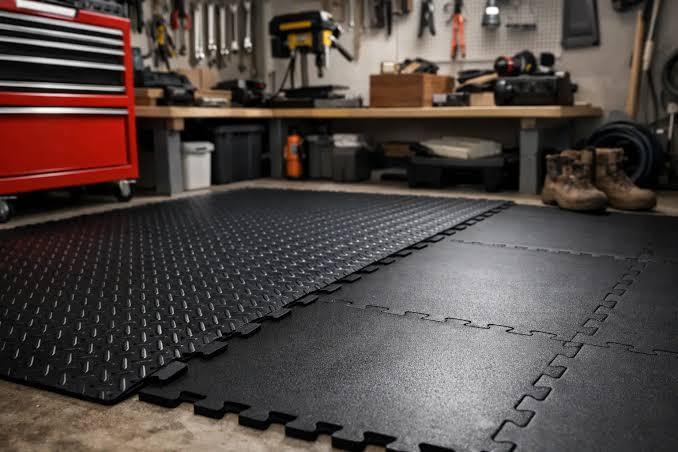
Concrete floors in garages, engineering bays, and woodworking spaces create serious daily challenges for both technicians and subfloors. Rigid concrete offers zero shock absorption, leading to lower back strain and foot fatigue during long shifts at workbenches. At the same time, dropped hand tools chip unprotected surfaces, while machine oils and coolants seep into porous concrete, leaving slick slip hazards and permanent stains.
Installing resilient workshop matting establishes an ergonomic, slip-resistant layer that cushions standing technicians, absorbs heavy tool impacts, and keeps working bays clean and safe.
Why Bare Concrete Degrades Workshop Productivity
Working directly on unshielded concrete compromises workplace ergonomics and accelerates structural floor wear across busy trade environments.
| Workshop Challenge | Impact on Technicians & Subfloors | Protective Matting Solution |
| Prolonged Standing Fatigue | Compresses lower joints and restricts leg blood circulation | Cushioned cellular structure encourages subtle muscle movement |
| Oil, Coolant & Grease Spills | Creates dangerous slip zones and stains porous concrete | Nitrile rubber compounds resist chemical swelling and improve grip |
| Dropped Tools & Parts | Chips concrete surfaces and damages precision metal tools | Dense elastic core absorbs kinetic drop energy cleanly |
| Cold Ground Transfer | Concrete draws body heat downward through work boots | Insulating rubber barrier blocks cold subfloor radiation |
Covering primary workbench zones and machinery perimeters protects valuable equipment while keeping technicians comfortable throughout demanding shifts.
Choosing the Right Surface Material for Your Trade
Different workshop environments expose flooring to distinct hazards, from hot welding sparks to heavy rolling tool chests. Matching the mat compound to your daily tasks ensures maximum service life.
Nitrile Rubber for Automotive and Machine Bays
Standard natural rubber swells and breaks down when exposed to synthetic engine oils, hydraulic fluids, and cutting lubricants. Nitrile-blended mats resist petroleum degradation, maintaining flat edges and reliable foot traction in greasy repair bays.
Closed-Cell Foam for Assembly and Packing Benches
In dry electronics, woodworking, or light assembly stations, closed-cell PVC or nitrile sponge mats deliver deep underfoot cushioning. Their sealed surface prevents sawdust and fine debris from penetrating the foam core, making daily sweeping effortless.
Heavy-Duty Interlocking Tiles for Full Bay Coverage
For large commercial workshops requiring wall-to-wall floor protection, interlocking solid rubber or heavy PVC tiles support rolling jacks, engine hoists, and heavy cabinets without tearing or shifting.
Sourcing durable trade flooring from established UK specialists like Essential Mats ensures reliable chemical resistance, trip-free beveled borders, and long-term structural stability.
Practical Installation and Layout Tips
Setting up floor protection efficiently prevents trip hazards and maximizes coverage around high-use machinery.
-
Position Along Primary Standing Zones: Place mats directly in front of workbenches, lathes, drill presses, and assembly tables where technicians stand stationary for extended periods.
-
Verify Beveled Perimeter Edges: Ensure standalone mats feature molded sloped borders so wheeled tool trolleys roll smoothly onto the surface without catching or tripping staff.
-
Allow New Rolls to Acclimatize: Unroll sheet matting flat in the workspace for 24 hours before trimming around bench legs or pillars to let the rubber relax completely.
Routine Cleaning and Care Guidelines
Proper maintenance prevents embedded metal shavings and grease from degrading surface traction over time.
-
Sweep Metal Swarf Daily: Remove sharp metal turnings, wood splinters, and grit with a stiff broom daily so debris does not grind into the rubber surface underfoot.
-
Degrease Regularly: Scrub oil-exposed mats weekly using warm water and a mild industrial degreaser, rinsing thoroughly to restore slip resistance.
-
Inspect Underneath Periodically: Lift loose-lay mats monthly to sweep away trapped dust and verify no moisture has accumulated against the concrete subfloor.
Frequently Asked Questions
What thickness is best for standing at a workbench all day?
A thickness between 12mm and 18mm provides ideal ergonomic support, offering enough resilience to relieve joint pressure without feeling unstable under work boots.
Can heavy rolling tool chests move over workshop mats?
Solid rubber tiles and dense PVC interlocking tiles easily support rolling tool cabinets and trolley jacks. For softer anti-fatigue foam mats, choose models with reinforced top skins and beveled edges for light cart traffic.
Are workshop mats resistant to welding sparks and hot metal?
Standard foam mats can melt under hot slag, whereas specialized fire-retardant rubber and nitrile welding mats are formulated to withstand brief contact with sparks and hot metal shavings.
How do I keep rubber mats from sliding on smooth painted garage floors?
High-density rubber mats rely on heavy deadweight and textured undersides to grip smooth epoxy or painted concrete. If shifting occurs in high-traffic lanes, double-sided industrial flooring tape anchors edges securely.
How long does industrial workshop matting typically last?
Depending on foot traffic and chemical exposure, commercial-grade nitrile and solid rubber mats regularly last between five and ten years with routine cleaning and degreasing.

 English
 Arabic
 French
 Portuguese
 Deutsch
 Turkish
 Dutch
 Italiano
 Russian
 Romaian
 Portuguese (Brazil)
 Greek