
Asset Tokenization Infrastructure: The Systems Behind Digital Asset Markets
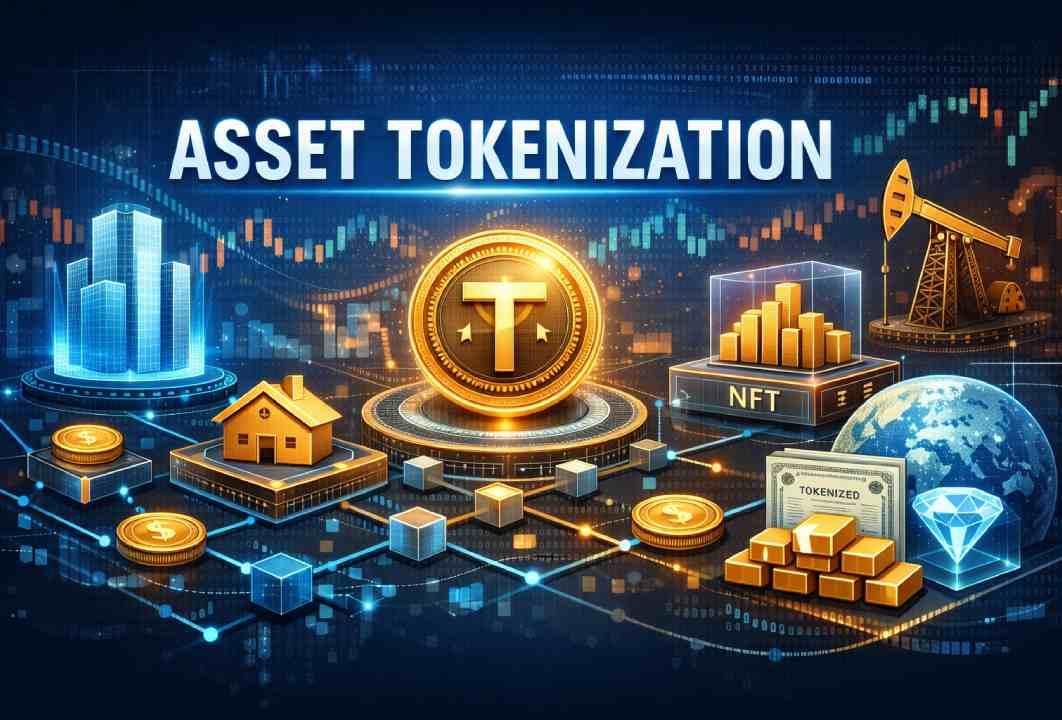
Asset tokenization is changing how real-world and financial assets are represented, managed, and transferred in digital markets. From real estate and commodities to private credit, securities, and infrastructure projects, tokenization creates digital representations of asset ownership or specific financial rights on a blockchain. However, successful tokenization requires more than creating digital tokens. It depends on a well-designed infrastructure that supports asset issuance, ownership records, investor onboarding, transactions, compliance, and ongoing asset management.
Asset tokenization infrastructure brings these components together to connect traditional assets with blockchain-based financial systems. It provides the technical and operational foundation needed to issue digital assets, manage their lifecycle, and enable transactions within defined legal and regulatory frameworks. As tokenized markets evolve, understanding the systems behind them becomes increasingly important for businesses, financial institutions, asset owners, and technology providers.
What Is Asset Tokenization Infrastructure?
Asset tokenization infrastructure refers to the collection of technologies, platforms, protocols, and operational systems used to create, issue, manage, and transfer tokenized assets. It includes blockchain networks, smart contracts, digital wallets, identity verification tools, compliance mechanisms, asset management systems, and transaction interfaces.
Each component performs a different function within the tokenization lifecycle. Blockchain networks maintain transaction records, while smart contracts execute predefined rules. Wallets allow users to hold and manage digital tokens, and identity verification systems help determine whether participants meet applicable eligibility requirements.
For example, a commercial property owner may want to represent investment interests in a building through blockchain-based tokens. The process requires a legal structure that defines investor rights, a system for issuing tokens, mechanisms for verifying investors, and processes for distributing eligible income. The infrastructure connects these elements into a coordinated operational framework.
The exact architecture varies depending on the asset class, jurisdiction, investor type, and intended market.
Why Infrastructure Matters in Digital Asset Markets
Tokenization can simplify certain processes, but its effectiveness depends on the systems supporting it. Without reliable infrastructure, issuing tokens does not automatically create efficient markets or meaningful investor protections.
A robust infrastructure can help address several operational challenges.
1. Consistent ownership records: Blockchain records can provide a shared, traceable history of token transfers. These records must still align with the legally recognized ownership or rights register where applicable.
2. Automated transaction processes: Smart contracts can automate approved actions, including token issuance, transfer restrictions, and distribution calculations, when the necessary conditions are met.
3. Improved operational coordination: Integrating identity verification, transaction processing, and asset servicing can reduce repetitive manual tasks and inconsistencies between systems.
4. Controlled asset transfers: Permissioned networks and smart contract rules can restrict transactions based on investor eligibility, jurisdiction, holding limits, or other applicable requirements.
5. Lifecycle management: Tokenized assets may require ongoing reporting, income distributions, corporate actions, redemption, and updates to investor records. Infrastructure supports these processes beyond the initial issuance.
These benefits depend on appropriate implementation, governance, and integration with off-chain legal and financial systems.
Core Components of Asset Tokenization Infrastructure
A tokenization ecosystem usually consists of several interconnected layers. Each layer supports a different stage of the asset's digital lifecycle.
1. Blockchain Networks
Blockchain networks provide the transaction-recording environment for issuing and transferring tokens. They maintain a shared ledger that allows authorized participants to verify transactions according to the network's rules.
Different blockchain architectures serve different requirements. Public blockchains offer broad network accessibility, while permissioned networks can provide greater control over participation and transaction visibility. Some projects use hybrid architectures to combine selected public blockchain capabilities with restricted operational systems.
Choosing a network involves evaluating transaction costs, processing capacity, security, interoperability, governance, and long-term support. Businesses must also consider whether the network's capabilities align with their legal obligations and the needs of their intended investors.
2. Smart Contracts and Token Standards
Smart contracts are programs deployed on a blockchain that execute predefined instructions when specified conditions are satisfied. In tokenization systems, they can govern issuance, transfers, supply limits, distributions, and redemption procedures.
Token standards provide common technical rules for how tokens behave and interact with wallets, exchanges, and other applications. Depending on the blockchain, developers may use fungible token standards, non-fungible token standards, or specialized frameworks for regulated assets.
For instance, a token representing an investment interest may need transfer restrictions, approved investor lists, and administrative controls. These requirements can be incorporated into the token's technical design where supported.
However, smart contracts cannot independently establish legal ownership or guarantee that an underlying asset exists. Legal documentation, external verification, and operational governance remain essential.
3. Asset Representation and Legal Structuring
The relationship between a digital token and the underlying asset is one of the most important parts of tokenization infrastructure.
A token may represent direct ownership where legally permitted, shares in a special-purpose vehicle, a debt instrument, a contractual claim, a right to receive revenue, or another defined interest. These structures are not interchangeable.
Legal structuring determines what token holders are entitled to receive, how their rights are enforced, and what happens if the issuer defaults or the underlying asset is sold.
For example, tokenizing a property through shares in a property-owning company differs from issuing tokens linked to rental income under a contractual arrangement. The digital tokens may look similar technically, but the legal rights and risks can be very different.
The infrastructure must therefore connect token records with reliable documentation, asset verification, and processes for handling legal changes.
4. Digital Wallets and Investor Identity
Digital wallets enable users to hold, receive, and transfer blockchain-based assets. Depending on the design, wallets may be controlled by individuals, custodians, or institutional service providers.
Investor onboarding systems often operate alongside wallets to verify identities and assess eligibility. Know Your Customer (KYC), Anti-Money Laundering (AML) checks, sanctions screening, and other controls may apply depending on the asset, jurisdiction, and distribution model.
A tokenization platform may link verified investor accounts to approved wallet addresses. This helps enforce restrictions on who can acquire or transfer particular tokens.
Wallet design also affects security and usability. Private-key management, account recovery, custody arrangements, and transaction authorization must be addressed carefully, particularly when assets have significant financial value.
5. Compliance and Permission Management
Digital asset markets operate within different regulatory frameworks depending on the type of asset and the jurisdictions involved. Infrastructure must be designed to support the applicable requirements rather than assuming that blockchain transactions are exempt from existing laws.
Compliance systems may manage investor eligibility, geographic restrictions, holding limits, transaction monitoring, disclosures, and reporting obligations. Some requirements can be automated through smart contracts, while others depend on external verification and human oversight.
Permission management determines which participants can issue tokens, approve transfers, access records, or perform administrative actions. Clear role definitions and audit trails can help reduce unauthorized activity and improve accountability.
For regulated offerings, the technical architecture should be developed alongside legal and compliance specialists from the beginning.
6. Custody and Asset Security
Custody infrastructure protects digital assets and the credentials used to control them. Depending on the operating model, custody may be handled by investors themselves, specialist custodians, or institutional systems.
Security measures can include multi-signature approvals, hardware security modules, key-management policies, transaction limits, access controls, and independent audits. The appropriate controls depend on the value of assets held, the threat model, and the organization's responsibilities.
Security also extends beyond wallets and private keys. Smart contract vulnerabilities, compromised administrator accounts, integration failures, and weaknesses in off-chain databases can affect the entire tokenization ecosystem.
A comprehensive security strategy therefore requires testing, monitoring, incident response procedures, and clearly defined responsibilities.
7. Asset Servicing and Lifecycle Management
Token issuance is only the beginning of an asset's lifecycle. Many tokenized assets require ongoing financial and administrative services.
These may include interest payments, rental income distributions, dividend processing, investor communications, maturity management, redemptions, and corporate actions. The infrastructure may integrate with banking systems, accounting software, property management platforms, and transfer agents to support these activities.
Consider tokenized real estate. Rental income must first be collected and reconciled, followed by the deduction of applicable expenses and obligations. The remaining distributable amount is calculated according to the legal agreements before eligible investors receive payments.
Automation can improve the consistency of these processes, but the system still relies on accurate underlying data, sufficient funds, and appropriate approval procedures.
How Asset Tokenization Infrastructure Works
A typical tokenization process connects legal, technical, and operational activities.
Step 1: Identify and evaluate the asset. The issuer determines which asset or financial rights will be represented, verifies relevant documentation, and assesses commercial feasibility.
Step 2: Establish the legal structure. The project defines investor rights, ownership arrangements, transfer conditions, disclosures, and applicable regulatory requirements.
Step 3: Design the token model. The issuer determines token supply, denomination, voting rights, distribution rules, transfer restrictions, and redemption conditions.
Step 4: Configure the blockchain infrastructure. Developers select the network, implement token contracts, integrate wallets, and establish administrative permissions.
Step 5: Integrate investor onboarding. Identity verification, eligibility assessments, and subscription workflows are connected to the issuance process.
Step 6: Issue and distribute tokens. Following required approvals and subscription procedures, tokens are allocated to eligible participants, with corresponding records maintained.
Step 7: Manage ongoing operations. The system supports reporting, transfers, asset servicing, distributions, and other lifecycle events according to the governing agreements.
Step 8: Handle redemption or exit events. When permitted, tokens may be redeemed, transferred, or settled through defined procedures. An available exit mechanism does not necessarily guarantee a buyer or immediate liquidity.
The workflow differs across asset classes, and some steps may occur simultaneously or require additional intermediaries.
Interoperability: Connecting Different Digital Asset Systems
Interoperability allows tokenization infrastructure to communicate with other blockchain networks and traditional financial systems. It becomes increasingly important when assets, investors, custodians, and service providers operate across multiple platforms.
For example, a tokenization platform may need to connect with a banking system for payments, a custody provider for asset safekeeping, an identity verification service for onboarding, and an external reporting system for compliance.
Cross-chain interoperability can also enable assets or relevant data to move between supported blockchain environments. However, bridges and cross-chain protocols introduce additional security and operational considerations. Moving a token between networks must preserve the intended rights and avoid creating conflicting or duplicate claims.
Effective interoperability therefore requires standardized interfaces, reliable data exchange, clear governance, and safeguards against transaction errors.
The Role of APIs and Data Infrastructure
Application Programming Interfaces (APIs) allow tokenization platforms to exchange information with external applications and services. They help connect blockchain operations with systems that handle financial records, investor information, asset valuations, and payment instructions.
Oracles and other data integration mechanisms can supply external information to smart contracts when automated processes depend on real-world events. Examples include asset valuations, interest rates, payment confirmations, or other reference data.
Because blockchain networks generally cannot independently verify every off-chain event, the reliability of these data sources is important. Incorrect, delayed, or manipulated information can lead to inaccurate calculations or unintended contract execution.
Strong data infrastructure should include source validation, access controls, monitoring, reconciliation, and procedures for correcting errors.
Challenges in Building Asset Tokenization Infrastructure
Despite its potential, developing tokenization infrastructure involves several challenges.
Regulatory complexity: Requirements differ by asset class and jurisdiction. Cross-border offerings can create additional licensing, disclosure, tax, and investor-protection obligations.
Integration with legacy systems: Financial institutions and asset owners may rely on older databases and operational processes that do not easily connect to blockchain applications.
Security risks: Smart contract vulnerabilities, compromised credentials, and poorly designed administrative controls can expose assets to loss or unauthorized transfers.
Liquidity limitations: Digitizing an asset does not guarantee market demand, exchange access, or continuous trading. Secondary-market activity depends on eligible participants, applicable laws, and available trading arrangements.
Data quality: Tokenization depends on accurate asset records, ownership documentation, valuations, and financial information. Blockchain immutability does not make inaccurate input data correct.
Scalability and cost: Transaction fees, network throughput, storage requirements, and operational expenses must be evaluated against the intended market size.
Governance and recovery: Projects need procedures for upgrades, disputes, lost access, erroneous transactions, and other exceptional situations. Some actions may be difficult or impossible to reverse once confirmed on-chain.
Addressing these challenges requires a coordinated approach involving technology teams, legal professionals, compliance specialists, asset managers, and financial service providers.
How to Choose the Right Asset Tokenization Infrastructure
Selecting an infrastructure model starts with understanding the asset, its legal structure, and the intended users. A system designed for a private credit offering may have different requirements from one supporting commercial real estate or tokenized commodities.
Important evaluation criteria include:
-
Asset compatibility: Confirm that the architecture supports the relevant ownership or financial rights.
-
Security standards: Assess smart contract audits, key management, access controls, and incident response capabilities.
-
Compliance integration: Determine whether identity verification, transfer restrictions, and reporting requirements can be implemented appropriately.
-
Scalability: Evaluate transaction throughput, costs, and the ability to support future growth.
-
Interoperability: Review connections with wallets, custodians, banking systems, and other platforms.
-
Lifecycle support: Check whether the system supports distributions, redemptions, reporting, and ongoing asset administration.
-
Governance: Establish who can modify contracts, approve exceptional actions, and resolve operational disputes.
-
Transparency: Ensure that relevant parties can access accurate records and understand the status of the underlying asset and tokenized rights.
The most suitable infrastructure is not necessarily the one with the largest number of features. It is the one that fits the asset's legal and commercial requirements while maintaining reliable security, operational control, and a clear investor experience.
The Future of Asset Tokenization Infrastructure
Asset tokenization infrastructure is likely to develop through closer integration between blockchain networks and established financial systems. Financial institutions, asset managers, technology companies, and infrastructure providers are exploring ways to represent financial instruments and real-world assets digitally while retaining necessary controls.
Several developments may shape this evolution.
More programmable financial rights: Tokens may increasingly encode defined rights relating to income, repayment, voting, redemption, and transfer eligibility.
Improved institutional integration: Standardized interfaces and operational frameworks may help connect tokenized assets with custody, payments, settlement, and reporting systems.
Expansion of asset servicing automation: Smart contracts and connected data services may reduce manual work in recurring processes such as distributions and maturity events.
Greater focus on compliance by design: Infrastructure may increasingly incorporate eligibility checks, permission controls, and reporting capabilities into the initial architecture.
Development of secondary-market infrastructure: Trading venues, transfer systems, and settlement services may improve access to eligible buyers and sellers where regulations permit.
These developments will depend on regulatory clarity, interoperability, security, market participation, and the ability to establish enforceable rights in the underlying assets. Adoption is likely to vary across markets rather than follow a single universal model.
Conclusion
Asset tokenization infrastructure is the foundation that connects blockchain-based tokens with real-world assets, financial rights, and operational processes. Its core components include blockchain networks, smart contracts, legal structuring, investor onboarding, custody, compliance, data integration, and lifecycle management.
When these systems are designed together, tokenization can support more traceable records, programmable transactions, and coordinated asset servicing. However, successful implementation requires more than technical development. Legal enforceability, data accuracy, cybersecurity, governance, and market access remain equally important.
As digital asset markets mature, infrastructure will play a central role in determining whether tokenization can move beyond isolated issuance projects toward reliable, interconnected financial ecosystems.
Frequently Asked Questions
1. What is asset tokenization infrastructure?
Asset tokenization infrastructure is the combination of blockchain networks, smart contracts, wallets, compliance tools, data systems, and operational services used to issue, manage, and transfer digital tokens representing assets or financial rights.
2. What are the main components of asset tokenization infrastructure?
The main components include blockchain technology, smart contracts, token standards, legal and asset verification systems, digital wallets, identity verification, custody solutions, compliance tools, and asset servicing systems.
3. How does blockchain support asset tokenization?
Blockchain provides a shared transaction record and an environment for executing smart contracts. It can help track token issuance and transfers, but legal ownership and enforceable rights also depend on the applicable legal structure and supporting records.
4. Does asset tokenization infrastructure guarantee liquidity?
No. Tokenization can make certain transfers easier to process, but liquidity depends on market demand, eligible participants, regulatory restrictions, trading arrangements, and the availability of buyers and sellers.
5. Is asset tokenization infrastructure suitable for real estate?
Yes. It can support digital representations of property ownership interests, shares in property-owning entities, debt instruments, or contractual income rights. The appropriate structure depends on legal requirements, investor rights, and the property's financial arrangements.
6. What are the main risks associated with tokenization infrastructure?
Key risks include smart contract vulnerabilities, cybersecurity incidents, regulatory uncertainty, inaccurate off-chain data, operational failures, custody risks, and limited secondary-market liquidity.
7. How long does it take to develop asset tokenization infrastructure?
Development time varies according to the asset class, blockchain network, legal structure, compliance requirements, integrations, security testing, and operational complexity. A basic proof of concept may take considerably less time than a production-ready platform designed for regulated assets.

 English
 Arabic
 Spanish
 Portuguese
 Deutsch
 Turkish
 Dutch
Dutch
 Italiano
 Russian
 Romaian
 Portuguese (Brazil)
 Greek
Greek