
What Happens During a Dog Dental Check Up
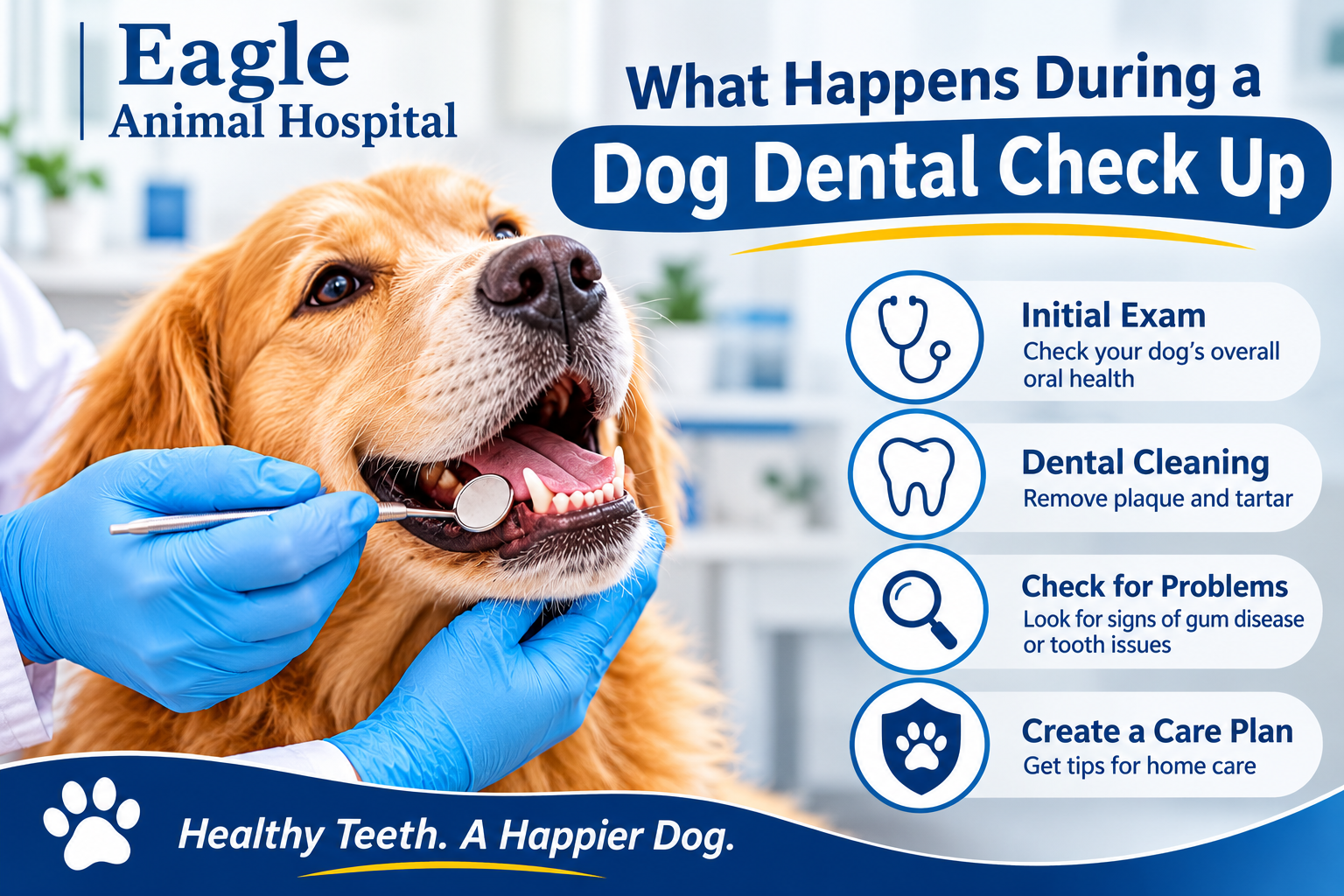
A dog dental check up is a simple, quick exam that can reveal a surprising amount about your dog's overall health. The mouth is one of the first places where early disease shows up, and it is also one of the places owners are least likely to inspect closely. Most dogs will not sit patiently while you examine every tooth, and even if they would, the signs of early dental disease are subtle enough to miss.
This guide explains what the veterinarian looks for during a dental exam, what warning signs you can watch for at home, and how the findings help decide whether your dog needs further treatment.
Why Dental Check Ups Matter
By age three, a large share of dogs already have some degree of periodontal disease. It begins with plaque and tartar, progresses to inflamed gums, and can eventually lead to infection, bone loss, and tooth loss. Because dogs are skilled at hiding pain, the disease often advances for a long time before an owner notices anything is wrong.
A routine dental exam catches the disease at an early stage, when the options are simpler. Mild tartar and gum inflammation can often be addressed with a straightforward cleaning. Waiting until teeth are loose or infected typically means more complex treatment, a longer anesthetic procedure, and a more difficult recovery.
What the Veterinarian Checks
A dental exam follows a consistent process that allows changes to be tracked from one visit to the next.
The Lips and Outer Mouth
The veterinarian begins by looking at the lips, the skin around the mouth, and the jaw. Swelling, lumps, or sores can point to problems that need further attention. Facial asymmetry or discomfort when the jaw is touched may signal a deeper issue.
The Teeth
Each visible tooth is checked for tartar, discoloration, chips, and fractures. Broken teeth are surprisingly common in dogs, particularly those who chew on hard bones, antlers, or hard plastic toys. A fractured tooth can expose sensitive tissue and become infected even if it looks minor from the outside.
The Gums
Healthy gums are pink and firm. Red, swollen, or bleeding gums suggest gingivitis. Receding gums, where the root of the tooth begins to show, point to more advanced disease. The veterinarian also looks for growths or other abnormal tissue.
The Tongue, Palate, and Throat
The rest of the mouth is examined for lumps, sores, and anything out of place. Oral tumors are not rare in older dogs, and finding them early matters considerably.
Bite and Alignment
Crowding, retained baby teeth, and misaligned bites can trap food and increase plaque buildup. These are especially common in small breeds and in young dogs who are losing their puppy teeth.
What the Exam Cannot Show
A visual exam on an awake dog has limits. It reveals the surface of the teeth and gums but not what is happening below them. Much of each tooth sits under the gumline, and the roots and surrounding bone can only be assessed with dental X rays, which require anesthesia. If the exam suggests significant disease, the veterinarian will usually recommend a full dental procedure so the whole mouth can be evaluated properly.
When the Check Up Leads to a Cleaning
If the exam shows heavy tartar, inflamed gums, or other signs of disease, the next step is typically a professional dog dental cleaning. The veterinarian will explain what was found, recommend a timeline, and outline the procedure, including preanesthetic bloodwork and X rays. Not every check up leads to an immediate cleaning. If the mouth is healthy, the visit simply confirms that your home care is working and helps establish a baseline for future comparison.
Dental Exams as Part of Routine Wellness
Dental checks are built into every wellness visit. During a full dog wellness exam, the veterinarian examines the mouth alongside the heart, lungs, joints, skin, and abdomen. This is often how dental concerns are first identified. A separate, more focused dental visit is worthwhile when you have noticed something specific between wellness exams.
Warning Signs to Watch For at Home
You do not need to wait for an appointment to pay attention to your dog's mouth. Watch for bad breath that is persistent or has recently worsened, yellow or brown buildup on the teeth, red or bleeding gums, drooling, pawing at the face, dropping food, chewing on one side, reluctance to eat hard food, or a sudden dislike of having the face touched.
More urgent signs include a swollen face, a bump under the eye, bleeding from the mouth, or a refusal to eat. These warrant a call to the hospital right away, since they can indicate an abscess or serious infection.
How to Do a Quick Mouth Check at Home
A short weekly check helps you notice changes sooner. Choose a calm moment, and lift your dog's lip gently to look at the teeth and gums. Healthy gums are pink, not bright red or pale. Look for tartar along the gumline, broken teeth, and any lumps. Reward your dog with a treat or praise afterward so the experience stays positive.
If your dog resists, do not force it. Start with just touching the muzzle and lifting the lip for a second, then build up gradually over several days. Dogs who are used to mouth handling tend to be much easier to examine and to brush.
Home Care Between Check Ups
Daily brushing with a pet safe toothpaste is the most effective home care. Dental chews and diets accepted by the Veterinary Oral Health Council can help reduce plaque and tartar. Choose chew toys carefully, and use the thumbnail test. If you cannot make a slight indent in the toy with your thumbnail, it may be hard enough to fracture a tooth.
Puppies and Dental Exams
Puppies have 28 baby teeth that are replaced by 42 adult teeth during the first several months of life. Dental exams during puppyhood are useful for confirming that baby teeth are falling out on schedule and that adult teeth are coming in properly. Retained baby teeth can crowd the adult teeth and trap debris, and they are easiest to address early. Puppy visits are also a good time to start getting your dog comfortable with mouth handling.
Senior Dogs and Dental Exams
Older dogs benefit from closer dental monitoring. Years of plaque buildup, wear, and age related changes make dental disease more likely, and older dogs are also more prone to oral tumors. Many seniors show a noticeable improvement in comfort and appetite once painful dental problems are treated. Age alone is rarely a reason to avoid dental care. Bloodwork and a physical exam help determine whether a senior dog is a good candidate for a cleaning.
How Often Should Dogs Have a Dental Exam
Most dogs should have a dental exam at least once a year, as part of the annual wellness visit. Small breed dogs, dogs with a history of dental disease, and seniors may benefit from more frequent monitoring. Your veterinarian can recommend an interval based on your dog's mouth.
Booking a Dental Exam
Eagle Animal Hospital offers dental exams, cleanings, extractions, and digital dental X rays in one location. Appointments are available during regular hours, on Tuesday and Thursday evenings, and on Saturday mornings. Request an appointment online to schedule your dog's dental exam.
Frequently Asked Questions
Q: What does a dog dental check up include?
A: The veterinarian examines the lips, teeth, gums, tongue, and bite, looking for tartar, fractures, gum inflammation, and abnormal growths. The findings help determine whether a professional cleaning or further treatment is needed.
Q: How often should my dog have a dental exam?
A: Most dogs should have a dental exam at least once a year during their wellness visit. Small breeds, seniors, and dogs with prior dental disease may benefit from more frequent monitoring.
Q: Can a dental exam find all dental problems?
A: Not all. A visual exam shows the surface of teeth and gums, but root and bone problems need dental X rays, which require anesthesia. The veterinarian may recommend a full dental procedure if disease is suspected.
Q: What are signs my dog needs a dental exam now?
A: Persistent bad breath, visible tartar, red or bleeding gums, drooling, pawing at the mouth, and dropping food are common signs. A swollen face or refusal to eat needs prompt veterinary attention.
Q: Does my dog need to be sedated for a dental check up?
A: A basic oral exam is done awake and requires no sedation. Sedation or anesthesia is only needed for X rays, cleaning, and treatment, which your veterinarian will recommend if the exam finds disease.

 English
 Arabic
 French
 Spanish
 Portuguese
 Deutsch
 Turkish
 Dutch
 Italiano
 Russian
 Romaian
 Portuguese (Brazil)