
Is Smile Makeover the Future of Cosmetic Dentistry?
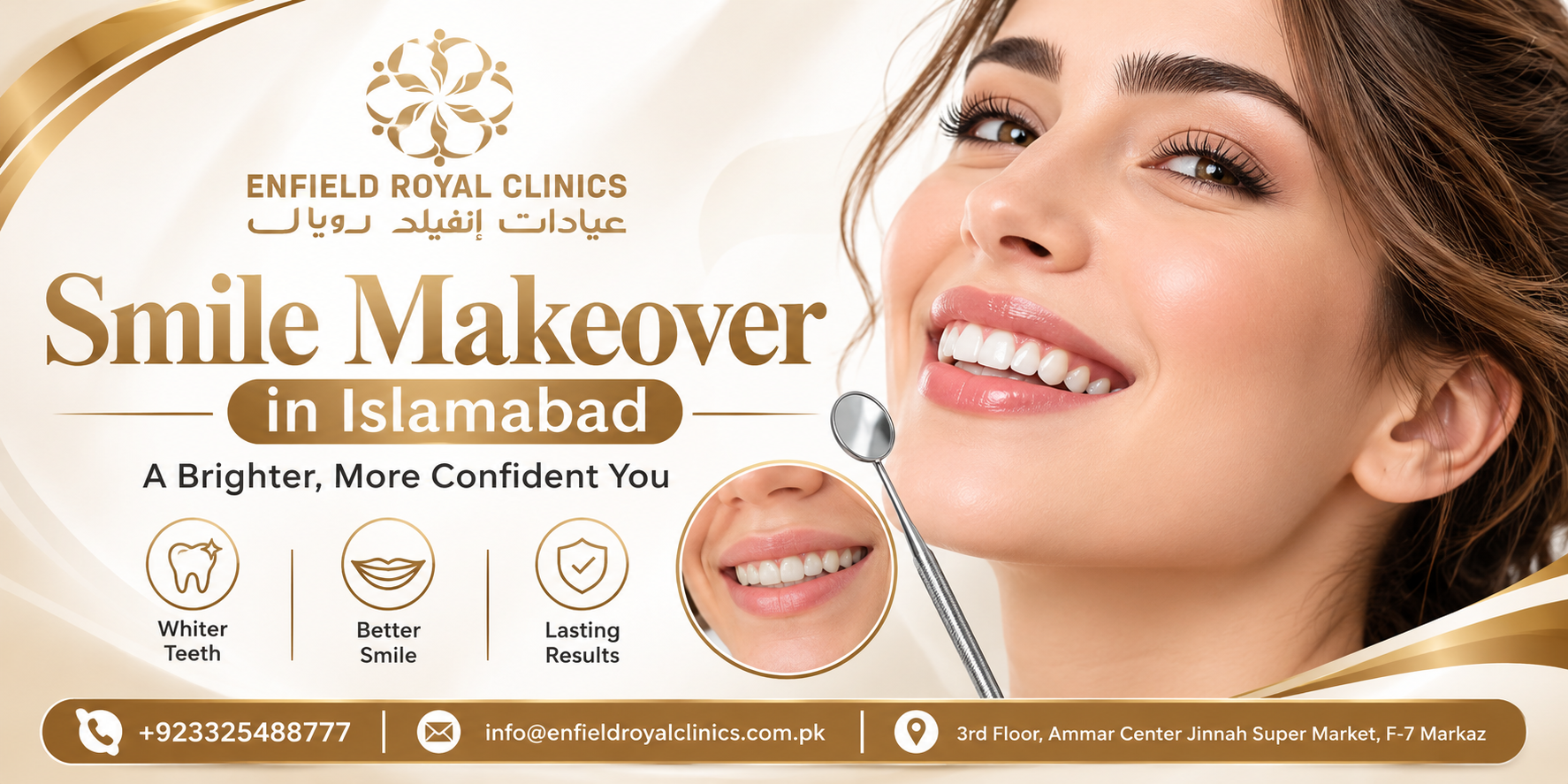
Cosmetic dentistry has changed significantly over the years. Modern dental treatments now focus not only on improving the appearance of teeth but also on creating natural-looking smiles that complement each person's facial features. Patients increasingly look for personalized solutions that address several dental concerns while maintaining comfort, function, and long-term oral health. One approach gaining attention is the smile makeover.
A smile makeover combines different cosmetic and restorative dental procedures to improve the appearance of teeth and gums. It can address concerns such as discoloration, chipped teeth, uneven shapes, gaps, and missing teeth. For people exploring Smile Makeover in Islamabad, this approach offers an opportunity to understand how modern cosmetic dentistry can create a more balanced and confident smile.
But does a smile makeover represent the future of cosmetic dentistry? Its growing popularity, personalized planning, and use of modern dental technology suggest that it is an important part of the field's development. However, successful treatment still depends on proper diagnosis, realistic expectations, and suitable dental care.
Why Is Smile Makeover Becoming Popular in Modern Dentistry?
People today are increasingly aware of how their smiles influence their appearance and confidence. Even small dental imperfections can make someone feel uncomfortable when speaking, smiling, or appearing in photographs. As a result, more patients are considering cosmetic dental treatments to improve their smiles.
A smile makeover is popular because it offers a flexible approach instead of focusing on just one concern. A patient with stained teeth may benefit from professional whitening, while someone with chipped or uneven teeth may require bonding or veneers. Patients with alignment problems may need orthodontic treatment before considering other cosmetic improvements.
This personalized approach makes smile makeovers suitable for different dental needs. The treatment plan is based on the patient's oral health, tooth structure, facial proportions, and desired results.
Another reason for its growing popularity is the emphasis on natural-looking outcomes. Modern cosmetic dentistry increasingly aims to preserve the character of a person's smile rather than create an artificial or identical appearance for everyone.
How Is Digital Smile Design Changing Cosmetic Dentistry?
Technology is playing an important role in the development of cosmetic dental treatments. Digital smile design is one example of how modern tools can support treatment planning and communication between patients and dental professionals.
Digital photographs, dental scans, and specialized software may be used to examine tooth proportions, gum visibility, alignment, and the relationship between the smile and facial features. These records can help illustrate possible changes and make it easier to discuss treatment goals.
Digital planning may offer several advantages:
-
It helps evaluate the current appearance of the smile.
-
It supports more personalized treatment planning.
-
It can help patients understand proposed cosmetic changes.
-
It improves communication about expected outcomes.
-
It allows dental professionals to assess proportions before certain procedures.
However, digital previews are planning tools rather than guarantees of the final result. Actual outcomes depend on the condition of the teeth, the selected procedures, and the patient's individual healing and response to treatment.
As dental technology continues to develop, digital planning is likely to remain an important part of modern cosmetic dentistry.
Which Modern Treatments Make Smile Makeovers More Versatile?
A major reason smile makeovers have become an important part of cosmetic dentistry is the range of treatments available. Different procedures can address different concerns, allowing dental professionals to develop a plan according to the patient's needs.
Some commonly used options include:
Professional teeth whitening: This procedure helps reduce certain types of stains and brighten natural teeth. It may be suitable for patients whose main concern is tooth discoloration.
Dental veneers: These thin coverings are placed over the front surfaces of selected teeth. They can improve tooth shape, size, and color when appropriate.
Dental bonding: Tooth-colored composite material is used to repair small chips, close selected gaps, or improve uneven edges.
Orthodontic treatment: Braces and clear aligners can gradually improve tooth alignment and address certain bite concerns.
Dental crowns: Crowns cover damaged or weakened teeth and can restore their appearance, shape, and strength.
Dental implants: Implants provide support for replacement teeth and may be considered when one or more teeth are missing.
Gum contouring: In suitable cases, reshaping selected gum areas can create a more balanced gum line.
Not every patient requires all these procedures. A careful dental assessment helps identify which options are necessary and whether any underlying oral health concerns should be treated first.
How Does Smile Makeover in Islamabad Support Personalized Results?
One of the most important developments in cosmetic dentistry is the move toward individualized treatment. Instead of applying the same smile design to every patient, modern dental planning considers differences in facial structure, tooth shape, lip position, age, and personal preferences.
For individuals considering Smile Makeover in Islamabad, a personalized approach can help ensure that proposed improvements suit their natural appearance. For example, a patient with naturally small front teeth may need a different treatment plan from someone with stained or worn enamel.
The process generally starts with an examination of the teeth, gums, and bite. Dental photographs, scans, or impressions may be collected to support planning. The patient's concerns and expectations are then discussed before suitable treatments are selected.
Oral health remains a priority throughout the process. Cavities, gum disease, infections, and other dental problems may need attention before cosmetic procedures begin. This helps create a healthier foundation for long-term results.
Personalized planning also means that patients should understand the limitations of each procedure. A smile makeover can improve dental appearance, but it cannot correct every facial or structural concern. Realistic expectations are essential for a satisfactory experience.
Can Smile Makeover Balance Beauty With Dental Health?
The future of cosmetic dentistry is not only about creating attractive smiles. It also involves maintaining healthy teeth and gums while improving appearance.
A well-planned smile makeover considers both aesthetics and dental function. For example, replacing a missing tooth may improve the appearance of the smile while also supporting chewing ability. Restoring a damaged tooth with an appropriate crown can improve its appearance and help protect its remaining structure.
Alignment treatments may also offer benefits beyond appearance. Properly positioned teeth can sometimes be easier to clean, although individual results depend on the patient's dental condition.
Nevertheless, cosmetic procedures should never replace essential dental care. Whitening does not treat cavities, veneers do not cure gum disease, and cosmetic improvements cannot compensate for untreated infections.
A responsible treatment plan begins with oral health assessment. This helps determine whether a patient is ready for cosmetic treatment and which procedures can be performed safely.
What Role Will Advanced Technology Play in the Future of Smile Makeovers?
Dental technology continues to improve how cosmetic procedures are planned and performed. Digital scanning, computer-assisted design, improved dental materials, and modern imaging techniques are helping support more detailed treatment planning.
Digital impressions can reduce the need for traditional impression materials in suitable cases. Computer-aided design and manufacturing may help create certain restorations, including crowns and veneers, with greater precision. Improved ceramic and composite materials also provide more options for restoring tooth appearance.
These developments may contribute to better communication, more efficient workflows, and restorations designed to match natural teeth.
However, technology alone does not guarantee successful treatment. The quality of the result still depends on accurate diagnosis, professional judgment, appropriate materials, and careful clinical technique.
The future of smile makeovers will likely involve a combination of advanced technology and personalized dental care. The most valuable developments will be those that improve patient comfort, preserve healthy tooth structure, and produce reliable results.
Is Smile Makeover Likely to Shape the Future of Cosmetic Dentistry?
Smile makeovers are already an important part of modern cosmetic dentistry because they bring multiple treatment options together under one personalized plan. Their ability to address several aesthetic concerns makes them useful for patients with different dental needs.
As digital planning, restorative materials, and cosmetic techniques continue to develop, smile makeover treatments may become even more precise and individualized. Patients may benefit from better ways to understand proposed changes and more treatment options suited to their oral health.
Still, a smile makeover is not automatically the best solution for everyone. Some patients may need only routine cleaning or whitening, while others may require restorative or orthodontic care. The most appropriate approach depends on a complete dental evaluation.
For patients considering Smile Makeover in Islamabad, the key is to choose treatments based on dental health, personal goals, and realistic expectations. Cosmetic dentistry's future is not simply about creating perfect-looking teeth; it is about achieving healthy, functional, and natural-looking smiles.
For more information visit Enfield royal clinic in islamabad
Frequently Asked Questions
1. What makes a smile makeover different from a single cosmetic dental treatment?
A smile makeover combines one or more dental procedures to address several concerns, such as discoloration, gaps, chips, tooth shape, and alignment. A single cosmetic treatment usually focuses on one specific issue.
2. Is a smile makeover a modern cosmetic dentistry treatment?
Yes. It brings together established cosmetic and restorative procedures with modern planning methods, including digital imaging and smile design tools where available.
3. Can a smile makeover create natural-looking results?
It can create natural-looking improvements when tooth shape, color, size, and facial proportions are carefully considered. The final result depends on the treatment plan and individual dental condition.
4. How long does a smile makeover take?
The duration depends on the procedures involved. Whitening or minor bonding may take a short time, while orthodontics, implants, and more complex restorations can require several months.
5. Is a smile makeover suitable for every patient?
Not necessarily. Patients with untreated cavities, gum disease, or other oral health problems may need treatment before cosmetic procedures. A dental examination helps determine suitability.
6. How can patients maintain their smile makeover results?
Regular brushing, flossing, dental checkups, and following aftercare instructions can help maintain results. Patients should also avoid habits such as biting hard objects that may damage restorations.

 English
 French
 Spanish
 Portuguese
 Deutsch
 Turkish
 Dutch
 Italiano
 Russian
 Romaian
 Portuguese (Brazil)
 Greek