How to Improve the Presentation of Your Homework
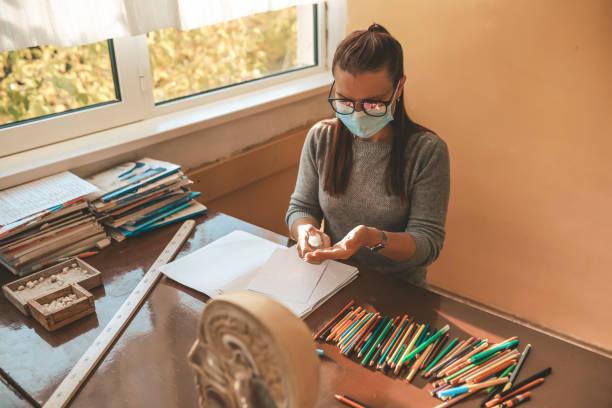
Getting the answers right is only part of doing good homework. The way you present your work matters too. When an assignment is neat, organized, and easy to follow, your teacher can understand your ideas without having to work through messy pages or confusing formatting.
The good news is that you don't need fancy stationery, perfect handwriting, or design skills to improve your homework. A few simple habits can make a big difference. From organizing your pages to proofreading your final draft, here's how I would approach it.
Start by Understanding the Assignment
Before worrying about how your homework looks, make sure you know exactly what you're supposed to do.
I've found that many presentation problems actually start before the writing begins. If you misunderstand the instructions, you may end up using the wrong format, leaving out important sections, or spending time on things your teacher never asked for.
Before you start, check:
-
What questions do you need to answer?
-
Is the work supposed to be handwritten or typed?
-
Has your teacher specified a font, spacing, or citation style?
-
Is there a word or page limit?
-
Do you need to include references, charts, images, or other materials?
Your teacher's instructions should always come first. General formatting advice is useful, but it shouldn't override specific requirements for your class.
Homework is generally most effective when it connects with classroom learning and gives students an opportunity to practice or reinforce what they've learned. The Education Endowment Foundation's research on homework also highlights the importance of feedback and a clear connection between homework and learning.
Once you know what the assignment requires, presentation becomes much easier.
Give Your Homework a Simple Structure
A well-organized page is easier to read than one where everything runs together.
For a typical assignment, you might begin with your name, class information, and the title of the assignment if your teacher requires them. Then arrange the questions or sections in a logical order.
For example:
-
Question or section title
-
Your answer
-
Supporting example or explanation, if needed
-
Next question or section
Don't be afraid of empty space. Leaving a little room between sections makes the page easier to scan.
At the same time, don't go too far in the other direction. Large gaps, oversized headings, decorative borders, and unnecessary graphics can make a simple assignment look cluttered.
Your goal isn't to make homework look like a magazine. Your goal is to make it easy to read.
Make Your Handwriting Easier to Read
Handwritten homework has one obvious requirement: someone else needs to be able to read it.
You don't have to have beautiful handwriting. What matters is consistency and legibility.
Pay attention to the size of your letters, the space between words, and whether your writing stays reasonably aligned with the page. Try not to squeeze several words into a tiny space just because you're running out of room.
Research backs up the importance of this. A 2026 study involving 129 girls aged 10–12 found that handwriting fluency and legibility are related but separate skills. The findings also pointed to a trade-off between writing speed and legibility. In simple terms, writing faster isn't helpful if the result becomes difficult to read.
So, if your handwriting gets messy when you rush, slow down slightly.
A useful trick is to look at one completed page before moving on. If you can easily read it a few minutes later, your teacher probably can too.
Use Headings to Organize Longer Assignments
Headings are particularly helpful when your homework is more than a page or two.
Instead of presenting an entire assignment as one long block of text, divide it into sections that reflect the different ideas you're discussing.
For example, a history assignment might include:
-
Causes
-
Important Events
-
Effects
-
Conclusion
A science assignment could use headings such as:
-
Aim
-
Method
-
Results
-
Discussion
-
Conclusion
The headings don't need to be elaborate. They simply tell the reader what's coming next.
If you're working in Microsoft Word, its built-in heading styles can help you keep headings consistent throughout a document. Microsoft's Word accessibility guidance also recommends using meaningful heading structures so documents are easier to navigate.
Consistency is what makes this work. If one heading is bold and 16 points, don't make the next one tiny and italic unless there's a reason for the difference.
Keep Your Formatting Simple
One of the easiest mistakes to make with typed homework is over-formatting.
You might think several fonts, bright colors, and decorative effects will make the assignment more interesting. Usually, they just make it harder to read.
Unless your teacher has given you different instructions, stick with a simple, readable font and use consistent sizing throughout the document.
For academic papers, formatting rules can be quite specific. For example, Purdue OWL's APA guidance lists several acceptable fonts and emphasizes readability and consistency. Its MLA formatting guidance provides separate requirements for MLA papers.
The important point is not to memorize every formatting style. It's to use the style your teacher or institution asks for.
For ordinary homework, simple formatting usually works best:
-
Use a readable font.
-
Keep the font size consistent.
-
Use clear headings.
-
Leave enough space between sections.
-
Keep margins consistent.
-
Number pages when appropriate.
-
Don't mix several unrelated fonts.
A clean page tends to look more professional without requiring much extra effort.
Number Questions and Answers Clearly
This sounds almost too obvious to mention, but numbering can make a surprisingly big difference.
If your worksheet contains ten questions, don't write ten answers as one continuous piece of text. Keep each answer beside or underneath the question it belongs to.
If a question has several parts, label them clearly as well.
For example:
4(a) Explain the process.
Your answer.
4(b) Give one example.
Your answer.
This helps your teacher follow your work and makes it much easier for you to check whether you've answered everything.
It also reduces the risk of accidentally skipping a question.
Don't Add Visuals Just for Decoration
Pictures, charts, diagrams, and tables can improve an assignment, but only when they actually help explain something.
A labeled diagram can be useful in science. A map may make a geography assignment clearer. A table might be the easiest way to compare statistics in a sports assignment.
But adding three random pictures to fill an empty page doesn't improve the presentation.
Think about every visual you include and ask yourself: “Does this help the reader understand the information?”
If the answer is no, leave it out.
Accessibility matters here as well. Microsoft's guidance for accessible documents recommends meaningful headings, appropriate color contrast, alternative text for important images, and properly structured tables. Those practices aren't only useful for students with disabilities they generally make documents easier for everyone to use.
Break Long Paragraphs Into Manageable Pieces
Presentation isn't just about fonts and spacing. Your writing style affects how easy the assignment is to read.
A page covered by huge blocks of text can feel difficult even when the information itself is good.
Try to give each paragraph one main purpose. Introduce the point, explain it, and then provide an example or piece of evidence when appropriate.
For example, instead of writing one 300-word paragraph about several causes of an event, you might give each major cause its own paragraph.
This also makes proofreading easier. When ideas are separated clearly, it's simpler to spot repetition, missing information, or sentences that don't belong.
If you're unsure whether a paragraph works, ask yourself what the paragraph is supposed to tell the reader. If you can't answer that easily, it may need to be reorganized.
Proofread Before You Submit
A common mistake is finishing the last sentence and immediately submitting the assignment.
Give yourself a few minutes for a separate proofreading pass.
Look for obvious issues such as:
-
Spelling mistakes
-
Missing punctuation
-
Incorrect capitalization
-
Grammar errors
-
Repeated words
-
Missing words
-
Incorrect names or terminology
-
Incomplete sentences
-
Missing citations
Don't rely completely on spellcheck. Automated tools can identify some errors, but they don't always understand what you intended to say.
Reading your work aloud can help too. A sentence that looks fine on screen can sound awkward when you hear it.
If you don't have much time, focus first on the mistakes that could affect your meaning or make the assignment difficult to understand.
Use the Correct Citation Style
If you've used books, websites, journal articles, or other sources, make sure you give them proper credit.
Different academic styles have different rules, so don't mix them together. If your teacher asks for APA, use APA. If the assignment requires MLA, follow MLA.
Resources such as Purdue OWL's APA guide and MLA guide can help when you're unsure about a particular requirement.
Good citation isn't just about presentation. It's part of responsible academic writing.
And if you use outside help while completing an assignment, check your school's academic-integrity rules. Some institutions allow certain types of assistance but restrict others.
Look at Your Homework From Your Teacher's Perspective
Here's a simple exercise I recommend: once you're finished, stop thinking like the student who wrote the assignment.
Look at it as if you're the person grading it.
Could you quickly find the answer to each question?
Can you tell where one section ends and another begins?
Are the headings easy to identify?
If it's handwritten, can you read every word?
If there are charts or diagrams, are they labeled?
Are the sources and references where they should be?
This quick change in perspective can reveal problems you might otherwise overlook.
You're not trying to make the assignment look perfect. You're checking whether you've made your work easy for another person to understand.
Use a Five-Minute Final Checklist
You don't necessarily need another hour after finishing your homework. A short final check can catch many presentation problems.
Before submitting, ask:
-
Have I followed all the instructions?
-
Have I answered every question?
-
Is my name included if required?
-
Are the questions and sections clearly organized?
-
Is my handwriting or font easy to read?
-
Is the spacing consistent?
-
Are the pages in the correct order?
-
Have I checked spelling and grammar?
-
Are diagrams, charts, and tables labeled?
-
Have I included required citations?
-
Am I submitting the correct file or pages?
This checklist takes very little time, but it can save you from submitting work with an avoidable mistake.
When You Need Help With a Difficult Assignment
Sometimes the presentation isn't the hardest part of the homework. The actual subject may be confusing, the instructions may be unfamiliar, or you may not know how to organize a large amount of information.
If you're working on a sports-related assignment, for example, you may need help understanding the topic before you can decide how to structure the final work. In that situation, a resource such as Sports Homework Services may be useful as a starting point.
Just remember that outside assistance should support your learning rather than replace it, and you should always follow your school's rules about permitted academic help.
Final Thoughts
You don't need to turn every homework assignment into a work of art.
Good presentation is mostly about making your work clear. Follow the instructions, organize your answers, leave enough space, write legibly, keep digital formatting consistent, and take a few minutes to proofread before you submit.
The research on handwriting makes an important point here. A 2022 meta-analysis covering 31 studies and 2,030 students found that handwriting interventions could improve writing fluency, with performance feedback and structured practice among the approaches associated with better outcomes.
In practice, that means presentation can improve with practice too.
The next time you finish an assignment, don't just ask, “Did I answer all the questions?”
Ask one more question:
“Would someone else find this easy to read and understand?”
If the answer is yes, you're probably on the right track.

 English
 Arabic
 French
 Spanish
 Portuguese
 Deutsch
 Turkish
 Dutch
Dutch
 Italiano
 Romaian
 Portuguese (Brazil)
 Greek
Greek