
Travel CRM Demo That Helps Agencies Manage Bookings Better
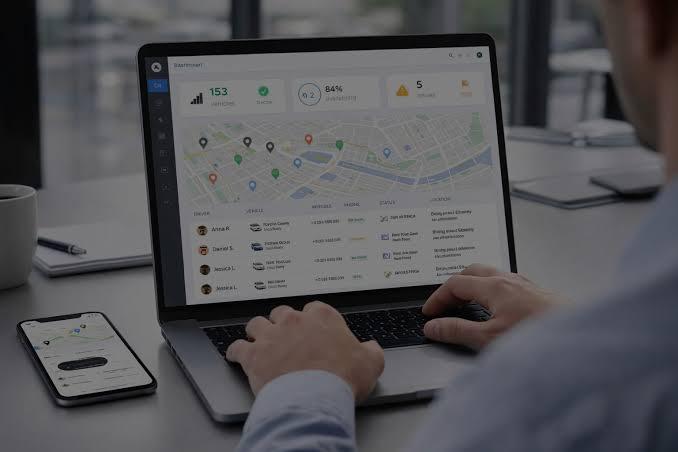
Running a travel agency involves much more than confirming flights and hotels. Teams have to handle customer enquiries, prepare quotations, update bookings, follow up with travellers, manage supplier details, and keep communication organised. When these tasks are handled through separate spreadsheets, emails, chat messages, and booking tools, it becomes difficult to maintain a clear view of every customer and trip.
A well-designed CRM can bring these activities into one organised environment. More importantly, a travel crm demo can help an agency understand how a system actually works before making a decision. Instead of judging software by a feature list alone, agencies can explore the workflow, see how information is organised, and decide whether the system fits the way their team operates.
Why Travel Agencies Need Better Customer and Booking Management
A travel business may deal with hundreds of customer interactions without every enquiry becoming a confirmed booking. Some travellers request quotations, others change their dates, and some return weeks later with new requirements. Keeping track of these conversations is challenging when information is spread across different places.
A CRM gives staff a central place to record customer details, enquiries, booking information, notes, and follow-up activities. This makes it easier for a team member to understand what has already happened before contacting the customer again. It also reduces the chance of asking for information that the traveller has already provided.
For agencies that handle both leisure and business travel, this organisation can become particularly useful. Staff can spend less time searching for old conversations and more time helping customers with actual travel decisions.
What to Look For During a Travel CRM Demo
The value of a demonstration is not simply seeing attractive screens. An agency should use the opportunity to examine how the system supports its real working process. During a travel crm demo, pay attention to how quickly a new enquiry can be created, how customer information is stored, and how a booking moves from an initial request to completion.
It is also useful to consider how the system handles follow-ups. Travel sales often depend on timely communication. A customer may need another quotation, additional hotel options, or clarification about a payment. A useful CRM should make these activities visible rather than leaving them dependent on someone's memory.
The demonstration should also show how staff can search and update records. If basic actions require too many steps, employees may avoid using the system consistently. Practical usability is often more important than having a long list of features that the team rarely needs.
Questions Worth Asking Before Choosing a CRM
Agencies can make a demonstration more productive by preparing questions in advance. For example:
- Can customer and booking information be viewed from one place?
- How easily can staff update an existing booking?
- Can different team members access the same customer record?
- How are follow-ups and pending enquiries tracked?
- Can the system connect with existing travel tools or APIs?
- Is the interface easy for new employees to understand?
- Can reports help managers identify pending or completed work?
- How does the system handle different types of travel services?
These questions help shift the focus from marketing language to everyday usability.
Connecting CRM Workflows With Travel Operations
A CRM becomes more valuable when it works alongside the other systems an agency already uses. Travel companies may depend on booking platforms, supplier connections, payment processes, airline or hotel APIs, and internal communication tools. If these systems operate independently, employees may have to enter the same information several times.
This is where b2b online travel software can support a more connected business workflow. When travel technology is designed to share relevant information between systems, agencies can reduce unnecessary manual work and improve the consistency of their records.
Integration does not mean that every system needs to be replaced. In many cases, the better approach is to connect important processes so employees can access the information they need without constantly switching between platforms. Before selecting a CRM, agencies should therefore ask what integrations are available and whether they match their current technology setup.
Making the Booking Journey Easier for Staff
A booking rarely follows a perfectly straight path. A customer may initially ask for one destination, change the dates, request a different hotel, and then add airport transfers before confirming the trip. Staff need a system that can accommodate these changes without creating confusion.
A strong CRM workflow can help employees keep the customer record updated throughout this process. Instead of creating separate notes for every conversation, the team can maintain a clearer history of the enquiry and booking.
For example, imagine a customer enquiring about a family holiday. The first conversation may contain preferred dates and a budget. Later, the customer may request another hotel and adjust the number of travellers. If these updates are recorded properly, the next staff member can understand the latest requirements without starting the conversation from the beginning.
This becomes even more important when several employees work on the same account. Shared information gives the team greater continuity and helps prevent important details from being lost when responsibility moves from one person to another.
Where Synch Travel Can Fit Into a Modern Agency Workflow
For agencies exploring travel technology, Synch Travel can be considered as part of a broader approach to organising travel operations. The important point is not simply having another piece of software. The system should help an agency create a smoother connection between customer management, bookings, sales activity, and day-to-day operations.
Before adopting any platform, an agency should compare its existing workflow with what the software offers. A smaller agency may prioritise straightforward customer management and enquiry tracking, while a growing business may need stronger automation, integrations, user management, and reporting.
The right solution should support the way the agency actually works rather than forcing employees to completely change their process. This is why seeing the software in action can be more useful than relying only on written feature descriptions.
Automation Can Reduce Repetitive Travel Tasks
Many travel agency activities are repetitive. Staff may need to send follow-up messages, update customer records, check pending enquiries, prepare information for bookings, or move records between different stages.
Automation can help with suitable parts of these processes. For example, a system may allow an agency to create reminders for outstanding enquiries or organise leads according to their current stage. This does not remove the need for personal communication. Instead, it gives staff a better structure for deciding where their attention is needed.
The goal should always be practical automation. Automating a task simply because it is possible does not necessarily improve the customer experience. Agencies should first identify activities that consume time without adding much value, then consider whether technology can handle them reliably.
Using Data to Understand Agency Performance
A CRM can also provide a clearer view of business activity. Managers may want to know how many enquiries are currently open, which bookings are progressing, which customers require follow-up, or where delays are occurring.
Good reporting can make these patterns easier to identify. Instead of relying on separate spreadsheets maintained by different employees, management can work from information stored within the same system.
However, reports are only useful when the underlying information is accurate. Employees need clear processes for updating records so that managers are not making decisions based on outdated or incomplete data. Training and consistent data entry therefore remain important even after new software has been introduced.
How to Evaluate a CRM Before Making a Decision
A demonstration should be treated as a practical test rather than a sales presentation. Ask the provider to show common scenarios that your agency deals with every day. Creating a new enquiry, updating a booking, following up with a customer, assigning work to another employee, and finding an old record can reveal a lot about the system.
It is also worth considering the learning curve. A powerful platform can still create problems if employees find it difficult to use. The best technology is usually the technology that staff can understand and use consistently.
Security, user permissions, data management, integrations, support, and future scalability should also be part of the evaluation. Travel agencies handle valuable customer and booking information, so operational convenience should never be considered separately from responsible data management.
Building a More Organised Travel Business
Technology works best when it solves a genuine business problem. For travel agencies, that problem is often not a lack of information but the difficulty of keeping information connected and accessible.
A CRM can provide structure around customer relationships, enquiries, bookings, follow-ups, and team activity. When it is combined with suitable booking systems, integrations, APIs, and automation, it can help create a more coordinated operating environment.
The key is to choose based on actual business requirements rather than selecting software because it has the longest feature list. Agencies should test realistic workflows, involve the employees who will use the system, and consider how the platform can support the business as its needs develop.
Conclusion
Choosing travel technology is an important decision for any agency that wants to manage bookings and customer relationships more effectively. A proper demonstration gives businesses the opportunity to look beyond feature lists and understand how a CRM performs in real working situations.
The strongest choice will be one that makes everyday tasks clearer, keeps customer information organised, supports collaboration, and connects naturally with the agency's wider travel technology environment. By evaluating these areas carefully, travel agencies can choose a CRM that supports their people and processes instead of adding another complicated system to manage.

 English
 Arabic
 French
 Spanish
 Deutsch
 Turkish
 Dutch
 Italiano
 Russian
 Romaian
 Portuguese (Brazil)
 Greek