
DTG Printing Explained: How Direct-to-Garment Printing Works
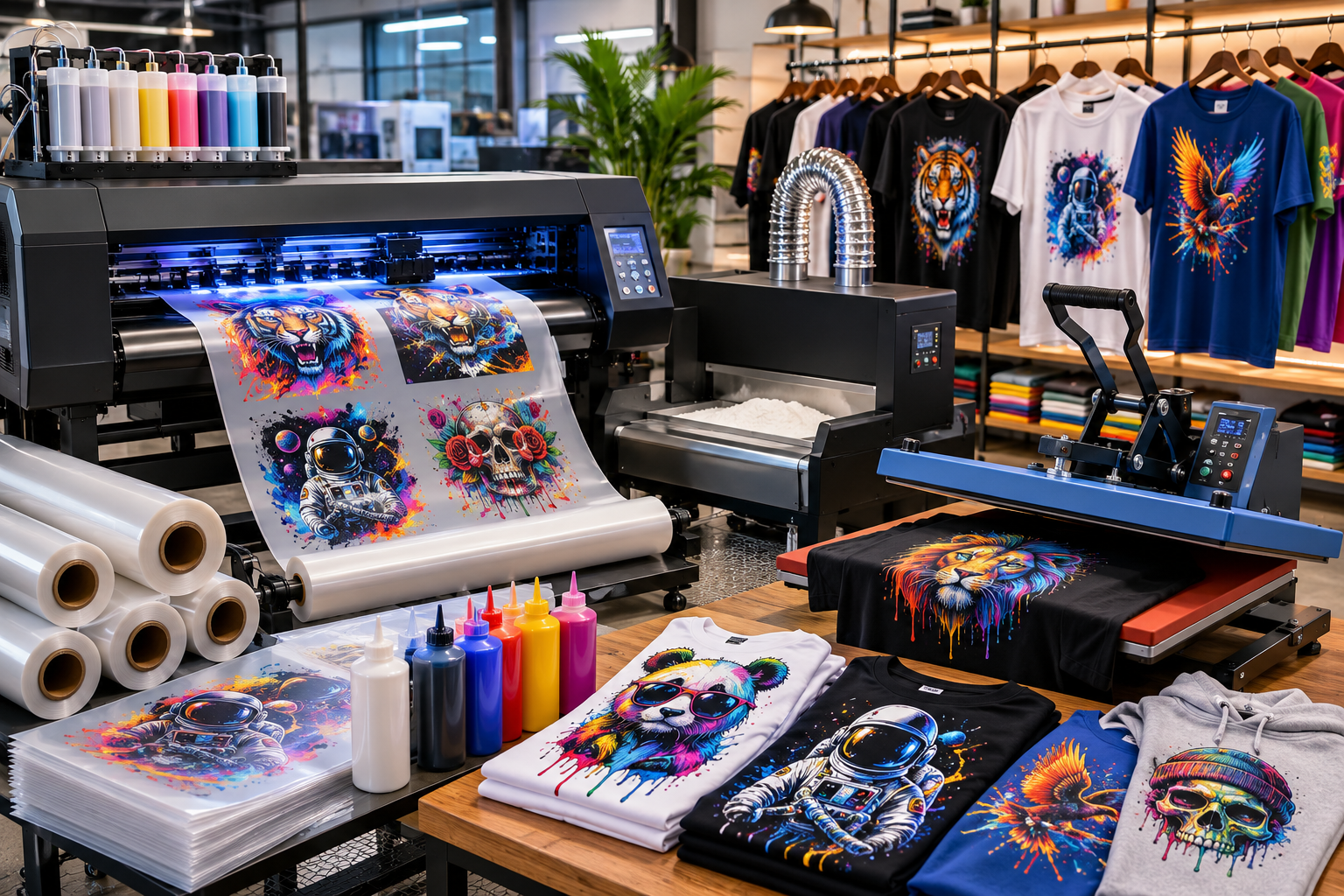
The custom apparel industry has changed significantly with the introduction of digital printing technologies. Businesses no longer need to depend entirely on traditional screen printing methods to produce customized clothing. Today, Direct-to-Garment (DTG) printing offers an effective way to create detailed designs, colorful graphics, and personalized apparel without requiring complicated screen preparation.
Whether someone wants to launch a small clothing brand, expand an existing print shop, or offer customized merchandise, understanding DTG technology can help them make better business decisions. But how does this printing method actually work, and what should businesses know before investing in it?
What Is Direct-to-Garment Printing?
Direct-to-Garment printing is a digital printing method that applies specialized textile ink directly onto fabric. Similar to an office inkjet printer printing an image on paper, DTG technology uses printheads to deposit ink onto garments.
The primary difference is that DTG equipment is specifically designed for textiles and uses specially formulated garment inks.
This technology is particularly useful for producing detailed artwork, photographs, gradients, and multicolored designs. Unlike traditional screen printing, it does not require a separate screen for every color, making it practical for small production runs and personalized orders.
How Does the DTG Printing Process Work?
Understanding the production process helps businesses achieve better results and avoid common printing mistakes. Although individual machines may have different operating procedures, the general workflow involves several important stages.
1. Preparing the Artwork
The process begins with creating or selecting a digital design. Artwork is generally prepared using graphic design software and saved in a compatible file format.
Before printing, operators should check image resolution, dimensions, color settings, and transparency. High-quality artwork helps produce sharper details and more accurate visual results.
2. Preparing the Garment
Garment preparation is essential for successful DTG printing. Depending on the fabric and printing system, pretreatment may be necessary to improve ink adhesion and color performance.
The garment is positioned on a platen and adjusted to ensure the printing surface remains flat. Wrinkles, loose threads, and uneven fabric positioning can negatively affect the final result.
3. Applying Pretreatment
Pretreatment is particularly important when printing white ink or producing vibrant designs on dark garments.
It creates a suitable surface for the ink to bond with the fabric. The application must be consistent, and the garment usually needs to be dried before printing.
4. Printing the Design
Once the garment is prepared, it is loaded into the machine. The RIP software processes the artwork and communicates the required printing information to the equipment.
Specialized printheads then deposit textile ink directly onto the garment. Depending on the design and fabric color, the printer may apply white ink as a base layer before printing the remaining colors.
5. Curing the Printed Garment
After printing, the garment must undergo the appropriate curing process. Heat presses or specialized curing equipment are commonly used, depending on the printer manufacturer's instructions and ink specifications.
Correct curing is essential for achieving suitable wash durability and long-lasting print performance.
What Equipment Is Needed to Start a DTG Printing Business?
Starting an apparel printing operation requires more than purchasing a printing machine. Businesses should consider the complete production workflow before making an investment.
Important equipment and supplies include:
-
DTG printing machine: The primary equipment used to print digital artwork directly onto garments.
-
Pretreatment equipment: Used to apply pretreatment solution when required.
-
Heat press or curing system: Helps cure printed designs according to the ink manufacturer's specifications.
-
RIP software: Processes artwork and manages print settings, color output, and white ink layers.
-
Textile inks: Specialized inks formulated for compatible DTG printing systems.
-
Garment blanks: Cotton and other manufacturer-approved fabrics suitable for the selected printing technology.
-
Maintenance supplies: Cleaning solutions and other approved materials used to maintain equipment performance.
Choosing suitable equipment for starting a T-shirt printing business requires evaluating production capacity, available workspace, operating costs, maintenance requirements, and expected order volumes.
DTG Printing vs. DTF Printing: Understanding the Difference
DTG and Direct-to-Film printing are both popular technologies in the custom apparel industry, but they serve different production requirements.
DTG printing applies ink directly onto the garment, making it particularly suitable for cotton-based apparel and detailed designs.
Direct-to-Film printing follows a different process. Artwork is printed onto a specialized transfer film, adhesive powder is applied, and the prepared design is transferred onto fabric using heat and pressure.
A DTF Printer can provide greater flexibility when businesses want to produce transfers for different fabric types and garment applications.
Modern DTF Printers are also attractive to businesses that want to prepare designs in advance and apply them to garments when orders arrive.
The right technology depends on the intended materials, production volume, available budget, and customer requirements. Some businesses even choose to operate both technologies to serve a wider range of applications.
Key Advantages of DTG Printing
DTG technology offers several benefits for businesses involved in custom apparel production.
Detailed print quality: Digital printing makes it possible to reproduce intricate artwork, photographs, gradients, and multicolored designs.
No traditional screen preparation: Businesses can produce individual designs without creating separate screens for different colors.
Suitable for personalized orders: The technology is practical for customized garments, limited collections, and print-on-demand businesses.
Design flexibility: Operators can change artwork between orders without rebuilding the entire production setup.
Reduced inventory pressure: Businesses can produce garments according to customer demand instead of maintaining large quantities of preprinted stock.
Common DTG Printing Challenges and How to Avoid Them
Despite its advantages, DTG printing requires proper operation and maintenance.
One common challenge is inconsistent print quality. This can result from incorrect pretreatment, unsuitable fabric, poor artwork preparation, or improper printer settings.
Printhead maintenance is another important consideration. Regular cleaning and following the manufacturer's maintenance schedule help maintain reliable operation.
Businesses should also pay attention to ink storage, humidity, garment positioning, and curing temperatures. Following equipment-specific instructions can prevent avoidable production problems.
Before accepting large orders, conducting test prints is a practical way to check color accuracy, fabric compatibility, and overall print performance.
How to Choose the Right Printing Equipment
Selecting printing equipment should begin with a clear understanding of business requirements.
New entrepreneurs may prioritize affordable startup costs, simple operation, and training support. Established print shops may focus more on production capacity, print speed, automation, and long-term maintenance expenses.
It is also important to consider software compatibility, availability of consumables, technical support, warranty coverage, and the cost of replacement components.
Comparing complete production packages rather than looking only at the printer's purchase price can help businesses make more informed decisions.
Conclusion
DTG printing has created new opportunities for apparel businesses by making customized garment production more flexible and accessible. From preparing artwork and treating garments to printing and curing, every production stage contributes to the final result. Understanding these steps helps business owners choose suitable equipment, manage operating costs, and maintain consistent print quality.

 English
 Arabic
 French
 Spanish
 Portuguese
 Deutsch
 Turkish
 Dutch
 Italiano
 Romaian
 Portuguese (Brazil)
 Greek