
GPT-INDIA Bag Filter: Improving Filtration Stability in Demanding Industrial Processes
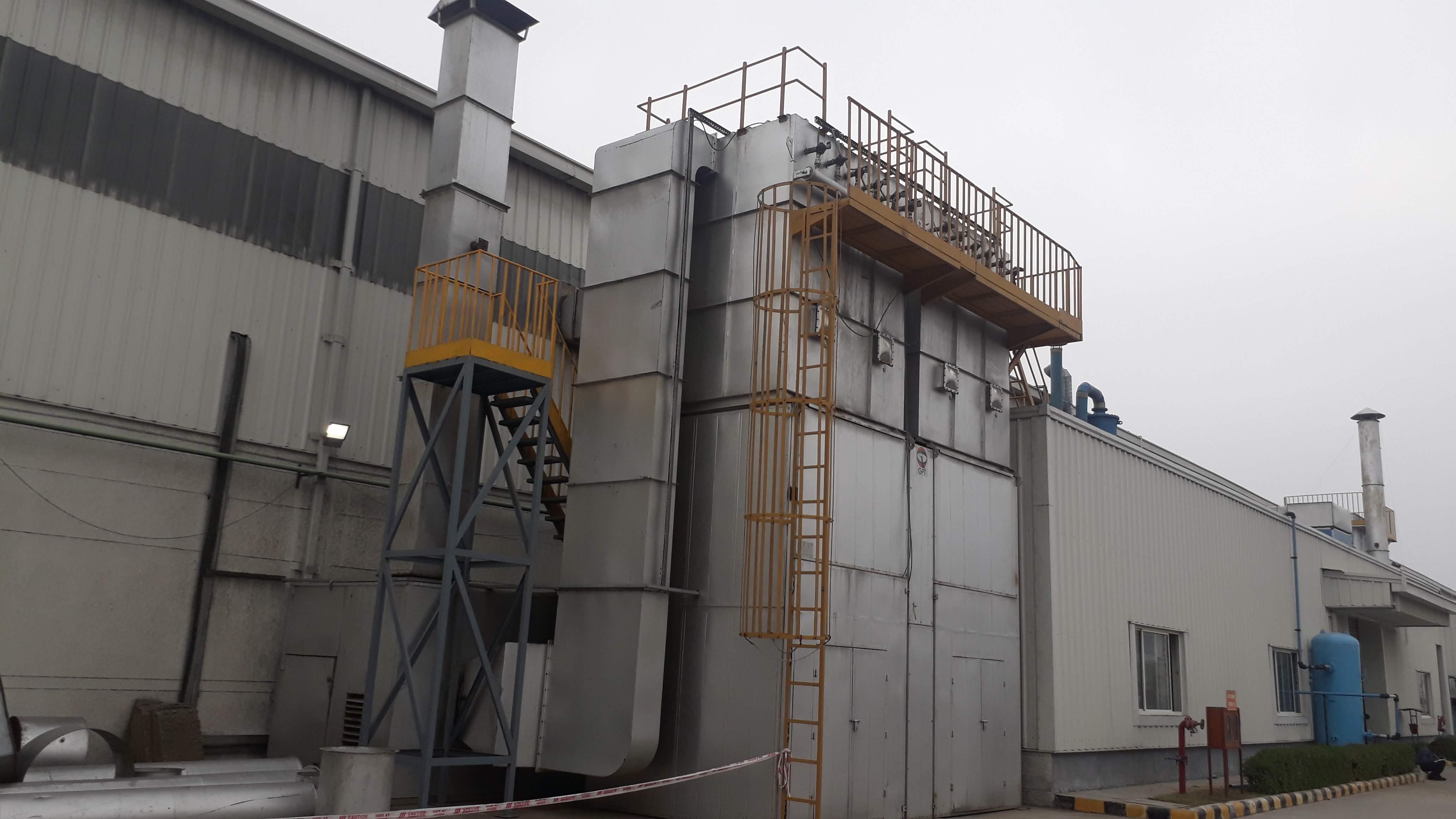
Industrial dust filtration rarely fails because the basic principle of filtration is wrong. More often, problems develop gradually: pressure drop starts increasing, filter bags require frequent replacement, airflow becomes inconsistent, dust escapes from the system, or the cleaning cycle no longer keeps pace with the process.
A Bag Filter has to work continuously under changing operating conditions. Dust concentration can vary from one production batch to another, temperatures can fluctuate, and moisture or sticky particles can change the behaviour of the collected material. Even the way dust enters the filter housing can influence how evenly the filtration media is loaded.
For this reason, reliable dust collection is less about installing a filter and more about maintaining a stable relationship between airflow, filtration area, filter media, cleaning, and dust discharge.
Understanding What Makes a Bag Filter Perform Consistently
A fabric filtration system works by passing dust-laden air through filter media while particulate matter is retained on the surface of the bags. Over time, the accumulated dust forms a dust cake that becomes part of the filtration process.
The challenge is maintaining the right balance.
Too much dust accumulation increases resistance to airflow. Excessive cleaning can disturb the dust cake and place unnecessary mechanical stress on the bags. Poor cleaning can cause pressure drop to rise. Uneven airflow can overload particular areas of the filter while leaving other areas underutilized.
A well-designed Bag Filter therefore aims for controlled filtration rather than simply maximum airflow.
This becomes especially important in continuously operating plants where even a small deterioration in extraction performance can affect production conditions over an extended period.
Why Airflow Distribution Matters Inside the Filter
The air entering a filtration chamber should not simply be allowed to strike the filter bags at high velocity.
Inlet design plays an important role in distributing the incoming dust-laden air. If heavier particles enter the bag section at excessive velocity, they may cause abrasion or create uneven loading.
Good internal flow distribution can reduce the burden on individual filter bags and help the filtration area work more uniformly.
The same principle applies to the relationship between the extraction fan and the filter. If the fan is selected without considering the complete system resistance, the collector may not achieve the required airflow under actual operating conditions.
This is why fan capacity, duct resistance, filter pressure drop, dampers, and process requirements need to be considered together.
Filter Bags Are More Than Replacement Components
Filter bags are often treated as consumable items that can simply be replaced whenever performance decreases. In reality, their selection has a direct influence on filtration efficiency, pressure drop, service life, and maintenance cost.
The correct filter media depends on the characteristics of the dust and the operating environment.
Particle size, temperature, moisture, chemical exposure, dust loading, filtration velocity, and cleaning method can all influence media selection.
For example, a bag material suitable for a dry, relatively cool dust application may not be appropriate for a process involving elevated temperatures or chemically aggressive particles.
The dimensions of the bags, construction quality, stitching, mounting arrangement, and compatibility with the cleaning system also matter.
Choosing filter bags based only on purchase price can therefore create higher costs later through premature replacement or unstable filtration.
How a Pulse Jet Bag Filter Maintains Airflow
A Pulse jet Bag filter uses short bursts of compressed air to clean accumulated dust from the filter bags.
During operation, dust builds up on the outside of the filtration media. When the cleaning sequence is activated, a controlled pulse of compressed air creates a pressure wave that causes the bags to flex and release accumulated dust.
The dislodged material falls toward the hopper or dust-discharge section.
The cleaning sequence needs to be properly controlled. If the bags are cleaned too aggressively or too frequently, unnecessary wear can occur. If cleaning is inadequate, pressure drop may continue to increase.
Modern systems can use sequence controllers and solenoid-operated pulse valves to manage the cleaning cycle across different bag rows.
The objective is straightforward: maintain acceptable pressure drop while extending filter-bag service life and avoiding unnecessary compressed-air consumption.
Pressure Drop Is a Useful Performance Indicator
Pressure drop across the filter section can tell operators a great deal about the condition of the system.
A gradual increase may indicate dust loading, ineffective cleaning, unsuitable filtration velocity, or changes in process conditions. A sudden change may indicate a more immediate problem such as damaged bags, abnormal airflow, leakage, or a malfunction in the cleaning system.
Pressure drop should therefore be monitored as part of routine operation rather than considered only when the collector begins to show visible problems.
For plants operating continuously, establishing normal pressure-drop ranges can make it easier to identify changes before they become major maintenance issues.
Moisture Can Change the Entire Filtration Behaviour
One of the most underestimated issues in fabric filtration is moisture.
When moisture combines with certain types of dust, the particles can become sticky. Instead of separating and discharging cleanly, material may adhere to the filter surface or accumulate in the hopper.
This can increase pressure drop and make cleaning more difficult.
Condensation inside a collector can create similar problems. Temperature differences between process air and surrounding conditions can lead to moisture formation if the system is not properly considered for the operating environment.
For this reason, the temperature and moisture profile of the process should be understood before selecting filter media and designing the collector.
Dust Discharge Must Keep Up With Filtration
A filter can collect dust successfully and still experience operational problems if the collected material cannot be removed efficiently.
The hopper should be designed according to the properties and quantity of the dust. The discharge system must also be compatible with the material.
Depending on the process, a rotary air lock or another suitable discharge mechanism may be integrated with the hopper.
If dust accumulates inside the collector for too long, it can reduce usable hopper capacity, interfere with operation, and potentially affect the filtration section.
The dust-handling arrangement should therefore be treated as an integral part of the filtration system.
Temperature Selection Should Be Based on Real Conditions
Operating temperature is another important factor in Bag Filter design.
The actual process temperature may fluctuate rather than remain at a single value. Short-duration temperature peaks can also occur during startup, shutdown, cleaning, or changes in production conditions.
Filter media, housing components, seals, and other parts should therefore be selected according to realistic operating conditions.
Where elevated temperatures are involved, the system may also require appropriate cooling or temperature-control measures before the air reaches the filtration media.
A design based only on average temperature can create problems if the actual process regularly experiences higher peaks.
When Filter Bags Wear Earlier Than Expected
Premature bag failure does not always mean that the filter bags were defective.
Several operating conditions can contribute to shortened service life. Excessive filtration velocity, abrasive dust, poor inlet distribution, incorrect cleaning pressure, misaligned cages, high temperature, moisture, chemical exposure, or damaged sealing arrangements can all contribute.
The appearance of the failed bag can sometimes provide useful clues.
Abrasion, pinholes, cracking, deformation, dust penetration, or unusual wear patterns can indicate different underlying problems. Replacing the bags without addressing the cause may simply lead to another premature failure.
This is why troubleshooting should look beyond the filter media itself.
The Importance of Choosing Experienced Bag Filter Suppliers
When evaluating Bag filter suppliers, it is useful to consider their ability to understand the complete application.
A supplier should be able to discuss the required airflow, dust loading, operating temperature, filtration media, cleaning arrangement, pressure drop, hopper configuration, and dust-discharge method.
Technical documentation is also important. Drawings, filter specifications, operating information, maintenance requirements, and replacement details can make the equipment easier to manage throughout its service life.
For a new plant, early involvement can also help coordinate the collector with ductwork and process equipment. For an existing plant, the supplier may need to work around current space, airflow, and production constraints.
What to Look for in Bag Filter Manufacturers
The role of Bag filter manufacturers extends beyond fabricating the filter housing.
The overall engineering should consider how the collector interacts with the fan, ductwork, extraction points, cleaning system, and dust-discharge arrangement.
Manufacturing quality is equally important. Filter housings, access doors, flanges, cages, supports, pulse components, and sealing surfaces all need to work together properly.
For demanding applications, customization can also become important. Different industries may require different configurations because dust behaviour, temperature, airflow, available space, and operating schedules are not identical.
An experienced manufacturer should therefore evaluate the process before finalizing the equipment configuration.
Working With Reliable Filter Bags Suppliers
The replacement stage deserves the same attention as the original installation.
Filter bags suppliers should be able to identify the correct media and dimensions rather than supplying a generic replacement based only on size.
The replacement bags need to match the filtration system, cage arrangement, mounting method, cleaning conditions, and operating environment.
Maintaining proper records of bag specifications and replacement history can also help plants identify recurring problems. If a particular set of bags repeatedly fails earlier than expected, the issue may be related to the process or operating conditions rather than normal wear.
Why Filter Bags Manufacturers Matter for Long-Term Performance
The quality of filter bags influences more than initial filtration performance.
Construction details such as stitching, material consistency, dimensional accuracy, finishing, and mounting compatibility can affect how the bags behave during repeated cleaning cycles.
Filter bags manufacturers with an understanding of industrial applications can also help identify the appropriate media for different dust and temperature conditions.
The right bag should be viewed as part of the collector's engineering rather than as an interchangeable commodity.
GPT-INDIA and Practical Industrial Filtration
Green Planet Technologies, popularly known as GPT-INDIA, works in industrial air pollution control, dust extraction, ventilation, and filtration applications.
Its approach to fabric filtration considers the relationship between process conditions, airflow, filter media, cleaning requirements, dust discharge, and maintenance. Depending on the application, Pulse jet Bag filter systems can be configured for different industrial dust-control requirements.
The company's filtration experience is relevant for industries where consistent extraction, controlled pressure drop, and manageable maintenance are important parts of daily operation.
GPT-INDIA NAP Details
Business Name: Green Planet Technologies popularly known as GPT-INDIA
Address: 59/2/1, Site 4, Industrial Area, Sahibabad, Distt. Ghaziabad–201010, Uttar Pradesh, India
Phone: +91-9773500660
Email: [email protected]
Website: gptindia.in
Frequently Asked Questions
What is the main purpose of a Bag Filter?
A Bag Filter separates particulate matter from dust-laden process air using fabric filter media. The collected dust is removed from the filtration surface and discharged through the system's dust-handling arrangement.
What is a Pulse jet Bag filter?
A Pulse jet Bag filter uses controlled bursts of compressed air to clean accumulated dust from filter bags. The cleaning cycle helps maintain airflow and manage pressure drop during continuous operation.
How can filter-bag life be improved?
Appropriate media selection, correct filtration velocity, proper airflow distribution, controlled pulse cleaning, suitable operating temperature, moisture control, and regular inspection can all contribute to longer bag service life.
Why does pressure drop increase in a bag filtration system?
Pressure drop can increase because of dust accumulation, inadequate cleaning, unsuitable filtration conditions, moisture, changes in process loading, or problems elsewhere in the air-handling system.
Should replacement bags always be purchased from the original manufacturer?
Not necessarily, but replacement bags must match the collector's dimensions, media requirements, mounting arrangement, cleaning conditions, and process environment. Compatibility is more important than simply matching the physical size.
What information should be shared with Bag filter suppliers?
Important information includes required airflow, dust type, particle characteristics, dust concentration, temperature, moisture conditions, operating hours, extraction points, and existing system details.
How do I select suitable Filter bags manufacturers?
Consider their understanding of filtration media, manufacturing consistency, dimensional accuracy, application experience, technical support, and ability to supply bags compatible with the existing collector.
Conclusion
Reliable fabric filtration is the result of many small engineering decisions working together. Filter media, airflow, pressure drop, inlet distribution, pulse cleaning, dust discharge, temperature, and maintenance all influence how consistently a Bag Filter performs.
For industries planning new dust-control equipment or dealing with recurring filter-bag problems, looking at the complete operating system can reveal opportunities that simply replacing bags may not address.
GPT-INDIA approaches industrial filtration with this broader perspective, helping process owners consider the relationship between equipment design, filtration conditions, and long-term operation when developing dust-control solutions.

 English
 French
 Spanish
 Portuguese
 Deutsch
 Turkish
 Dutch
Dutch
 Italiano
 Russian
 Romaian
 Portuguese (Brazil)
 Greek
Greek