
What Are Electronic Shelf Labels and How Do They Work?
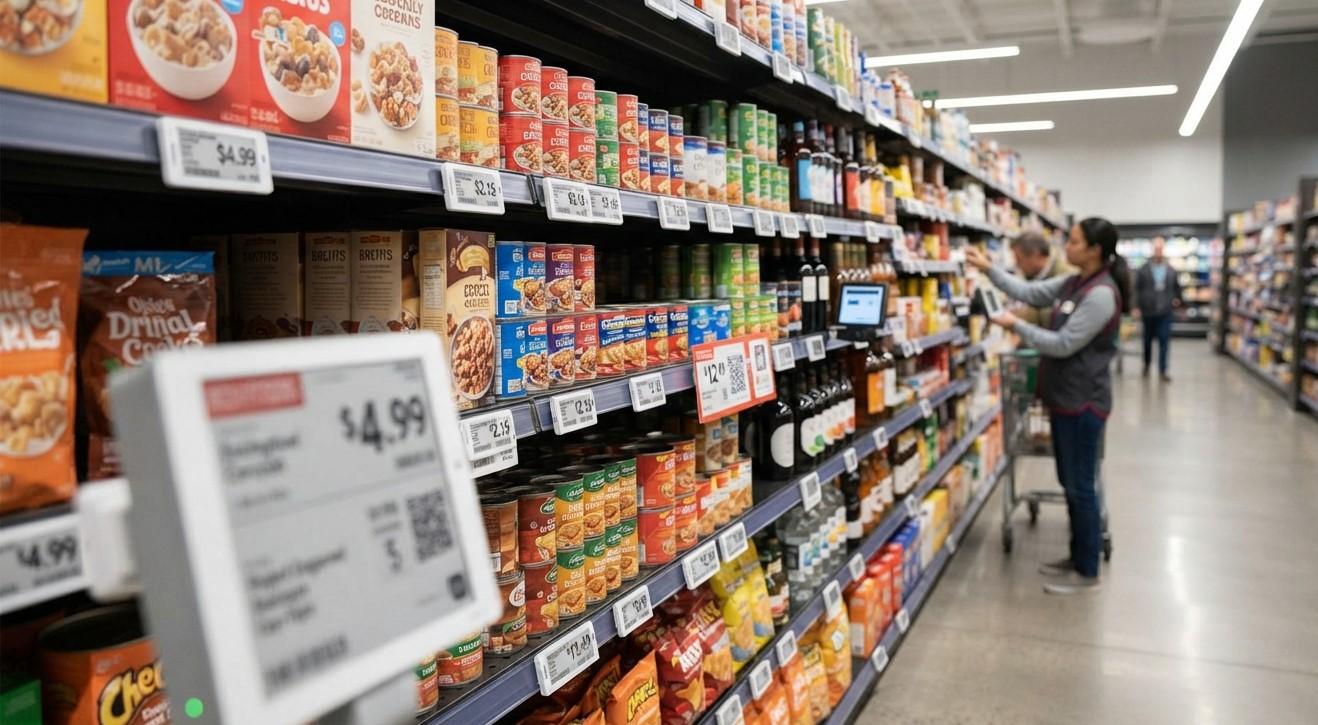
Retail businesses manage thousands of products, prices, promotions, and stock-related details every day. Keeping shelf information accurate and up to date can become challenging when employees have to manually replace paper price tags whenever a product price or promotion changes. Electronic Shelf Labels (ESLs) provide a digital alternative that allows retailers to update information displayed on shelves through a connected system.
Pointus Solutions provides technology solutions that can help businesses adopt modern retail and identification technologies. Alongside digital retail solutions, businesses can explore Shop Barcode options and Printing Products for product identification, labeling, and other retail requirements.
But what exactly are Electronic Shelf Labels, and how do they work? In this guide, we explain what ESLs are, how they communicate with a central system, what information they can display, their benefits and limitations, and where retailers can use them.
Table of Contents
- What Are Electronic Shelf Labels?
- How Do Electronic Shelf Labels Work?
- Main Components of an ESL System
- What Information Can Electronic Shelf Labels Display?
- How Are ESLs Updated?
- Benefits of Electronic Shelf Labels
- Where Are Electronic Shelf Labels Used?
- Electronic Shelf Labels vs. Traditional Paper Labels
- What Should Businesses Consider Before Installing ESLs?
- Frequently Asked Questions
- Conclusion and CTA
What Are Electronic Shelf Labels?
Electronic Shelf Labels, commonly called ESLs, are small digital displays attached to retail shelves to show information such as product names, prices, promotional messages, product codes, or other details.
Unlike traditional paper labels, ESLs use electronic displays that can be updated digitally. A connected retail or management system can send new information to the shelf label, reducing the need for employees to physically replace paper price tags every time information changes.
ESLs are particularly useful in retail environments where prices or product information may change frequently. Depending on the system, electronic shelf labels can be connected to store software so that changes can be distributed to many labels.
The technology is therefore more than simply a digital replacement for paper. It can become part of a connected retail infrastructure.
How Do Electronic Shelf Labels Work?
An ESL system generally consists of electronic labels, communication infrastructure, software, and a central management system.
The process can be understood in several steps.
1. Product Information Is Stored in a Business System
Product information such as the item name, price, product code, and promotional details is maintained in a retail management system, POS system, ERP, or another connected application.
2. A Price or Product Detail Changes
When a retailer changes a price or another piece of information, the updated data is recorded in the connected system.
For example, a retailer may change the price of a product for a promotional campaign.
3. The ESL System Receives the Update
The ESL management platform communicates the updated information to the appropriate electronic shelf label.
Depending on the system, communication may use wireless technologies designed specifically for low-power retail applications.
4. The Label Updates Its Display
The electronic shelf label receives the new information and updates its screen.
Employees therefore do not necessarily need to walk through the store and manually replace individual paper labels.
5. The New Information Appears on the Shelf
Customers can then see the updated information directly beside the relevant product.
The exact communication architecture differs between ESL manufacturers and systems, but the general concept is to connect digital shelf displays with centralized product information.
Main Components of an ESL System
An electronic shelf-label solution usually includes several components.
Electronic Shelf Labels
These are the digital displays physically attached to shelves.
ESLs are available in different sizes and display configurations depending on the retailer's requirements.
Communication Infrastructure
A communication network allows the central system to send information to individual shelf labels.
The technology used can vary depending on the ESL platform and deployment.
ESL Management Software
The software manages the labels and allows authorized users or connected business systems to send information updates.
Business System Integration
An ESL system may connect with systems such as:
- Point-of-sale software
- ERP platforms
- Retail management systems
- Inventory systems
- Product information systems
- Pricing platforms
Integration allows retailers to synchronize shelf information with the data used elsewhere in the business.
Power Source
Electronic shelf labels are designed to operate with low power consumption. Many systems use batteries designed to support extended operation before replacement is required.
The actual battery life depends on the label, display technology, update frequency, communication method, and operating conditions.
What Information Can Electronic Shelf Labels Display?
ESLs are not limited to displaying prices.
Depending on the capabilities of the system, they can display information such as:
- Product names
- Prices
- Product codes
- Promotions
- Discounts
- Unit prices
- Special offers
- Stock-related information
- QR codes
- Barcodes
- Product descriptions
- Customer-facing messages
More advanced systems may also support different layouts, symbols, or display formats.
For example, a retailer could display a promotional message alongside the regular product price or use a QR code to direct customers to additional digital information.
How Are ESLs Updated?
One of the main advantages of an electronic shelf-label system is centralized updating.
Imagine a supermarket with thousands of products. With traditional paper labels, employees may need to print and replace individual labels when prices change.
With ESLs, the process can be more centralized.
A typical workflow could look like this:
Pricing System → ESL Management Platform → Wireless Communication → Electronic Shelf Label
When a price changes in the connected system, the relevant ESL can receive the new information and update its display.
This can help reduce repetitive manual work and improve synchronization between digital pricing information and what customers see on the shelf.
Benefits of Electronic Shelf Labels
ESLs can provide several potential benefits for retailers.
1. Faster Price Updates
Retailers can update prices electronically rather than manually replacing paper labels.
This can be particularly useful when stores run frequent promotions or price changes.
2. Reduced Manual Label Replacement
Employees may spend less time printing, sorting, transporting, and replacing paper price tags.
The time saved can potentially be redirected toward customer service, merchandising, stock-related activities, or other store tasks.
3. Improved Price Accuracy
Because shelf information can be connected with centralized pricing systems, ESLs can help reduce discrepancies caused by outdated paper labels.
The actual level of accuracy depends on the quality of system integration and operational processes.
4. Better Promotion Management
Retailers can update promotional information electronically and coordinate changes across multiple products or locations.
5. Consistent Product Information
A centralized system can help maintain consistent information across participating shelf labels.
6. Digital Customer Engagement
Some ESLs can display QR codes or other information that allows customers to access additional product details using a smartphone.
7. Reduced Paper Usage
Replacing paper labels with electronic displays can reduce the need to continuously print and dispose of paper price tags, although the environmental impact of the complete ESL system also depends on hardware production, batteries, electricity, and end-of-life management.
Where Are Electronic Shelf Labels Used?
ESLs are most commonly associated with retail environments, but their potential applications can extend beyond conventional supermarkets.
Supermarkets
Grocery stores can use ESLs for food, household products, beverages, and other merchandise.
Frequent price changes and promotions make centralized digital shelf information particularly relevant in these environments.
Hypermarkets
Large-format stores with thousands of products can use ESL systems to manage shelf pricing and product information across large areas.
Electronics Stores
Electronics retailers frequently manage changing prices, promotions, specifications, and product information. ESLs can provide a flexible way to update shelf displays.
Pharmacies
Pharmacies and health-related retail environments can use digital shelf labels for product pricing and information, subject to applicable regulatory and operational requirements.
Specialty Retail
Clothing, home goods, hardware, and other specialty retailers may also use digital shelf displays where centralized updates provide operational value.
Electronic Shelf Labels vs. Traditional Paper Labels
Both approaches can display product information, but their operating methods are different.
| Feature | Electronic Shelf Labels | Traditional Paper Labels |
|---|---|---|
| Updating | Digital | Manual replacement |
| Price changes | Can be centrally managed | Requires new printed labels |
| Physical replacement | Usually not required for each update | Required |
| Communication | Wireless/digital system | No electronic communication |
| Display | Electronic | Printed |
| Initial investment | Higher | Lower |
| Ongoing printing | Reduced | Required |
| Integration | Can connect with business systems | Usually independent |
| Promotions | Can be updated digitally | Requires new labels |
The appropriate option depends on the retailer's size, price-change frequency, operating model, budget, and technology strategy.
What Should Businesses Consider Before Installing ESLs?
An ESL project should be evaluated as a complete technology deployment rather than simply a purchase of digital displays.
Store Size
A small store may have very different requirements from a large retail chain with multiple locations.
Number of Products
The number of shelves and products determines how many electronic labels are required.
Price-Change Frequency
Retailers that frequently change prices or promotions may have a stronger operational reason to consider ESL technology.
Software Integration
Businesses should determine whether the ESL system can integrate with their existing POS, ERP, retail management, pricing, or product information systems.
Communication Coverage
The store needs appropriate wireless communication coverage so that labels can receive updates reliably.
Battery Management
Businesses should understand expected battery life, replacement requirements, and maintenance procedures.
Employee Training
Staff should understand how to manage the ESL system, troubleshoot basic issues, and handle physical label replacement when required.
Return on Investment
The business should compare the initial investment and ongoing maintenance costs with potential savings in labor, printing, price-update processes, and operational efficiency.
Frequently Asked Questions
What does ESL stand for?
ESL stands for Electronic Shelf Label. It is a digital display used primarily in retail environments to show product information such as prices, product names, promotions, and other details.
How do electronic shelf labels receive price updates?
ESLs typically receive updates through a wireless communication system connected to an ESL management platform. The platform can receive information from retail, pricing, POS, ERP, or other business systems.
Do electronic shelf labels need batteries?
Many electronic shelf labels use batteries designed for extended operation. Battery life depends on the specific ESL technology, update frequency, communication method, and operating conditions.
Can ESLs display barcodes or QR codes?
Some electronic shelf labels can display barcodes, QR codes, and other graphical information depending on the display and software capabilities.
Can electronic shelf labels connect to POS systems?
Yes. ESL systems can be integrated with POS and other retail systems, although the exact integration method depends on the ESL platform and the retailer's existing technology environment.
Are electronic shelf labels only useful for supermarkets?
No. ESLs can be used in supermarkets, hypermarkets, electronics stores, pharmacies, specialty retail stores, and other environments where digital shelf information can provide operational benefits.
Do electronic shelf labels eliminate paper completely?
Not necessarily. ESLs can reduce the need for printed shelf price labels, but retailers may still use paper for other signage, documents, labels, packaging, and operational requirements.
Are electronic shelf labels expensive?
The cost depends on the number and type of labels, communication infrastructure, software, installation, integration, and maintenance. Businesses should evaluate the complete deployment cost rather than looking only at the price of individual labels.
Conclusion
Electronic Shelf Labels provide retailers with a digital way to display and manage product information directly on store shelves. Instead of manually printing and replacing paper price tags whenever information changes, retailers can connect electronic displays to centralized systems and update information digitally.
ESLs can support faster price changes, reduced manual work, improved information consistency, promotional management, and digital customer interactions. However, businesses should evaluate factors such as store size, product volume, software integration, communication infrastructure, battery management, and overall return on investment before implementing the technology.
For businesses looking to modernize their retail operations, Pointus Solutions can help explore technology solutions for digital retail, identification, printing, and data management requirements. Businesses can also explore Shop Barcode solutions and Printing Products for barcode, labeling, and related retail needs.
Ready to Modernize Your Retail Operations?
Looking to improve how your business manages shelf pricing, product information, and retail technology?
Connect with Pointus Solutions to explore Electronic Shelf Labels and other modern business technology solutions designed around your operational requirements.

 English
 Arabic
 French
 Spanish
 Deutsch
 Turkish
 Dutch
Dutch
 Italiano
 Russian
 Romaian
 Portuguese (Brazil)
 Greek
Greek