
AI Powered IT Solutions: How Businesses Can Improve Efficiency, Security, and Scalability
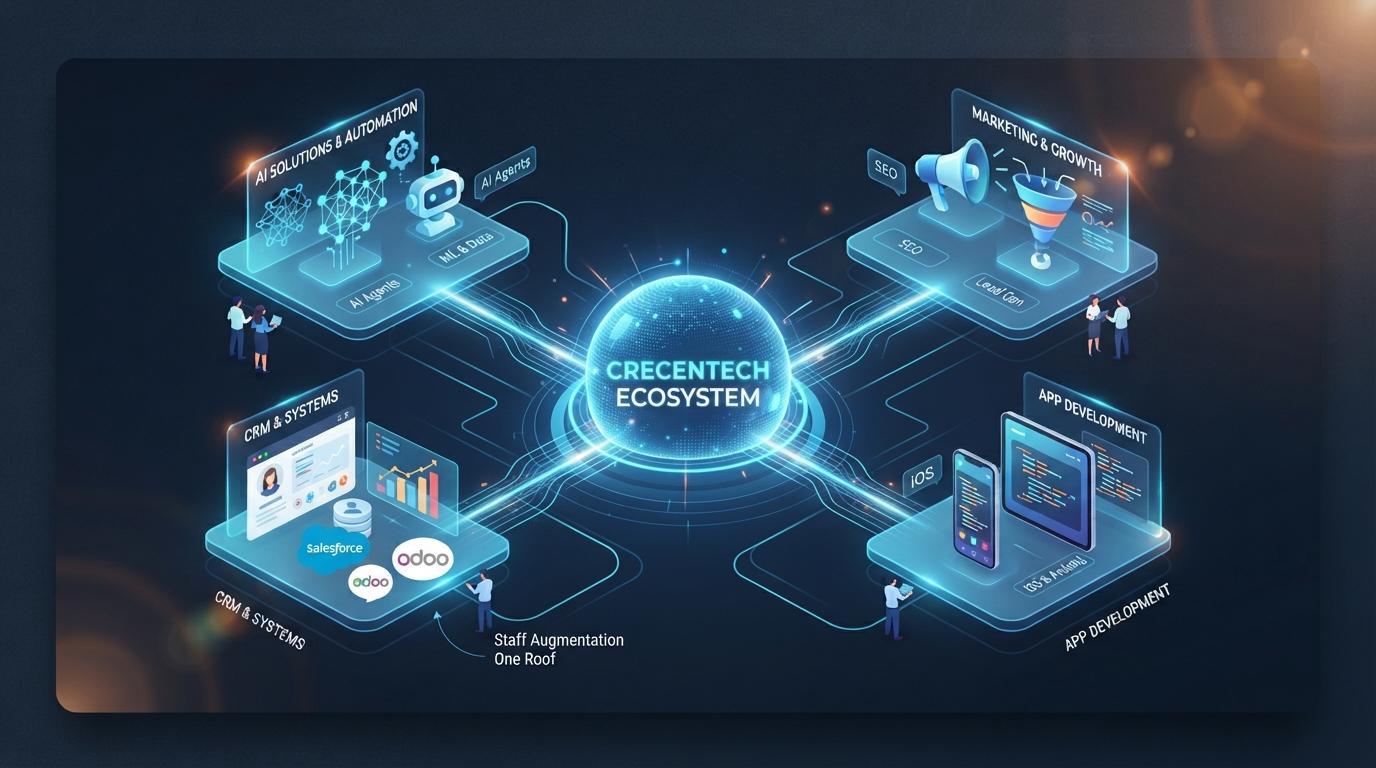
Technology is no longer simply a support function for modern businesses. It plays a central role in how companies communicate with customers, manage information, protect systems, and deliver services. As organizations handle larger volumes of data and increasingly complex digital processes, traditional IT management can become difficult to maintain efficiently.
AI powered IT solutions are changing how businesses approach these challenges. By combining artificial intelligence with IT infrastructure, automation, analytics, and security tools, organizations can identify problems faster, automate repetitive processes, and make more informed operational decisions. The goal is not to replace every existing system, but to use intelligent technology where it can create measurable improvements.
What Are AI Powered IT Solutions?
AI powered IT solutions use artificial intelligence technologies to improve the way technology systems are monitored, managed, secured, and optimized. These solutions can include machine learning, predictive analytics, intelligent automation, natural language processing, and AI driven monitoring.
For example, an organization may use an AI based monitoring system to analyze network activity and identify unusual patterns. Instead of waiting for an employee to notice a problem, the system can flag potential issues for investigation.
Similarly, an automated support platform can classify common IT requests, provide answers to routine questions, and route more complicated issues to the appropriate team.
The specific technology depends on the business, its infrastructure, and the problems it wants to solve.
Where AI Can Improve Business IT Operations
Automating Repetitive IT Tasks
Many IT teams spend considerable time handling routine processes such as ticket classification, system monitoring, data organization, and user support. Automating appropriate tasks can give employees more time to focus on complex technical and strategic work.
For example, an AI system can categorize incoming support requests based on their content and urgency. A routine password related request can follow an established workflow, while a potential security incident can be escalated to a specialist.
This type of intelligent automation can reduce manual workload without requiring businesses to redesign every part of their IT environment.
Improving Security and Threat Detection
Cybersecurity is another area where artificial intelligence can support IT teams. AI systems can process large amounts of activity data and identify patterns that may deserve further investigation.
An unusual login location, unexpected access behavior, or sudden increase in network activity may not always indicate an attack, but automated analysis can help security teams identify anomalies more quickly.
AI does not eliminate cybersecurity risks. Human oversight, security policies, access controls, software updates, and employee awareness remain important components of a comprehensive security strategy.
Using AI for Better Business Decisions
Turning Data Into Useful Insights
Businesses generate information through websites, applications, CRM platforms, financial systems, customer interactions, and internal operations. The challenge is often not collecting data but understanding it.
AI analytics can help identify trends and relationships within large datasets. For instance, a company could analyze support requests to identify recurring technical problems or examine customer behavior to understand where users are experiencing difficulties.
These insights can help management make decisions based on broader evidence rather than relying solely on manual reports.
Predicting IT Problems Before They Escalate
Traditional IT support often responds after something stops working. Predictive approaches can help teams identify potential problems earlier.
For example, monitoring systems can analyze server performance, storage utilization, or application behavior and highlight unusual changes. An IT team can then investigate the situation before it develops into a larger disruption.
This proactive approach can be particularly useful for organizations where system downtime affects customers, employees, or revenue.
How AI Solutions Support Business Scalability
Growing companies often add employees, customers, applications, data, and locations. Technology systems that work effectively for a small organization may become difficult to manage at a larger scale.
AI solutions for businesses can support scalability by automating processes that would otherwise require additional manual effort. Intelligent workflows can help manage growing volumes of support requests, data analysis, system monitoring, and operational tasks.
Consider a company expanding from 50 employees to 300. An IT department may not be able to increase its workforce at the same rate as the organization. Automation can help handle predictable tasks while IT professionals concentrate on infrastructure planning, security, and more complex issues.
Implementing AI Without Creating Unnecessary Complexity
Adopting artificial intelligence does not mean introducing multiple AI tools at once. A more practical approach is to identify a specific business problem and determine whether AI can address it effectively.
Start by examining repetitive processes, frequent IT problems, security monitoring requirements, and areas where employees spend substantial time on manual work. Measure the current process before introducing automation so that improvements can be evaluated afterward.
Data quality should also be considered. AI systems depend on reliable information, and poor or inconsistent data can reduce the usefulness of automated analysis.
Businesses should also establish appropriate access controls and human review processes. Not every automated decision should be allowed to operate without oversight, particularly when it affects security, finances, customers, or sensitive information.
Choosing the Right AI Technology Partner
The right implementation approach depends on the organization's existing technology environment and business objectives. A useful technology partner should understand both the technical requirements and the operational problem the company is trying to solve.
The objective should be to build a technology environment that is practical, secure, maintainable, and capable of adapting as the business grows.
Conclusion
Artificial intelligence is becoming increasingly relevant to the way businesses manage technology. From automating repetitive IT processes and identifying unusual activity to analyzing data and supporting proactive system management, AI can help organizations improve how their technology operates.
AI powered IT solutions are most valuable when they address clearly defined business needs rather than being adopted simply because the technology is new. Businesses should evaluate their existing infrastructure, identify opportunities for automation, protect sensitive data, and introduce AI in a measured way.
Organizations exploring artificial intelligence IT solutions can begin by identifying one process where intelligent automation could deliver a measurable improvement. With the right strategy and implementation approach, AI can become a practical part of a scalable and efficient IT environment.
FAQs
What are AI powered IT solutions?
AI powered IT solutions use artificial intelligence technologies such as machine learning, predictive analytics, and intelligent automation to improve IT management, security, monitoring, and business operations.
How can AI powered IT solutions improve business efficiency?
They can automate repetitive tasks, analyze information quickly, identify potential problems, and help employees spend more time on complex work that requires human judgment.
Are AI IT solutions useful for small businesses?
Yes. Small businesses can use AI for areas such as customer support, workflow automation, data analysis, cybersecurity monitoring, and routine IT management, depending on their needs and resources.
How can AI solutions for businesses improve cybersecurity?
AI can analyze large volumes of system activity and identify unusual patterns that may require investigation. It works alongside established security controls rather than replacing them.
Can AI predict IT problems before they happen?
AI based monitoring can identify patterns that may indicate an emerging problem, such as unusual resource usage or changes in system behavior. This can give IT teams an opportunity to investigate before an issue becomes more serious.
How should a business start implementing AI in IT?
A business should begin by identifying a specific operational problem, evaluating the available data, defining measurable objectives, and selecting technology that addresses that particular need.
Do AI powered IT solutions replace IT professionals?
Not necessarily. AI can automate predictable tasks and assist with analysis, while IT professionals continue to handle complex decisions, system architecture, security strategy, troubleshooting, and oversight.
How do businesses choose the right AI IT solution?
Businesses should consider their objectives, existing infrastructure, data requirements, security needs, integration capabilities, scalability, implementation costs, and the level of human oversight required.

 Arabic
 French
 Spanish
 Portuguese
 Deutsch
 Turkish
 Dutch
Dutch
 Italiano
 Russian
 Romaian
 Portuguese (Brazil)
 Greek
Greek