
What Makes a High-Quality Logo Digitizing Service Reliable?
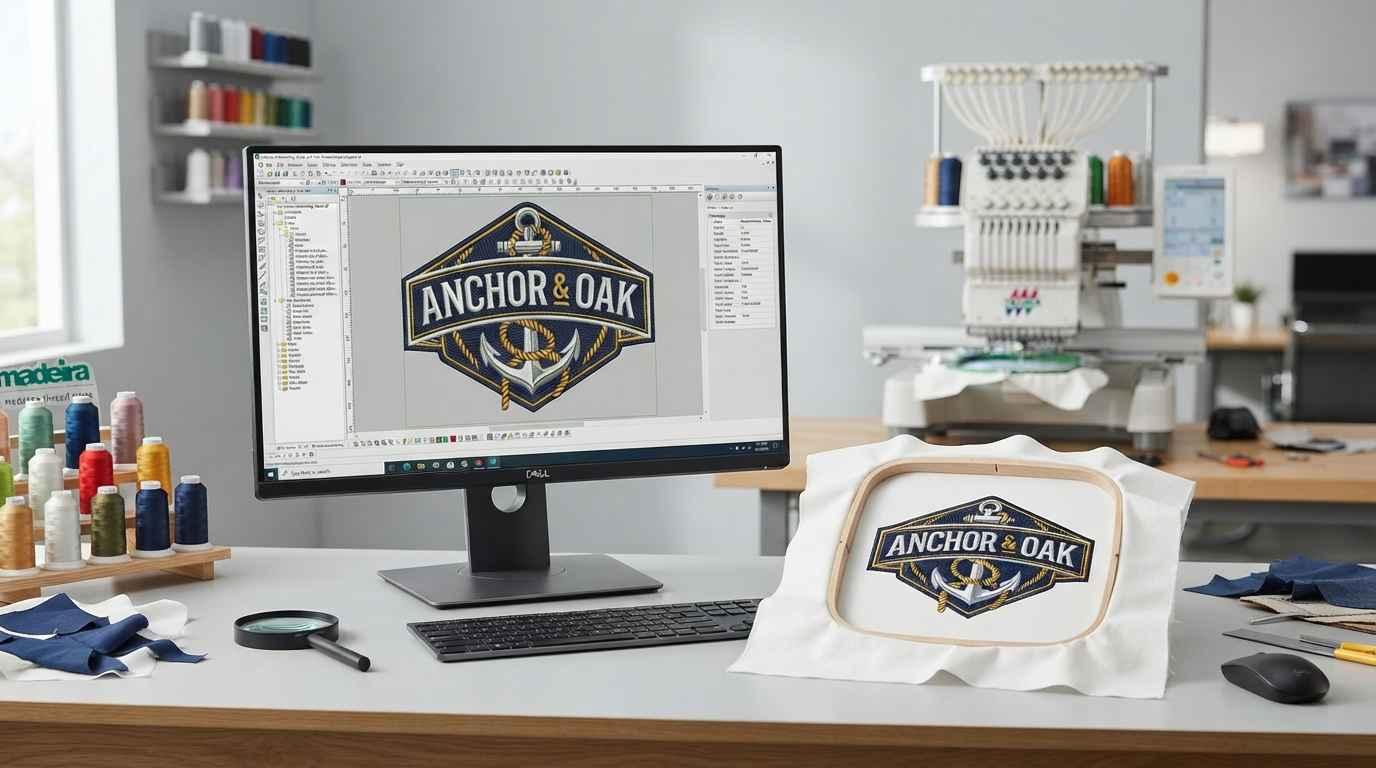
A logo can look simple on a screen, but converting that artwork into embroidery requires careful planning. A digital logo must be transformed into stitches that work with the selected fabric, embroidery machine, thread, needle, size, and placement.
This is why choosing a high-quality logo digitizing service involves more than finding a provider that can deliver a DST or PES file. The quality of the digitizing work can affect stitch coverage, lettering, thread movement, registration, and the appearance of the finished embroidered logo.
A reliable digitizing process considers both the original artwork and the physical requirements of embroidery. From stitch density and underlay to sequencing and quality control, several factors contribute to a production-ready embroidery file.
What Is Logo Digitizing?
Logo digitizing is the process of converting artwork into an embroidery file containing instructions for an embroidery machine.
A JPG, PNG, AI, EPS, or SVG file does not directly tell an embroidery machine how to stitch a design. The artwork must be interpreted and converted into stitch information.
The digitizer determines details such as:
-
Stitch types
-
Stitch direction
-
Stitch density
-
Underlay
-
Stitch sequence
-
Thread colors
-
Pull compensation
-
Machine format
The final file may be saved in formats such as DST, PES, JEF, HUS, or EXP, depending on the embroidery machine.
Why Does Logo Digitizing Quality Matter?
A logo that is properly digitized can produce more consistent embroidery when the correct machine, materials, and production settings are used.
Poor digitizing can contribute to problems such as excessive density, gaps, thread breaks, distorted lettering, puckering, poor registration, and unnecessary thread changes.
However, digitizing is only one part of the embroidery process. Machine condition, thread tension, needle selection, fabric, hooping, stabilizer, and operator settings can also affect the final result.
A high-quality digitizing service therefore prepares the file with these production factors in mind.
1. Experience With Different Types of Logos
Logo designs can vary significantly.
A simple company name may require a straightforward embroidery approach, while a detailed emblem may contain multiple shapes, small lettering, borders, and overlapping elements.
An experienced digitizer understands that the same settings cannot necessarily be applied to every design.
The design needs to be evaluated based on its size, detail level, fabric, and intended placement.
2. Understanding of Embroidery Fabrics
Fabric behavior is an important consideration in digitizing.
Cotton, denim, fleece, jackets, caps, towels, performance fabrics, and other materials can respond differently to stitching.
A design that works well on a stable woven fabric may require adjustments when embroidered on a stretchy or textured material.
A professional digitizer can account for fabric characteristics when determining density, underlay, pull compensation, and other settings.
3. Proper Stitch Density
Stitch density refers to the amount and spacing of stitches within a particular area.
If the density is too high, the design may become unnecessarily heavy and can contribute to puckering, thread breaks, or fabric distortion.
If the density is too low, coverage may become inconsistent and the underlying fabric may show through.
The appropriate density depends on the design, fabric, thread, stitch type, and embroidery size.
4. Correct Underlay
Underlay stitches are placed beneath the visible stitches.
They can help stabilize the fabric and provide a foundation for the top stitching. Different embroidery situations may require different underlay approaches.
Too little underlay may result in poor stability, while excessive underlay can create unnecessary bulk.
A reliable digitizing process considers the material and design before selecting the underlay structure.
5. Appropriate Stitch Direction
Stitch direction can affect the visual appearance of an embroidered logo.
Different areas of a design may require different directions to define shapes and create appropriate coverage.
For example, curved elements and lettering may require carefully planned stitch directions rather than one uniform direction across the entire logo.
Proper planning can also help manage fabric movement during embroidery.
6. Effective Stitch Sequencing
The order in which elements are embroidered can affect production efficiency and registration.
Poor sequencing can result in unnecessary jumps, excessive thread changes, or alignment problems.
A professional digitizer plans the stitch sequence according to the structure of the logo and the embroidery process.
This can help the machine move through the design in a more controlled manner.
7. Attention to Small Lettering
Small text can be challenging in embroidery.
A font that appears perfectly readable on a computer screen may not remain equally clear when converted into stitches at a small size.
A digitizer should consider letter height, spacing, stroke thickness, and stitch structure.
If the lettering is too small for reliable embroidery, the design may need to be simplified or resized. Discussing these limitations before production can prevent unexpected results.
8. Proper Pull Compensation
During embroidery, fabric and thread can move as stitches are formed. This can cause certain elements to become narrower or slightly distorted.
Pull compensation is used to account for some of these effects.
The required amount depends on the design, fabric, stitch direction, density, and other production factors.
It should be applied thoughtfully rather than using one setting for every logo.
9. Clean Stitch Path Planning
The way stitches travel through a design can affect both appearance and production.
Poorly planned paths may create unnecessary jumps, trims, or thread changes.
Clean path planning can help reduce unnecessary machine movement and create a more organized embroidery sequence.
For detailed logos, this becomes particularly important because several elements may need to connect or overlap.
10. Accurate Thread Color Selection
A logo's colors are an important part of brand identity.
The digitizer should use appropriate thread colors based on the customer's requirements and available thread system.
Digital colors displayed on a monitor do not always correspond exactly to physical embroidery thread. For important branding projects, the actual thread palette should be considered when selecting colors.
If an exact brand color cannot be reproduced with available thread, the customer may need to approve the closest practical option.
11. Quality Control Before Delivery
A professional digitizing workflow should include quality control before the final file is delivered.
The design can be checked for:
-
Missing stitches
-
Incorrect stitch sequence
-
Excessive density
-
Unwanted overlaps
-
Color errors
-
Poor lettering
-
Unnecessary jumps or trims
-
Registration concerns
A stitch simulation can help identify certain technical issues before the design is sent to production.
For complex logos, a physical sew-out can provide additional information about how the file performs on the intended fabric.
12. Support for Multiple Embroidery Formats
Different machines may require different file formats.
DST is commonly used across many commercial embroidery systems, while PES, JEF, HUS, EXP, and other formats are associated with specific machines or software environments.
A reliable service should ask which machine or format is required instead of automatically supplying one format for every customer.
The original editable digitizing file may also be useful for future revisions, depending on the provider's workflow.
13. Clear Communication With Customers
Good communication helps ensure that the digitized file matches the actual production requirements.
Before starting a project, the service may need information about:
-
Final embroidery size
-
Garment or fabric type
-
Design placement
-
Required thread colors
-
Embroidery machine
-
Required file format
-
Production quantity
For example, a logo intended for a cap may require a different approach from the same logo intended for a jacket back.
14. Revision and Adjustment Support
Even a carefully prepared embroidery file may require adjustments after testing.
A customer may find that a small area needs more coverage, a letter needs modification, or a particular element does not perform as expected on the selected fabric.
A clear revision process allows these issues to be communicated and addressed efficiently.
Before ordering, customers should review the provider's revision policy so expectations are clear.
15. Realistic Turnaround Times
Turnaround time is another factor to consider.
A simple logo with a few shapes may require less digitizing work than a detailed design with multiple colors and complex lettering.
A reliable service should provide a realistic delivery estimate based on the project's complexity and requirements.
Fast delivery should not replace appropriate quality control.
16. Portfolio and Actual Embroidery Examples
A provider's portfolio can help customers understand the type of work they produce.
When reviewing examples, look for different logo styles, lettering sizes, fabric types, and embroidery applications.
It is useful to determine whether an example is a digital simulation or an actual sew-out. A digital preview shows the intended stitch appearance, while a physical sample provides information about how the design performs on fabric.
17. Understanding Different Logo Placements
The placement of a logo can influence its digitizing requirements.
Left Chest Logo
Left chest logos are often relatively small, so lettering and fine details need careful consideration.
Cap or Hat Logo
Caps have a curved surface and can require specific planning for stitch direction, sequencing, and design placement.
Jacket Back Logo
Large jacket-back logos provide more space but may contain high stitch counts and require longer production times.
Sleeve Logo
Sleeve embroidery may have limited width and can require adjustments to lettering and design proportions.
Workwear Logo
Uniform and workwear logos may be produced repeatedly in larger quantities. Consistency between finished pieces becomes an important production consideration.
What Information Should You Provide for Logo Digitizing?
Providing clear information can help the digitizer prepare a more suitable file.
Send the highest-quality artwork available and include the intended embroidery size and placement.
If possible, provide information about the fabric, garment type, machine format, thread colors, and any specific brand requirements.
If your logo contains very small text or detailed elements, mention these concerns before digitizing begins.
Common Problems With Poorly Digitized Logos
Poor digitizing may contribute to several visible or production-related issues.
Thread Breaks
Excessive density, unsuitable stitch structures, or production settings can contribute to thread breaks.
Puckering
Puckering can occur when fabric moves or becomes distorted during embroidery. Digitizing, stabilizer, hooping, fabric type, and machine settings can all play a role.
Gaps in Coverage
Insufficient density or unsuitable stitch structures can leave areas of fabric visible.
Distorted Lettering
Small or poorly structured lettering may lose clarity during stitching.
Excessive Thread Changes
Poor sequencing can increase the number of color changes and machine interruptions.
These issues should be evaluated in the context of the entire embroidery setup rather than automatically attributed to digitizing alone.
How to Choose a High-Quality Logo Digitizing Service
When evaluating a service, consider its experience, portfolio, communication process, supported formats, revision policy, turnaround expectations, and approach to quality control.
Ask whether the provider considers fabric type and final embroidery size when preparing files.
For important projects, you can also ask about sew-out testing and how revisions are handled if the design needs adjustments after production testing.
A provider that clearly explains these processes can make it easier to understand what is included in the service.
Professional Logo Digitizing for Better Embroidery Preparation
High-quality logo digitizing involves translating artwork into a stitch structure that considers both the visual design and the physical behavior of embroidery.
The digitizer needs to make decisions about density, underlay, stitch direction, sequencing, pull compensation, lettering, and color selection.
Quality control and production testing can provide additional assurance that the file is suitable for the intended application.
No digitized file can completely control every factor involved in embroidery production, but careful preparation can provide a strong foundation for consistent results.
Conclusion
A high-quality logo digitizing service combines embroidery knowledge, careful stitch planning, suitable file preparation, quality control, and clear customer communication. The process should consider the artwork, embroidery size, fabric, placement, machine format, and intended production requirements.
When choosing a service, review its portfolio, technical process, file formats, turnaround information, and revision policy. These details can help you understand how the provider approaches professional logo digitizing.
For businesses that need professionally prepared embroidery files, iDigitize can create logo digitizing files according to the artwork, fabric, size, placement, and machine requirements.
FAQs
Q1. What makes a logo digitizing service high quality?
Important factors include accurate stitch planning, suitable density and underlay, proper sequencing, attention to lettering, quality control, clear communication, and knowledge of embroidery production.
Q2. Why is fabric important when digitizing a logo?
Different fabrics respond differently to stitches. The digitizer may need to adjust density, underlay, pull compensation, and other settings according to the material.
Q3. What is stitch density in logo digitizing?
Stitch density describes the spacing and concentration of stitches within an embroidered area. It needs to be appropriate for the design, fabric, and stitch type.
Q4. What is underlay in embroidery?
Underlay consists of foundation stitches placed beneath the visible embroidery. It can help stabilize the fabric and support the top stitching.
Q5. Can the same logo file be used on every fabric?
Not necessarily. A file may work differently on cotton, denim, fleece, caps, stretch fabrics, and other materials. Adjustments may be needed for different applications.
Q6. What file formats can a logo digitizing service provide?
Common embroidery formats include DST, PES, JEF, HUS, and EXP. The required format depends on the embroidery machine.
Q7. Is a sew-out necessary for every logo?
Not always. A sew-out can be particularly useful for complex designs, new fabrics, small lettering, or larger production orders where physical testing is important.
Q8. Can a JPG or PNG logo be digitized for embroidery?
Yes. JPG and PNG artwork can be used as a source for digitizing. The digitizer interprets the artwork and creates stitch instructions suitable for embroidery.

 English
 Arabic
 French
 Spanish
 Portuguese
 Turkish
 Dutch
Dutch
 Italiano
 Russian
 Romaian
 Portuguese (Brazil)
 Greek
Greek