
Chiropractic Care in Albuquerque for Every Stage of Life: Pregnancy, Kids, Active Adults and Seniors
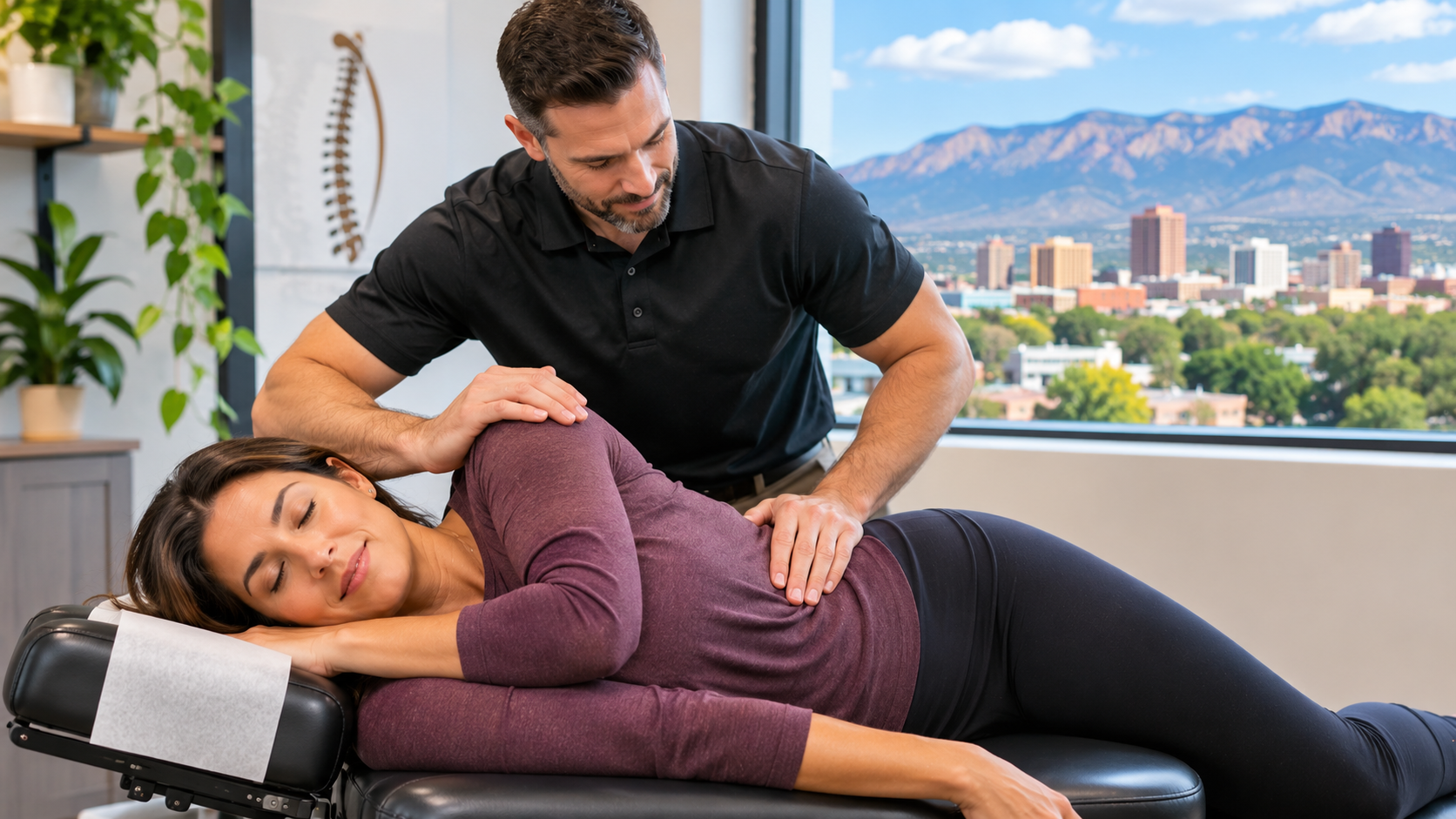
When most people picture a chiropractor's patient, they imagine a middle-aged adult with a bad back. That person definitely exists. But in my experience, the waiting room of a good family chiropractic clinic tells a much bigger story: an expecting mom trying to sleep through the night again, a teenage soccer player with a sore hip, a nurse coming off a run of twelve-hour shifts, and a grandparent who just wants to get down on the floor and play with the grandkids without regretting it the next day.
The spine you have at 8 is the same spine you will have at 80. What changes is how you use it, what you ask of it, and how it responds. That is why I think the best way to understand chiropractic care in Albuquerque is not as one treatment for one problem, but as an approach that adapts as your body moves through each stage of life.
In this article I will walk through how chiropractic care typically looks during pregnancy, childhood, active adult years and later life. I will be honest about where the evidence is strong, where it is still developing, and when a different kind of provider is the better call.
Key Takeaways
- Chiropractic care can be adapted for nearly every age, using different techniques, forces and goals at each stage.
- During pregnancy, specialized positioning and gentle techniques focus on pelvic balance and comfort. Always coordinate with your OB or midwife.
- For children, care is very gentle and evaluation is the priority. Some childhood uses have limited research behind them, so honest expectations matter.
- Active adults often use chiropractic care to recover from sports and work strains and to keep moving well.
- Seniors benefit from low-force techniques and an emphasis on mobility, balance and safety, especially when bone density is a concern.
- At every age, a thorough history and exam come first, and a trustworthy chiropractor refers out when something is beyond their scope.
One Spine, Many Seasons
Here is a simple idea I keep coming back to: good chiropractic care changes its methods to fit the person on the table, not the other way around. A newborn, a pregnant woman, a college athlete and someone with osteoporosis all need very different handling. The goals shift, too, from comfort and development to performance, recovery and independence.
That flexibility is what separates a thoughtful family practice from a one-size-fits-all approach. When you are evaluating chiropractic care in Albuquerque for yourself or your family, one of the best questions you can ask is, "How do you adjust your approach for different ages and conditions?"
If you want a quick sense of the services a local family clinic offers, a page covering chiropractic care in Albuquerque for back pain, neck pain, headaches, pediatric concerns, pregnancy and senior care shows how broad that range can be.
Stage One: Pregnancy
For many families, the first experience with chiropractic care in Albuquerque happens during pregnancy. Pregnancy is one of the most physically demanding things the human body does, and the spine and pelvis carry a lot of that load.
What Changes in the Body
As your baby grows, your center of gravity moves forward. Your lower back curve often deepens to compensate. Hormones like relaxin loosen your ligaments to prepare the pelvis for birth, which is wonderful for delivery but can make joints feel unstable and achy along the way. Your posture, sleep and even how you walk all change.
Common Discomforts
- Lower back pain and stiffness
- Pelvic and sacroiliac joint pain
- Round ligament pain, the sharp pulling feeling on the sides of the belly
- Sciatica-type pain running into the buttock or leg
- Upper back and neck tension, especially later in pregnancy
- Trouble finding a comfortable sleep position
How Prenatal Chiropractic Care Adapts
Prenatal chiropractic care uses special tables, pillows or positioning so you never have to lie on your belly. Techniques are gentle and focus on comfort and balance through the pelvis and lower back. The Webster Technique is one approach many prenatal chiropractors use; it focuses on assessing and balancing the pelvis and the soft tissues around it.
A clinic that offers dedicated prenatal chiropractic care with the Webster Technique will usually have the right equipment and training to keep you comfortable from the first trimester through the third.
What the Evidence Says About Safety
Research on chiropractic during pregnancy is still limited, so I want to be careful here. The National Center for Complementary and Integrative Health notes in its fact sheet on spinal manipulation safety and pregnancy that reports of serious adverse events from spinal manipulation during pregnancy are very rare, but there has not been much rigorous research on the topic. Their advice is to talk through the potential risks and benefits with your health care provider. I think that is the right approach: keep your OB or midwife in the loop and choose a chiropractor with specific prenatal training.
Signs to Call Your OB First
Any pregnancy symptom like bleeding, fluid leakage, severe abdominal pain, sudden swelling, severe headaches or vision changes needs your OB or midwife right away. Chiropractic care is for musculoskeletal comfort, not for managing pregnancy complications.
Stage Two: Infants and Children
This is the stage of chiropractic care in Albuquerque where I think honesty matters most, because parents understandably want to do everything they can for their kids.
Why Parents Bring Children In
Children are constantly falling, climbing, carrying heavy backpacks, playing sports and, more and more, hunching over tablets and phones. Some common reasons parents seek pediatric chiropractic care include:
- Neck stiffness or a head tilt, sometimes related to torticollis
- Posture concerns from backpacks and screens
- Back or neck pain after sports or falls
- Monitoring of mild spinal curves like scoliosis
- Fussiness or colic in infants
How Care Is Different for Kids
Pediatric adjustments are very different from adult adjustments. The force used on an infant is often compared to the gentle pressure you would use to test the ripeness of a fruit. For older kids, care is still gentler than for adults and focuses heavily on evaluation, posture, movement and education.
A good pediatric visit should feel calm and unhurried. The chiropractor should explain everything to you, and ideally to your child in kid-friendly terms, before doing anything.
Being Honest About the Research
Here is where I want to be straightforward. Researchers have studied spinal manipulation for some childhood issues like infant colic and ear infections, and right now there is too little evidence to know whether it helps with those problems. That does not mean a gentle evaluation has no value, but it does mean you should be wary of anyone promising dramatic results for conditions like these.
For musculoskeletal issues, such as a sore neck after a fall or back pain from sports, chiropractic care in Albuquerque can be a reasonable, gentle option as part of a broader plan.
When to See the Pediatrician First
Fever, poor feeding, persistent vomiting, unusual lethargy, a curve that seems to be progressing quickly, or pain that wakes your child at night are all reasons to see your pediatrician first. A responsible chiropractor will work alongside your child's doctor, not replace them.
Bridging Stage: Teens and Young Athletes
The teenage years deserve their own mention, because so much changes so quickly. Growth spurts can leave muscles temporarily tight as bones lengthen faster than soft tissue adapts. Backpacks get heavier. Screen time climbs. And for many Albuquerque teens, school and club sports become serious, with year-round practice in soccer, volleyball, basketball, cross country and more.
Common Teen Complaints
- Low back pain from sports, heavy backpacks or long study sessions
- Neck and upper back tension from phones and laptops
- Overuse injuries from playing one sport all year
- Posture changes during growth spurts
- Minor sprains and strains from practice and games
How Care Adapts
For teens, chiropractic care in Albuquerque usually focuses on movement screening, gentle adjustments when appropriate, soft tissue work and, above all, education. Teaching a 15-year-old how to lift, stretch, warm up and set up a study space is an investment that pays off for decades.
I also think this is the age when kids start to take ownership of their own bodies. A good chiropractor talks to the teen directly, not just to the parent, and gives them simple routines they can actually stick with.
When to Involve a Doctor
Back pain that wakes a teen at night, pain with fever, pain that steadily worsens, or a curve that seems to be changing during a growth spurt should be checked by a pediatrician or sports medicine physician.
Stage Three: Active Adults
This is the stage when life gets busy and our bodies often get the least attention. Careers, kids, commutes, workouts and weekend projects all compete for the same spine.
Where the Strain Comes From
In Albuquerque, I see the same mix again and again:
- Weekend athletes hiking the Sandias, biking the Bosque, running, playing pickleball or skiing in winter
- Physical jobs in healthcare, construction, warehousing, restaurants and the trades
- Desk jobs with long hours of sitting and screen time
- Parenting with all the lifting, carrying and car seat wrestling that comes with it
- Car accidents on busy roads, leading to whiplash and soft tissue injuries
Common Problems
- Low back pain from lifting or long hours of sitting
- Neck pain and tension headaches
- Sports injuries, sprains and strains
- Sciatica
- Shoulder, hip and knee issues connected to how the spine and pelvis move
- Repetitive strain problems like carpal tunnel symptoms and plantar fasciitis
How Chiropractic Care Fits
For active adults, chiropractic care in Albuquerque usually blends several tools:
Adjustments restore motion to stiff joints.
Manual therapy and massage relax overworked muscles so joints can move more freely.
Cold laser therapy may be used for irritated soft tissues.
Spinal rehab exercises build core strength, hip stability and flexibility so you can keep doing what you love.
Auto injury care focuses on early evaluation, careful documentation and progressive rehab after an accident.
What I like about care in this stage is that the goal is often performance and resilience, not just pain relief. People want to get back on the trail, back to the gym, back to work and back to their kids.
A Note on Recovery Between Visits
In my experience, active adults are the most likely to skip their home exercises because they "already work out." But general workouts and targeted rehab are not the same thing. A few minutes of specific stability work for your weak spots can protect everything else you do.
A Season Often Forgotten: Postpartum Recovery
After the baby arrives, attention naturally shifts to the newborn. But the parent who just gave birth is going through a major physical recovery of their own, and it is easy for that to get lost.
What Postpartum Bodies Deal With
Ligaments that loosened during pregnancy take time to firm up again. Core muscles are often weak or stretched. And suddenly you are spending hours feeding, rocking, bending over a crib, lifting a car seat and carrying a baby on one hip. Many new parents tell me their back felt worse after birth than during pregnancy.
How Chiropractic Care Can Help
Postpartum chiropractic care in Albuquerque often focuses on gentle pelvic and lower back work, upper back and neck relief from feeding positions, and a gradual return to core and pelvic stability exercises. Timing matters, so it is wise to get clearance from your OB or midwife first, especially after a C-section or a complicated delivery.
Simple Postpartum Habits
- Bring the baby up to you during feeding with pillows, instead of hunching down
- Switch the hip you carry the baby on
- Lift the car seat close to your body and bend at the knees
- Start with gentle breathing and core activation before returning to harder workouts
Stage Four: Seniors and Later Life
As we age, the spine naturally changes. Discs lose some height and hydration. Joints can develop arthritis. Muscles lose strength if we are not working to keep them. Balance can become less reliable. None of this means pain is inevitable, but it does mean care needs to be thoughtful.
Common Concerns
- Stiffness, especially in the morning
- Arthritis-related joint pain
- Reduced range of motion in the neck and back
- Balance and fall concerns
- Spinal stenosis symptoms such as leg pain when walking
- Difficulty with everyday tasks like getting up from a chair or turning to look behind while driving
How Chiropractic Care Adapts for Older Adults
This is where low-force techniques really shine. Many chiropractors use instrument-assisted adjustments, drop tables, gentle mobilization and soft tissue work instead of high-velocity thrusts, especially when bone density is a concern.
Goals for seniors often focus on:
- Keeping joints moving through their full available range
- Easing stiffness so daily tasks feel easier
- Strengthening the muscles that support balance and posture
- Supporting independence and confidence in movement
Staying Active in the Albuquerque Climate
One thing I appreciate about this city for older adults is how many days of sunshine we get. That makes daily walks much easier to keep up than in places with long, gray winters. Still, there are a few local things to keep in mind. Winter mornings can be cold and stiff, so a few minutes of gentle movement indoors before heading out helps. Uneven sidewalks, gravel and xeriscaped yards can be tricky for balance, so supportive shoes matter. And the dry air means hydration is easy to overlook, which can leave muscles feeling tighter and more tired. Walking with a friend, joining a senior center exercise class or doing laps at an indoor mall on very hot or very cold days are all simple ways to keep moving year-round.
Safety Comes First
Severe osteoporosis, spinal cancer, increased stroke risk and certain bone abnormalities in the upper neck are reasons adjustments may need to be modified or avoided entirely. Blood thinners and other medications also matter. A thorough history and exam are essential, and any chiropractor treating seniors should be comfortable coordinating with primary care doctors and specialists.
Small Habits, Big Difference
For older adults, the at-home piece is just as important as the in-office care:
- Daily walking, even short distances
- Gentle range of motion exercises for the neck, back and hips
- Simple balance practice, like standing on one foot while holding a counter
- A home setup that reduces fall risk: good lighting, secure rugs, and supportive chairs
Myths I Hear at Every Life Stage
Over the years I have heard the same misconceptions from people of every age. Let me clear up a few.
"Once you start, you have to go forever." Not true. Many people complete a plan and stop. Ongoing visits are a choice, not a requirement, and a good chiropractor will tell you that.
"The cracking sound means it worked." The pop is just gas releasing from the joint. Some of the most effective adjustments are silent, and low-force techniques often make no sound at all.
"Chiropractic is only for back pain." Back pain is the most common reason people come in, but neck pain, headaches, sports injuries and joint mobility are all common reasons too.
"My kid is too young" or "I am too old." Age alone is rarely the deciding factor. Technique, force and goals change, and a careful evaluation decides what is appropriate.
"It is all or nothing." Chiropractic care in Albuquerque works best alongside your other providers, not instead of them. The best outcomes I have seen come from teamwork.
What Every Stage Has in Common
Even though care looks different at 3 months, 30 years and 75 years, a few things stay the same. When I think about what makes chiropractic care in Albuquerque trustworthy at any age, it comes down to these:
A real evaluation first. History, exam and, when needed, imaging. No one should be adjusted without a clear reason.
A plan you understand. What is being treated, how, for how long, and how progress will be measured.
Techniques matched to the person. Gentle when needed, firmer only when appropriate and comfortable.
Active involvement from you. Exercises, habits and honest feedback between visits.
Willingness to refer. Knowing when a problem belongs with an OB, pediatrician, primary care doctor, physical therapist or specialist.
Choosing a Family Chiropractor in Albuquerque
If you are looking for one clinic that can see multiple people in your household, here is what I would look for:
Experience across ages. Ask directly about prenatal, pediatric and senior care, and what training the chiropractor has for each.
A full set of tools. Adjustments, manual therapy, laser therapy and rehab give more options to tailor care.
Gentle technique options. Instrument-based and low-force methods are important for kids, pregnant women and seniors.
Clear communication. You should leave every visit understanding what was done and why.
Transparent pricing and paperwork. Upfront costs, payment options and the ability to complete forms ahead of time make life easier for busy families.
A convenient location. If you are juggling school pickups, work and appointments, a clinic in a part of Albuquerque that fits your routine matters more than you might think.
Questions to Ask at Your First Family Visit
To get the most from chiropractic care in Albuquerque for anyone in your family, it helps to arrive with a few questions:
- What do you think is causing these symptoms?
- What techniques will you use, and how gentle are they?
- How many visits do you expect, and how will we know it is working?
- What can we do at home between visits?
- Are there any reasons you would refer us to another provider?
- How do you coordinate with our doctors?
The answers will tell you a lot about whether a clinic is the right fit.
Final Thoughts
Your spine is with you for the whole ride, from your very first steps to your last walk around the neighborhood. The way it needs to be cared for changes along the way, and good chiropractic care changes with it.
For an expecting mom, it might mean gentle pelvic balancing and better sleep. For a child, a careful evaluation and a lot of reassurance. For an active adult, recovering from a weekend injury and building strength to prevent the next one. For a senior, staying mobile, balanced and independent.
If you are considering chiropractic care in Albuquerque for yourself or someone you love, start with a clinic that takes time to understand the person in front of them, explains its plan clearly, respects the research, and works alongside your other health providers. In my experience, that combination is what turns a single appointment into care that genuinely supports your family through every stage.
Frequently Asked Questions
1. Is chiropractic care safe for all ages?
Chiropractic care can be adapted for most ages, using gentler techniques for infants, children, pregnant women and seniors. A thorough history and exam come first so the chiropractor can choose methods that are safe for each person.
2. When during pregnancy can I start seeing a chiropractor?
Many women start whenever discomfort begins, in any trimester. Talk with your OB or midwife first, and choose a chiropractor with prenatal training and equipment that keeps you comfortable without lying on your belly.
3. What is the Webster Technique?
The Webster Technique is a chiropractic approach used during pregnancy that focuses on assessing and balancing the pelvis and the surrounding soft tissues. It is designed to support comfort and pelvic function.
4. Are chiropractic adjustments for babies gentle?
Yes. Adjustments for infants use very light pressure, often compared to the touch you would use to check a ripe fruit. They look and feel very different from adult adjustments.
5. Can chiropractic care help with infant colic?
Current research does not provide enough evidence to know whether spinal manipulation helps infant colic. If your baby is unusually fussy, talk with your pediatrician first to rule out medical causes.
6. Can a chiropractor help with my child's scoliosis?
A chiropractor can help monitor mild curves and support posture, flexibility and strength. Scoliosis should also be followed by a pediatrician or specialist, especially if the curve seems to be changing quickly.
7. Is chiropractic care safe for seniors with arthritis?
Many seniors with arthritis use chiropractic care, often with low-force techniques. The chiropractor will consider bone density, medications and other health conditions before choosing how to treat.
8. Should someone with osteoporosis get chiropractic adjustments?
Severe osteoporosis is a reason to avoid traditional high-force adjustments. Gentle, low-force techniques and soft tissue work may still be options after a careful evaluation and coordination with your doctor.
9. Can the whole family see the same chiropractor?
Yes, many family chiropractic clinics treat patients of all ages. Look for a provider with specific experience in prenatal, pediatric and senior care if those apply to your household.
10. How do I know if chiropractic care is working?
You should notice some improvement, such as less pain, better movement or easier sleep, within a few weeks. If nothing changes, your chiropractor should reassess the plan or refer you to another provider.

 Arabic
 French
 Spanish
 Portuguese
 Deutsch
 Turkish
 Dutch
 Italiano
 Russian
 Romaian
 Portuguese (Brazil)
 Greek