How Is Laser Hair Removal Performed?
Laser hair removal is a popular method for reducing unwanted hair on different areas of the body. Unlike shaving, which only cuts hair at the skin surface, or waxing, which pulls hair from the root, laser treatment uses concentrated light energy to target the hair follicle. With a suitable treatment plan, it can gradually reduce hair growth and make regular grooming easier.
For people considering Laser Hair Removal In Islamabad, understanding how the procedure is performed can make the treatment process easier to understand. The procedure usually involves an initial assessment, preparation of the treatment area, controlled application of laser energy, and aftercare. The exact approach depends on the person's skin tone, hair color, hair thickness, treatment area, and individual response.
How Is Laser Hair Removal Planned?
The process generally begins with an assessment of the area that will be treated. Important factors include the person's skin tone, hair color, hair thickness, hair density, and previous hair-removal methods.
The treatment provider may also discuss medical history, skin sensitivity, medications, recent tanning, and any existing skin irritation. This information helps determine whether laser hair removal is suitable and which treatment approach may be appropriate.
Different skin tones can respond differently to laser energy because the laser interacts with pigment. Darker skin may require particularly careful technology selection and energy settings to protect surrounding skin while effectively targeting the hair.
A treatment plan may also consider the growth pattern of the hair. Since hair follicles go through different growth phases, several sessions are generally required rather than relying on a single treatment.
What Preparation Is Needed Before Treatment?
Proper preparation can help make the procedure smoother and reduce unnecessary skin irritation. The preparation instructions may vary depending on the treatment area and the individual's skin.
Shaving the treatment area before a session is commonly recommended. This leaves the hair shaft short while allowing the follicle to remain available as a target for the laser. Waxing, plucking, or other methods that remove hair from the root are generally avoided before treatment because the follicle needs to be present for the laser to target it.
Excessive sun exposure and tanning may also need to be avoided before treatment. Recently tanned or sunburned skin can be more sensitive and may increase the risk of unwanted skin reactions.
The treatment area should also be free from products or substances that could interfere with the procedure. Following the preparation instructions provided for the specific treatment can help support a comfortable session.
What Happens During Laser Hair Removal?
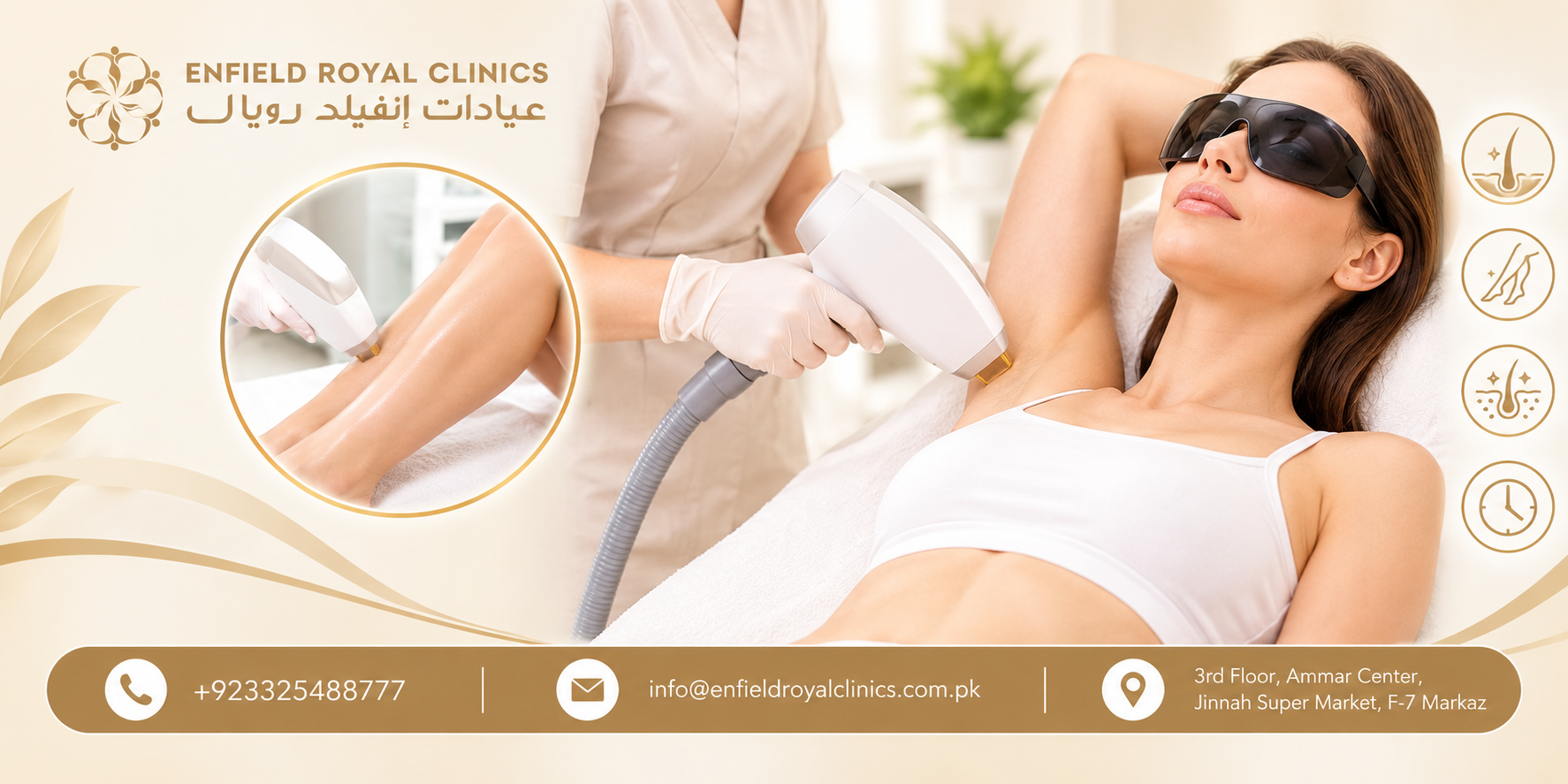
During the procedure, the treatment area is positioned comfortably and the skin is prepared. Appropriate eye protection is used to protect the eyes from the laser light.
A handheld laser device is then moved across the selected area. The device delivers controlled pulses of light energy into the skin. The pigment in the hair absorbs the energy, which produces heat that affects the targeted follicle.
The sensation can vary depending on the treatment area, hair thickness, and individual sensitivity. Some people describe the pulses as a quick snapping or warming sensation. Modern laser systems may also include cooling features designed to improve comfort and help protect the skin's surface.
The length of a session depends on the size of the treatment area. A small facial area may take only a short time, while larger areas such as the legs or back can require longer sessions.
How Does the Laser Target the Hair Follicle?
The principle behind laser hair removal is selective targeting of the pigment in the hair. When laser energy reaches a suitable hair, the pigment absorbs the light and converts it into heat.
That heat travels toward the follicle and can interfere with its ability to produce strong hair. The surrounding skin is managed through appropriate laser selection, settings, cooling, and technique.
The process does not affect every follicle equally during one session because hairs are naturally present in different growth stages. Hair in an active growth phase may respond better than hair in other stages.
For this reason, laser hair removal is performed as a series of treatments rather than as a one-time procedure. Over multiple sessions, different groups of follicles can be targeted as they enter suitable growth phases.
Which Areas Can Be Treated?
Laser hair removal can be performed on many areas where unwanted hair is present. Common treatment areas include the legs, arms, underarms, upper lip, chin, chest, back, shoulders, and bikini area.
The face requires careful planning because facial hair can be influenced by hormonal factors. The treatment approach may therefore differ from that used for body hair.
Large areas can also be treated efficiently because laser devices can cover multiple hairs with each application. The duration and number of sessions depend on the size of the area, hair characteristics, and individual response.
A proper assessment helps determine which areas are appropriate and how the treatment should be performed.
What Happens After a Laser Hair Removal Session?
Immediately after treatment, some people may experience temporary redness, warmth, mild swelling, or sensitivity around the treated follicles. These effects are generally temporary and may settle as the skin recovers.
The treated area should be handled gently after the session. Excessive heat, harsh skincare products, vigorous rubbing, and unnecessary exfoliation may be avoided for a period according to the recommended aftercare instructions.
Sun protection is particularly important. Treated skin should be protected from excessive sun exposure, and suitable sunscreen can help reduce the risk of unwanted pigmentation changes.
Hair does not necessarily disappear immediately after a session. Treated hairs may gradually shed over the following days or weeks. New growth may then appear from follicles that were not in the appropriate growth phase during that session.
How Many Laser Hair Removal Sessions Are Needed?
Laser hair removal generally requires multiple sessions because hair follicles follow different growth cycles. The exact number varies considerably from one person to another.
Factors that can influence the treatment schedule include:
- Hair color and thickness
- Skin tone
- Treatment area
- Hair density
- Hormonal influences
- Individual response to treatment
- Timing between sessions
After several treatments, many people experience slower hair growth, reduced hair density, and finer regrowth. Some may also notice that they need to shave or groom less often.
Maintenance sessions may sometimes be useful because hormonal changes and natural hair cycles can lead to some regrowth over time. Laser hair removal should therefore be viewed as a method of long-term hair reduction rather than a guarantee that every hair will be permanently eliminated.
FAQs
1. Is laser hair removal painful?
The sensation varies from person to person and depends on the treatment area and hair characteristics. Many people describe the laser pulses as brief warmth or small snapping sensations. Cooling features may improve comfort during treatment.
2. Can laser hair removal be performed on all skin tones?
Laser hair removal can be considered for many skin tones, but the laser type and settings need to be selected carefully. Darker skin may require additional attention to laser selection and energy levels.
3. Should hair be shaved before laser hair removal?
Shaving is commonly recommended before treatment because it leaves the follicle available for targeting while keeping the surface hair short. Waxing and plucking are generally avoided because they remove hair from the root.
4. When can results be seen after treatment?
Results develop gradually rather than immediately. Treated hairs may shed after a session, while noticeable reduction in hair growth generally becomes clearer after multiple treatments.
For more information visit Enfield royal clinic in islamabad

 English
 Arabic
 French
 Spanish
 Deutsch
 Turkish
 Dutch
Dutch
 Italiano
 Russian
 Romaian
 Portuguese (Brazil)
 Greek
Greek