I Thought Block Blast Would Be Easy—Then It Started Tricking My Brain
I found Block Blast on a random afternoon when I wanted something mindless but still fun. The setup looked so straightforward: blocks show up, you drag them onto a grid, and if you fill a whole row or column, it clears. Easy, I thought. Like a casual block puzzle I could coast through.
The first couple of rounds confirmed my smug little optimism. I was placing pieces, watching lines disappear, feeling clever. And then the board started filling up, and suddenly the same moves that felt obvious earlier started feeling… suspicious. One placement would “work,” but it would also leave behind a weird little pocket that looked harmless at first. A few moves later, that harmless gap turned into the reason I couldn’t place the next block set at all.
The part that got me: no falling pieces, and every move matters
One of the first things I noticed about the Block Blast game is that there’s no falling-piece chaos. The pieces don’t drop into place; you’re the one dragging them to where they fit. That made the game feel more deliberate—less reaction time, more thinking.
But the thinking doesn’t stop. In fact, it slowly becomes the whole game.
When I was early in a run, I’d sometimes place what felt like the “easy” block right away. It would clear a row, maybe even two, and it felt great. Then I’d look at the remaining board and think, Okay, I’m good. I’ve created space.
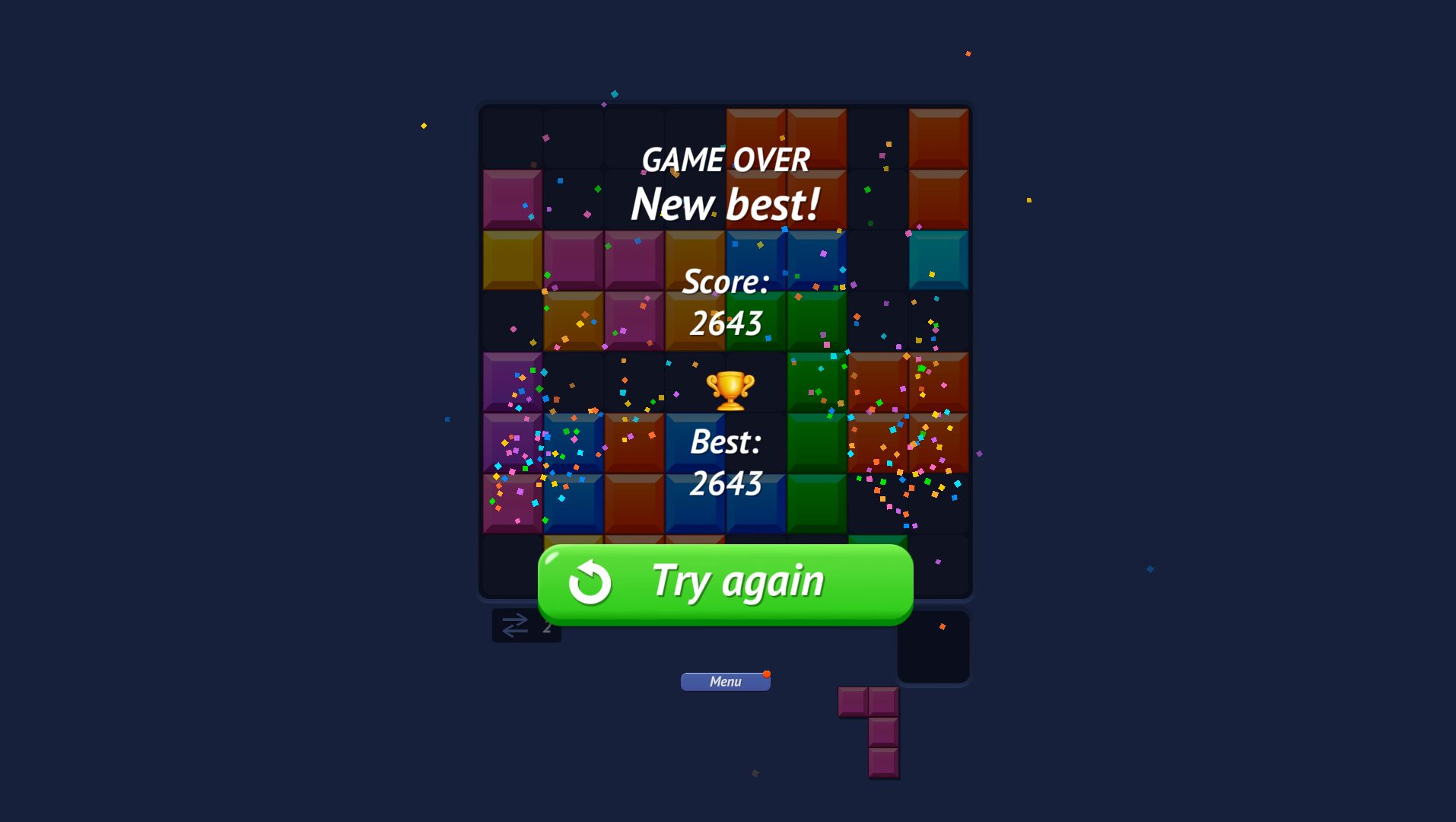
And then—bam—those cleared cells didn’t help in the way I expected, because the next set of blocks didn’t match the shapes I’d left behind. The game ends when none of the currently available pieces can fit anywhere on the remaining grid, and realizing I was one bad placement away from that “oh no” moment is… honestly pretty stressful for something that started as a casual browser game.
Keeping the board open is everything (even when it doesn’t feel like it)
What surprised me most is how much keeping large open areas matters. The game is generous at the start, but as the grid fills, small isolated gaps become a problem. I’d accidentally create one-cell spaces or awkward little pockets near corners, and they were way harder to fill than they looked—because the pieces can’t be rotated. You have to work with the exact orientation you’re given.
So sometimes I’d chase a quick clear instead of saving space. I’d see an opportunity to complete something right now and ignore the bigger picture. And then I’d end up with a board that was technically “clear enough,” but not open enough for the next set of blocks.
That’s when it clicked for me: a run isn’t just about making lines disappear. It’s about shaping the future.
A single placement can clear multiple rows or columns, and when it happens, I get that little surge of excitement. It feels like the game rewards planning rather than brute force. But it also taught me that clearing “right now” isn’t the same as clearing “in a way that keeps everything placeable later.”
My biggest learning: plan the full set, not just the first move
The website’s advice about reviewing pieces before you start is real—but I didn’t fully believe it until I suffered for it. I’d see a set of blocks underneath the board and immediately grab the one that looked easiest to place. That approach worked just long enough to trick me.
Eventually I started forcing myself to look at all the available pieces as a group. Not overthinking—just checking, “If I place this one here, will the rest still fit?” That small change made a noticeable difference. I stopped treating the first move like a throwaway and started treating it like the opening move in a mini chess puzzle.
I also learned to stop filling the center without thinking. The center can help clear rows and columns, sure, but overcrowding it can split the board into awkward sections. And once the board gets split, you can pretty much feel your options shrinking.
Mistakes I made (and why I keep coming back)
I’ll admit it: my early runs were full of “I can fix it later” energy. I’d make a placement that scored immediately, even if it created a lumpy shape. Then I’d hope the next block set would contain something perfect to repair it. Spoiler: it usually didn’t.
After a couple failed runs, I caught myself doing the same thing again—quick clear, then panic. The difference now is that when I’m stuck, I don’t just blame the game. I look back and ask what I gave up: open space, a corridor for straight pieces, or the ability to avoid isolated holes.
And because there’s no countdown timer, I can slow down. I don’t feel rushed into the next move. I can stare at the board for a few extra seconds, move pieces around in my head, and pick a placement that actually makes the next placements possible.
That “take your time” feeling is a big part of why I keep starting another round after losing. It’s frustrating in the best way—like the game is saying, “Yeah… but what if you tried again with a plan?”
A few casual tips from my own run chaos
When I play Block Blast, I try to remember three things: review the whole set first, preserve big open space (especially before the board splits), and don’t casually create tiny gaps you can’t fill later. If a placement clears multiple lines, cool—but I still ask whether it leaves the board flexible enough for what comes next.
Try Block Blast and we’ll compare our chaos
If you like block puzzle games but you also enjoy those “I thought I had it—why can’t I place the next piece?!” moments, Block Blast is worth a go. Jump in, take your time, and see how far you can keep the board open.
And if you want, play along and tell me what tripped you up—was it an awkward gap, a piece you couldn’t rotate into place, or that one move you swear was obvious until it wasn’t.

 English
 Arabic
 French
 Spanish
 Portuguese
 Deutsch
 Dutch
Dutch
 Italiano
 Russian
 Romaian
 Portuguese (Brazil)
 Greek
Greek