
Thin-Film Battery Market Outlook 2026-2034: Size, Share, Trends, Demand and Forecast
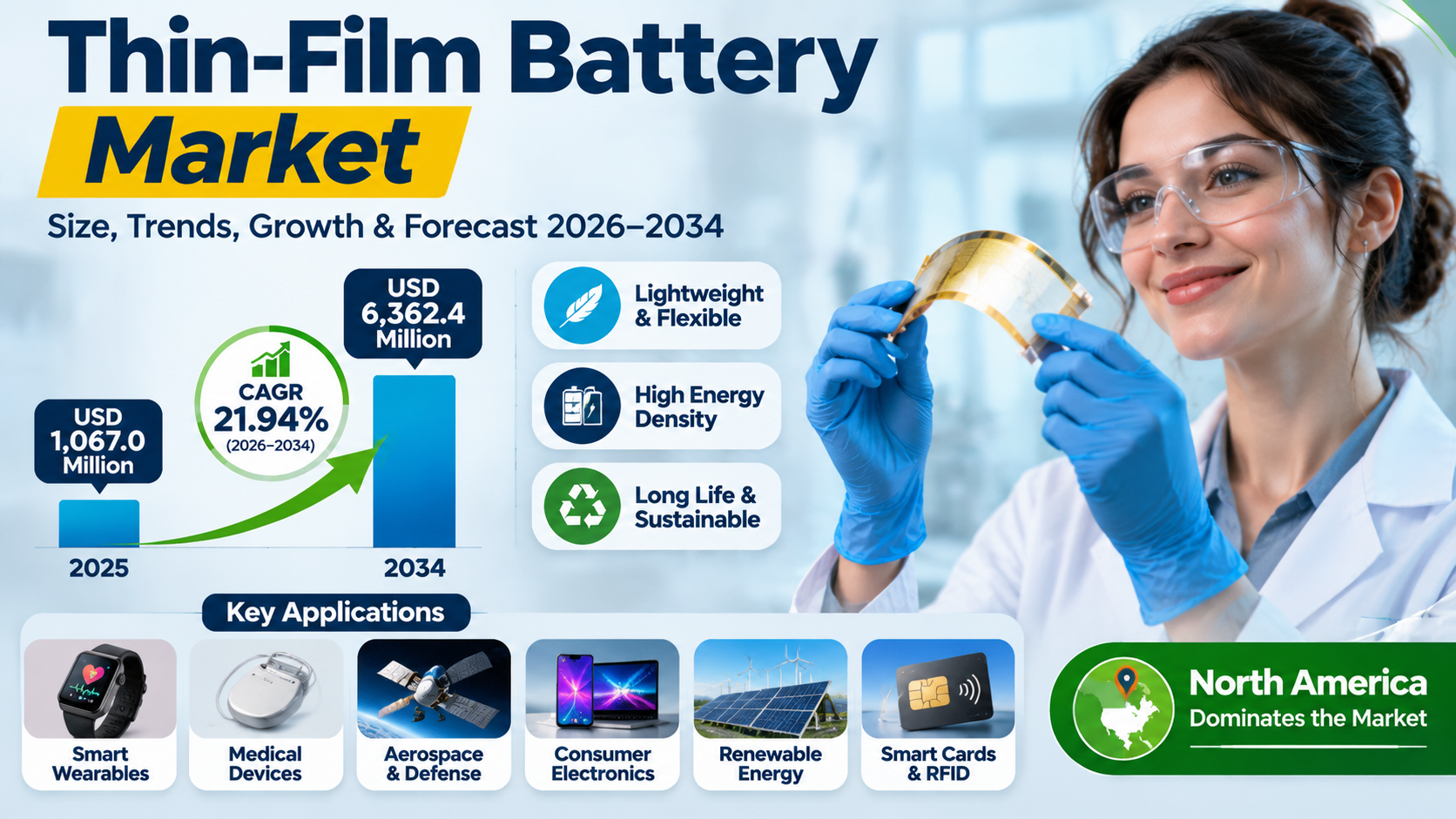
The global thin-film battery market was valued at USD 1,067.0 million in 2025 and is expected to reach USD 6,362.4 million by 2034, growing at a CAGR of 21.94% during 2026–2034. This represents a significant expansion in demand for compact, lightweight and flexible energy storage solutions. Thin-film batteries are increasingly finding applications across consumer electronics, healthcare, aerospace, defense and Internet of Things (IoT) devices.
The technology offers several advantages over conventional battery formats, particularly where space, weight and design flexibility are important. As smart wearables, connected devices and advanced medical technologies continue to develop, the ability to integrate efficient power sources into smaller products is becoming increasingly valuable. The market's growth is also being supported by advancements in battery materials, rechargeable technologies and energy storage applications.
What Is Driving the Growth
Five forces explain most of the momentum:
-
Increasing demand for portable and wearable electronics. The growing adoption of smartwatches, fitness trackers, wireless earbuds and other compact electronic devices is increasing the need for lightweight and flexible power sources. Thin-film batteries offer compact designs, efficient energy storage and the ability to fit into devices with limited internal space.
-
Growing aerospace and defense applications. Thin-film batteries offer advantages in terms of energy density, longevity and performance in demanding environments. Their use in unmanned aerial vehicles (UAVs), satellites, space probes, remote sensors and advanced communication systems is supporting demand across aerospace and defense applications.
-
Rapid medical device innovations. The development of implantable sensors, drug delivery patches, biosensors and patient monitoring devices is creating demand for compact and compatible power sources. Thin-film batteries offer design flexibility and potential applications in medical technologies requiring lightweight and specialized energy storage solutions.
-
Advancements in battery technology. Continuous research and development activities are improving battery performance, energy density and efficiency. Innovations in thin-film materials and lithium-ion technology are helping manufacturers develop batteries suitable for increasingly demanding electronic applications.
-
Growing adoption of IoT and renewable energy solutions. The expansion of connected devices and smart infrastructure is increasing demand for compact and efficient energy storage. At the same time, the shift toward renewable energy sources and electric mobility is encouraging further development of advanced battery technologies.
Want the segment-level numbers behind this? Get a free sample of the report.
Where the Market Stands Today
By technology, the market is divided into thin-film lithium, thin-film lithium polymer, zinc-based thin-film and others. Thin-film lithium represents the largest segment, supported by its high energy density, lightweight characteristics and flexibility. These properties make it particularly suitable for portable electronics, smart wearables and IoT devices where compact designs and reliable battery performance are essential.
By battery type, the market is categorized into rechargeable and disposable batteries. Rechargeable batteries dominate the segment due to their long cycle life, cost-effectiveness and suitability for applications requiring frequent recharging. Their ability to be used multiple times also reduces battery waste, making them an attractive option for consumer electronics, wearable devices and medical implants.
By voltage type, the market is segmented into below 1.5V, 1.5V to 3V and above 3V. Batteries below 1.5V are generally used in low-power applications such as medical devices, sensors and small consumer electronics. The 1.5V to 3V category serves devices such as hearing aids, smartwatches and IoT products, while batteries above 3V are used in applications requiring higher power output, including electric vehicles, renewable energy storage and larger electronic devices.
By application, the market includes smart cards and RFID, medical applications, smart wearables, wireless sensor network systems, portable electronics and others. Smart wearables represent the leading application segment, driven by the growing popularity of smartwatches, fitness trackers and health monitoring devices. The demand for continuous monitoring, GPS tracking and longer battery life is increasing the importance of compact and efficient energy storage technologies.
Our Take: The Smallest Devices Are Creating Big Battery Opportunities
The growing adoption of connected and portable technologies is changing the requirements of the battery industry. Traditional battery formats are not always suitable for devices that need to be extremely thin, lightweight or flexible. Thin-film batteries address these requirements by providing compact energy storage solutions that can be integrated into products with limited space.
This is particularly relevant in healthcare, where medical devices increasingly require specialized power sources. Drug patches, biosensors, diagnostic equipment and implantable technologies can benefit from batteries designed around specific size, flexibility and compatibility requirements. Research into biocompatible battery materials is also creating new possibilities for medical applications.
Developments in the aerospace and defense sectors offer another indication of the technology's potential. In September 2023, the Royal New Zealand Navy issued a worldwide tender to modernize its fleet, reflecting the broader focus on upgrading defense capabilities. In the same year, Bengaluru's National Aerospace Laboratories successfully conducted an initial test run of a solar-powered pseudo-satellite UAV designed to enhance surveillance and monitoring capabilities in frontier regions.
Developments in battery materials are also contributing to innovation. In August 2023, researchers from German and British universities announced the development of T-Nb₂O₅ thin films, which enable faster lithium-ion movement and offer potential improvements in battery performance.
Our view is that the market's long-term opportunities will depend on how effectively manufacturers translate these technological developments into reliable and commercially viable products. Companies that can address the specialized power requirements of medical devices, wearables, aerospace systems and connected electronics will be well positioned to participate in the industry's expansion.
Regional Outlook
-
North America holds the largest market share, supported by technological advancements, high demand for consumer electronics and continued investment in next-generation battery technologies. The United States is an important market due to its strong technology ecosystem, research capabilities and growing adoption of wearable devices, medical implants and IoT applications.
-
Asia-Pacific is an important market for thin-film batteries, supported by the rapid development of the electronics manufacturing industry. China, Japan and South Korea are key countries contributing to demand across wearables, medical equipment and mobile devices.
-
Europe benefits from its emphasis on energy efficiency, sustainability and battery technology innovation. Countries such as Germany, Sweden and the United Kingdom are supporting developments in battery technologies, while the adoption of electric vehicles and IoT devices is creating additional demand.
-
Latin America is witnessing increasing interest in advanced energy storage solutions across consumer electronics and renewable energy applications. Brazil, Mexico and Argentina are among the markets contributing to regional adoption.
-
Middle East and Africa offer opportunities through growing investments in renewable energy projects, particularly solar power. Initiatives in countries such as Saudi Arabia and the UAE, alongside increasing demand for portable electronics and medical devices, are supporting market development.
Who Is Competing
The thin-film battery market includes companies focusing on technological innovation, product development and expanding applications across different industries. Competition revolves around improving energy density, battery efficiency, sustainability and the ability to integrate power solutions into increasingly compact electronic products.
The report profiles Blue Spark Technologies, BrightVolt, Enfucell Oy, STMicroelectronics N.V., Cymbet Corporation, Imprint Energy, Ilika PLC, LG Chem, Ltd, Paper Battery Company and Jenax Inc.
These companies are investing in research and development activities to improve battery performance and address the changing requirements of consumer electronics, medical technologies, wearable devices and industrial applications. Strategic collaborations, product innovation and expansion into emerging applications are important elements of the competitive landscape.
Opportunities and Challenges
Opportunities. The growing adoption of smart wearables, IoT devices and portable electronics creates significant opportunities for thin-film battery manufacturers. The healthcare sector also offers potential through the development of implantable medical devices, drug delivery patches, biosensors and patient monitoring technologies. Advances in biocompatible materials and flexible battery designs could further expand their application possibilities.
Aerospace and defense applications represent another important area of opportunity, particularly as demand grows for lightweight and dependable power sources in satellites, UAVs, remote sensors and communication systems. The expansion of renewable energy solutions and electric mobility is also encouraging innovation in advanced energy storage technologies.
Challenges. Manufacturers must continue improving battery performance, energy density and reliability while addressing the requirements of specialized applications. Developing batteries that meet the safety, compatibility and durability expectations of medical devices and other advanced technologies remains important. The ability to translate research breakthroughs into commercially viable products will also influence the pace of market expansion.
What This Means for You
-
If you are an investor, examine developments in rechargeable thin-film lithium batteries, smart wearables and specialized medical applications when evaluating opportunities in the advanced battery industry.
-
If you are a battery manufacturer, focus on improving energy density, flexibility, efficiency and product reliability to address the changing requirements of electronics and healthcare customers.
-
If you work in the healthcare technology sector, biocompatible batteries and compact energy storage solutions offer opportunities for developing advanced medical devices and monitoring technologies.
-
If you are an electronics or IoT developer, thin-film batteries can provide compact power solutions for smart wearables, sensors, connected devices and portable electronic products.
Thin-Film Battery Market FAQs
How big is the thin-film battery market? According to IMARC Group, the global thin-film battery market was valued at USD 1,067.0 million in 2025.
What is the future outlook for the thin-film battery market? The market is projected to reach USD 6,362.4 million by 2034, growing at a CAGR of 21.94% during 2026–2034.
What is driving the thin-film battery market? Rising demand for portable electronics and smart wearables, advancements in battery technology, medical device innovations, aerospace and defense applications, and the expansion of IoT are among the major growth drivers.
Which technology leads the thin-film battery market? Thin-film lithium represents the largest technology segment, supported by its high energy density, lightweight properties and suitability for compact electronic devices.
Which battery type dominates the market? Rechargeable batteries lead the market due to their long cycle life, cost-effectiveness and suitability for applications requiring repeated charging.
Which application represents the largest market segment? Smart wearables are the leading application segment, driven by increasing demand for smartwatches, fitness trackers and health monitoring devices.
Which region holds the largest market share? North America accounts for the largest share of the global thin-film battery market.
Who are the key companies in the thin-film battery market? Major companies include Blue Spark Technologies, BrightVolt, Enfucell Oy, STMicroelectronics N.V., Cymbet Corporation, Imprint Energy, Ilika PLC, LG Chem, Ltd, Paper Battery Company and Jenax Inc.
Conclusion
The global thin-film battery market is poised for substantial growth through 2034, driven by increasing demand for compact, lightweight, and flexible energy storage technologies across a wide range of applications. Continuous advancements in battery materials, manufacturing processes, and miniaturized electronic devices are creating significant growth opportunities for the industry. The thin-film lithium-ion battery market is gaining traction due to its high energy density, lightweight structure, and suitability for next-generation electronic applications. Similarly, the rechargeable thin-film battery market is expanding as demand increases for reliable, reusable, and efficient power sources in portable and connected devices.
The printed thin-film battery market is also emerging as a promising segment, supported by growing adoption of flexible electronics, smart packaging, wearable devices, and Internet of Things (IoT) applications. Its compatibility with cost-efficient printing technologies and flexible form factors is encouraging manufacturers to explore new applications and product innovations. Among end-use applications, smart wearables account for a significant share of market demand, while consumer electronics, medical devices, and smart sensors are creating additional growth opportunities. Regionally, North America holds a leading position, supported by strong technological innovation, research and development activities, and increasing adoption of advanced energy storage solutions across consumer electronics and emerging applications.
At the same time, developments in medical devices, aerospace, defense and IoT are creating new opportunities for specialized battery technologies. As manufacturers continue improving energy density, flexibility and performance, thin-film batteries are expected to play an increasingly important role in powering next-generation electronic and connected devices.
The full report covers 16 countries, with 2025 as the base year and forecasts through 2034. It provides detailed analysis across technology, battery type, voltage type, applications and regional markets.
Need the numbers behind this analysis? Speak to an analyst.
This article is for informational purposes only.
About the Author
IMARC Group is a leading global market research company providing data-driven insights and expert consulting services to businesses seeking to achieve their strategic objectives. With a multi-disciplinary team of industry experts, IMARC delivers thorough, reliable market intelligence across sectors including Healthcare, Food and Beverages, Chemicals and Materials, Consumer Goods, and more.
Media & Sales Contact
IMARC Group
United States: +1-201-971-6302
India: +91-120-433-0800
United Kingdom: +44-753-714-6104

 English
 Arabic
 French
 Spanish
 Portuguese
 Deutsch
 Turkish
 Dutch
 Russian
 Romaian
 Portuguese (Brazil)
 Greek