
Vegetable Display: What Does Your Shop Need?
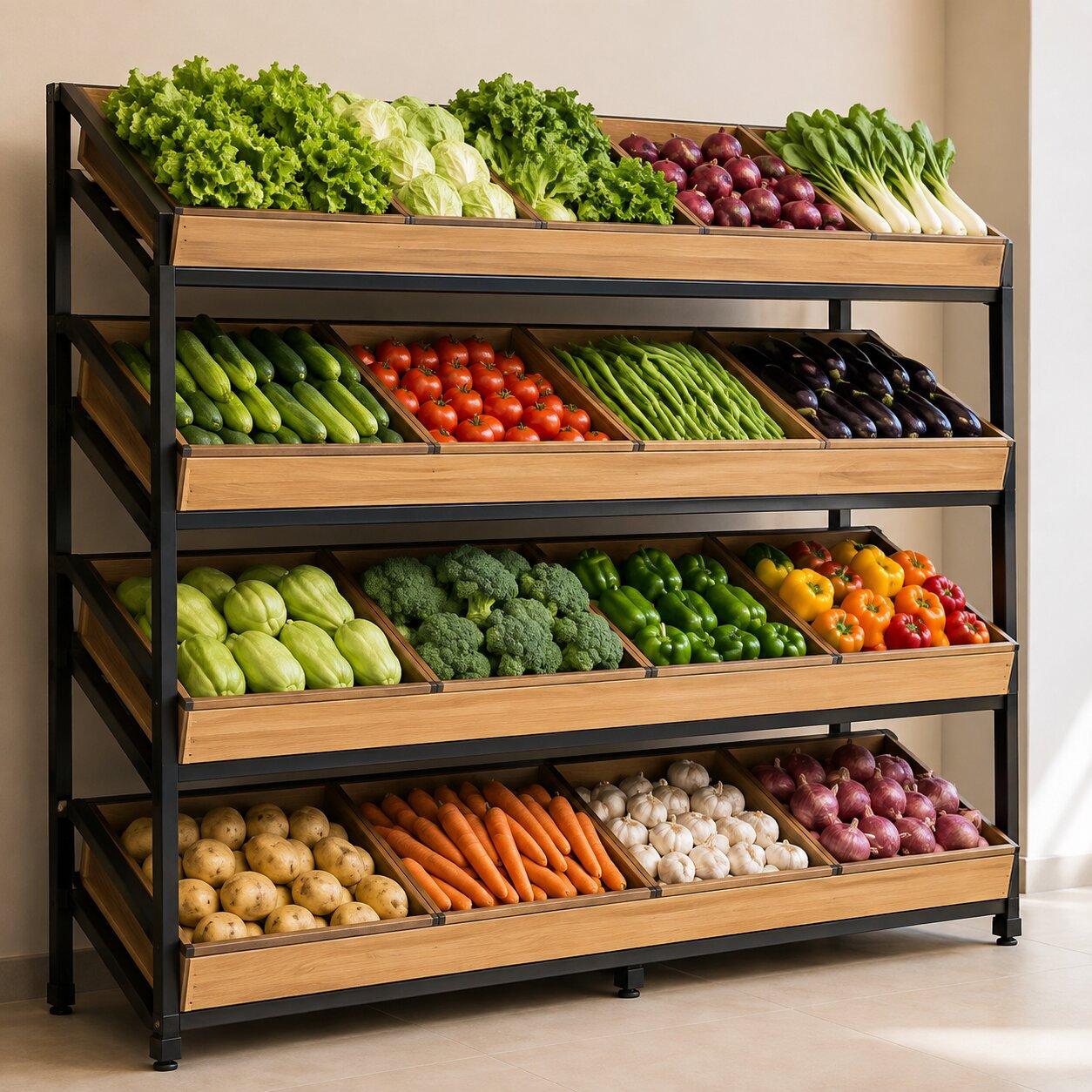
A Vegetable Display gives supermarkets, greengrocers, convenience stores, farm shops, and independent retailers a practical way to present fresh produce. The right display helps organise vegetables by type while making the shopping area easier to browse.
Fresh vegetables come in different shapes, sizes, weights, and packaging formats. Because of this, a good retail display needs to provide enough space without making the area look cluttered. Open shelving, baskets, tiered units, and dedicated produce stands can all be used to create a practical layout.
A well-planned display can also make better use of available floor space and give staff easier access when products need to be replenished.
Why Does a Shop Need a Vegetable Display?
Vegetables need to be easy for customers to see and reach. A dedicated display creates a defined area where fresh produce can be arranged in an orderly way.
Instead of placing different products across unrelated shelves, retailers can group vegetables together and create sections based on product type. This makes it easier for customers to browse the range and compare different items.
A suitable display also helps staff maintain the produce area throughout the day. Empty spaces can be replenished quickly, while different products can remain in their designated positions.
What Type of Vegetable Display Is Suitable for a Retail Store?
The ideal display depends on the size of the shop, the amount of produce, and the available floor space.
Freestanding produce units can work well in larger supermarkets and stores with dedicated fresh-food areas. Wall-mounted or compact shelving may be more suitable for smaller shops.
Basket-style displays can provide an attractive way to separate loose vegetables, while tiered shelving can improve visibility by placing products at different heights.
The main goal is to create a layout where customers can see and access products without unnecessary obstacles.
How Should Vegetables Be Arranged on Display?
A clear arrangement can make the produce section easier to navigate. Retailers can group similar products together and use different sections for root vegetables, leafy vegetables, onions, potatoes, or other categories.
Larger and heavier products can be placed in areas where they're easy to reach without creating an awkward arrangement. Smaller items can be displayed in baskets or trays that keep them contained.
The display should also leave enough room for customers to select products comfortably. Overfilling shelves can make the area look untidy and may make individual products harder to pick.
Does a Vegetable Display Need Adjustable Shelves?
Adjustable shelves can provide useful flexibility, especially for retailers with a changing product range.
Vegetables aren't all the same size. Some require deeper storage areas, while others can fit into smaller trays or baskets. Adjustable shelving allows retailers to change the available space according to the products being displayed.
This flexibility can also be helpful when seasonal produce changes the requirements of the display.
Can Vegetable Displays Save Shop Floor Space?
Yes. A well-planned display can make better use of the available retail area.
Vertical shelving and tiered displays allow retailers to use height as well as floor space. This can be particularly useful in smaller stores where every section needs to serve a clear purpose.
A compact produce unit can create a dedicated vegetable section without requiring a large footprint. Retailers should still leave comfortable walking space around the display so customers can browse without difficulty.
What Materials Are Used for Vegetable Displays?
Vegetable displays can be made from several materials depending on the store's design and practical requirements.
Metal shelving can provide a strong structure for busy retail environments. Wood-based units can create a more traditional market or farm-shop appearance, while plastic or composite baskets can be used to separate individual produce categories.
The material should be suitable for regular retail use and easy for staff to maintain. Since fresh produce areas can require frequent cleaning, surfaces should be practical to wipe and keep presentable.
Should a Vegetable Display Use Baskets?
Baskets can be useful for separating different vegetables while giving the display a more organised appearance.
A basket can provide a defined space for one product or a particular category. This makes it easier for customers to browse and helps staff return products to the correct position.
Different basket sizes can also accommodate different types of vegetables. Larger baskets may suit bulky produce, while smaller containers can be used for smaller items.
How Can a Vegetable Display Improve Product Visibility?
Visibility is important when customers are choosing fresh produce. A display should allow products to be seen without placing too many items on top of one another.
Tiered shelving can raise products toward eye level, while open baskets allow customers to see the contents from above.
Spacing also matters. Leaving sensible gaps between sections can help customers identify individual products and move naturally through the display.
Good visibility doesn't necessarily require a large display. A carefully planned layout can make even a compact vegetable section easy to browse.
Where Should a Vegetable Display Be Positioned?
The location depends on the overall shop layout. Many retailers place fresh produce close to the entrance or in a dedicated section where customers can easily find it.
The display shouldn't block entrances, walkways, checkout areas, or important access points. Customers need enough room to stand, browse, and select products.
It can also be useful to position related produce close together. This can create a logical shopping journey and make the fresh-food section feel more organised.
How Often Should a Vegetable Display Be Reorganised?
The display should be checked regularly throughout the day. Fresh produce can move quickly, and products may become mixed together as customers shop.
Staff can remove empty containers, refill sections, straighten baskets, and move products into suitable positions.
Regular checks can also help identify damaged or unsuitable produce that needs to be removed from the display. Keeping the area tidy supports a cleaner and more consistent retail presentation.
Can Vegetable Displays Be Used in Small Shops?
Yes. Smaller retailers can use compact shelving, baskets, wall-mounted units, or modular produce stands to create a dedicated vegetable section.
The key is to match the display size with the available space. A smaller shop doesn't necessarily need a large freestanding unit. Several compact sections can provide enough capacity while preserving aisle space.
Modular designs can be especially useful because retailers can adjust the arrangement as their product range changes.
What Should You Consider Before Buying a Vegetable Display?
Start by measuring the available floor and wall space. Then consider how many products you need to display and whether you require baskets, shelves, tiers, or adjustable sections.
Think about accessibility as well. Customers should be able to reach products comfortably, while staff should have enough room to restock the display.
Durability, cleaning requirements, storage capacity, and overall appearance are also important considerations. A display should fit naturally with the rest of the shop furniture rather than looking like an isolated unit.
How Can the Right Vegetable Display Support Your Retail Layout?
A suitable Vegetable Display combines practical storage with an organised presentation. It gives fresh produce a dedicated place while helping customers move through the store comfortably.
Whether you're running a supermarket, convenience store, farm shop, greengrocer, or independent retailer, the right combination of shelves, baskets, tiers, and open display space can make the produce area easier to manage.
The best setup depends on your available space, product range, customer traffic, and daily stocking requirements. By choosing a display that fits those needs, retailers can create a practical fresh-produce section that works smoothly as part of the wider shop layout. Read more: Retail Equipment UK

 Arabic
 French
 Spanish
 Portuguese
 Deutsch
 Turkish
 Dutch
Dutch
 Italiano
 Russian
 Romaian
 Portuguese (Brazil)
 Greek
Greek