
Medical Transcription Services: Improving Healthcare Documentation, Accuracy, and Practice Efficiency
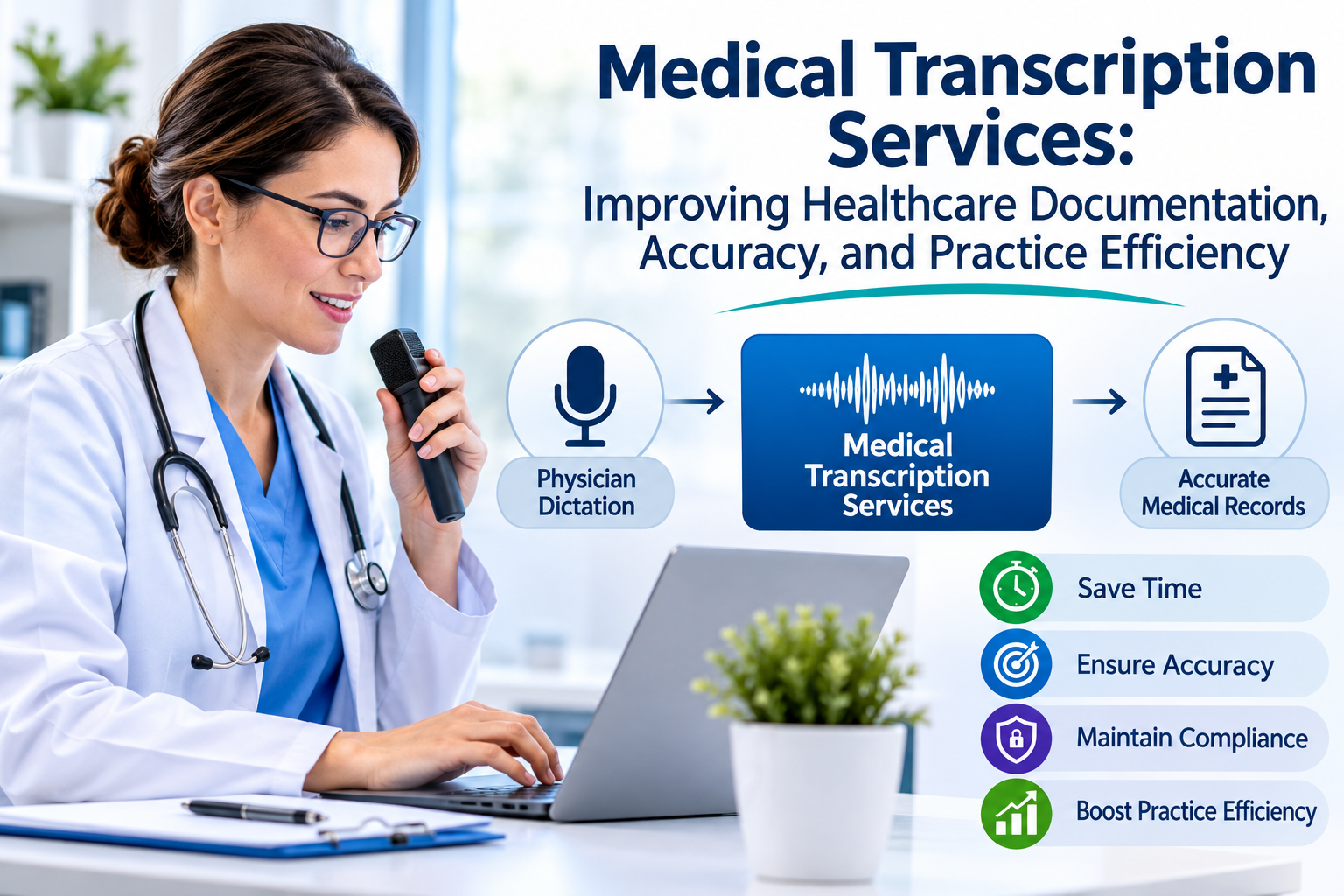
Accurate medical documentation is one of the most important aspects of delivering quality healthcare. Every patient interaction, diagnosis, treatment recommendation, prescription, and medical procedure needs to be recorded properly. Healthcare professionals rely on detailed patient records to make informed decisions, coordinate treatments, monitor medical conditions, and maintain continuity of care. However, documenting every detail manually can consume valuable time and create additional administrative responsibilities for physicians and medical staff.
This is where Medical Transcription Services become an essential part of modern healthcare operations. These services help healthcare providers convert recorded medical dictations into organized, accurate, and professional written documents. By outsourcing transcription responsibilities to experienced professionals, physicians can reduce administrative workloads, improve documentation processes, and dedicate more time to patient care.
As healthcare practices continue adopting digital technologies and electronic health records (EHRs), the demand for reliable documentation solutions remains significant. Professional medical transcription can support clinical workflows by ensuring that important medical information is captured, reviewed, and made available in a consistent format.
For hospitals, private practices, specialty clinics, and independent healthcare providers, choosing the right transcription partner can improve operational efficiency while supporting better medical record management.
What Are Medical Transcription Services?
Medical transcription services involve converting recorded conversations, physician dictations, clinical notes, and other healthcare-related audio information into written medical documents. These documents become part of a patient's medical record and may include essential information about diagnoses, symptoms, examinations, treatment plans, medications, and follow-up instructions.
Medical transcriptionists work with healthcare terminology, medical abbreviations, specialty-specific language, and different documentation formats. Their responsibility is to accurately transform spoken information into readable, structured documents while preserving the intended clinical meaning.
Depending on a healthcare provider's requirements, transcription may involve:
-
Patient consultation notes
-
Medical history and examination reports
-
Discharge summaries
-
Operative and surgical reports
-
Diagnostic reports
-
Referral letters
-
Progress notes
-
Treatment plans
-
Specialist consultation reports
-
Clinical correspondence
Professional Medical Transcription Services help healthcare organizations maintain organized documentation without requiring physicians to spend additional hours preparing every report themselves.
Why Accurate Medical Documentation Matters in Healthcare
Medical records provide an important history of a patient's healthcare journey. They help physicians understand previous diagnoses, identify ongoing health concerns, evaluate treatment effectiveness, and make informed decisions about future care.
Incomplete or unclear documentation can create communication problems between healthcare professionals. Important details may be overlooked, treatment instructions may become difficult to interpret, and administrative processes may experience unnecessary delays.
Accurate documentation offers several important advantages.
1. Supports Better Clinical Decision-Making
Physicians depend on reliable patient information when evaluating symptoms, diagnosing medical conditions, and recommending treatments. Well-organized medical records allow healthcare professionals to review relevant clinical details without searching through incomplete or inconsistent notes.
Accurate transcription helps preserve information from patient consultations and physician dictations, making it easier for authorized healthcare professionals to review the patient's medical history.
2. Improves Communication Between Healthcare Professionals
Patients frequently receive care from multiple healthcare providers, including primary care physicians, specialists, surgeons, and diagnostic professionals.
Clear medical documentation supports communication between these providers. When patient information is recorded consistently, healthcare professionals can better understand previous treatments, recommendations, and follow-up requirements.
3. Supports Medical Record Management
Healthcare organizations handle significant amounts of patient information every day. Without an organized documentation process, maintaining complete and accessible records can become challenging.
Professional transcription helps practices create standardized written reports that can be incorporated into their existing medical record systems.
4. Helps Maintain Documentation for Administrative Purposes
Medical records also support administrative activities, including insurance claims, medical billing, coding reviews, audits, and reimbursement processes.
Complete clinical documentation can help billing and coding professionals understand the services provided during patient encounters. It may also help identify missing information before claims are submitted.
Key Benefits of Outsourcing Medical Transcription Services
Managing transcription internally can require additional staff, training, software, equipment, and quality control procedures. For many healthcare practices, outsourcing offers a practical alternative.
Here are some of the major benefits of working with a professional transcription provider.
1. More Time for Patient Care
Physicians often spend considerable time documenting consultations, preparing reports, updating patient records, and completing administrative tasks.
These responsibilities can reduce the time available for direct patient interaction.
Outsourcing transcription allows healthcare professionals to delegate the conversion of recorded dictations into written documents. This can reduce documentation-related workload and help physicians focus more attention on patient care.
2. Improved Documentation Accuracy
Medical terminology can be complex. Different specialties use specific abbreviations, procedures, medications, and diagnostic expressions that require familiarity with healthcare language.
Professional medical transcriptionists are trained to work with medical terminology and understand the importance of accurate documentation.
A structured transcription and review process can help identify unclear wording, terminology inconsistencies, and potential transcription errors before documents are finalized.
However, clinical accuracy still depends on clear dictation, appropriate review, and confirmation of uncertain medical details by authorized healthcare professionals.
3. Reduced Administrative Expenses
Maintaining an internal transcription department may involve recruitment, salaries, employee training, equipment, and ongoing management.
Outsourcing can help practices reduce some of these operational responsibilities.
Rather than maintaining a dedicated internal team, healthcare organizations can use external transcription support according to their documentation volume and business requirements.
This approach may be particularly beneficial for small and medium-sized practices that need professional support without expanding their administrative workforce.
4. Faster Documentation Turnaround
Timely documentation is important for maintaining efficient clinical workflows.
Delayed reports can affect record completion, communication, billing preparation, and other administrative activities.
Professional transcription providers use established workflows and dedicated personnel to process medical dictations efficiently. Depending on the provider's capabilities and service agreement, practices may receive completed documents within an agreed turnaround period.
5. Greater Operational Flexibility
Healthcare practices experience changing documentation requirements. Patient volumes may increase during certain periods, and specialty departments may generate different types of medical reports.
Outsourcing provides flexibility because practices can select service arrangements based on their workload.
This allows healthcare organizations to manage changing transcription demands without constantly adjusting their internal staffing levels.
How Medical Transcription Services Support Revenue Cycle Management
Revenue cycle management involves several interconnected activities, from patient registration and insurance verification to claim submission and payment collection.
Although transcription is not the same as medical billing or coding, accurate clinical documentation can support important revenue cycle processes.
Better Documentation for Medical Coding
Medical coders review clinical documentation to identify the services, diagnoses, and procedures that should be represented using appropriate medical codes.
When documentation is incomplete or unclear, coders may need to request clarification from providers.
Accurate transcription helps preserve the information contained in physician dictations, giving coding professionals a clearer record to review.
Fewer Documentation-Related Delays
Missing clinical details can create additional administrative work during claim preparation.
When medical records are organized and available on time, billing teams can review the necessary documentation more efficiently.
This may help reduce avoidable delays associated with locating or clarifying clinical information.
Improved Support for Claim Documentation
Insurance companies may request medical records to verify services, evaluate claims, or support reimbursement decisions.
Complete and properly maintained documentation can help healthcare practices respond to these requests.
Professional Medical Transcription Services contribute to the documentation process by converting recorded clinical information into structured written reports.
It is important to remember that transcription alone does not guarantee claim approval or reimbursement. Proper coding, accurate billing information, payer requirements, and medical necessity documentation remain essential.
The Role of HIPAA Compliance in Medical Transcription
Patient confidentiality is a fundamental responsibility for every healthcare organization. Medical records contain protected health information (PHI), including patient identities, diagnoses, treatment details, and other sensitive information.
When a healthcare practice shares patient information with an external transcription provider, privacy and security responsibilities must be carefully considered.
The Health Insurance Portability and Accountability Act (HIPAA) establishes requirements for protecting certain patient information and regulating how covered entities and their business associates handle PHI.
Healthcare providers should evaluate the following security considerations when selecting a transcription partner.
1. Secure Data Transmission
Medical dictations and completed reports should be transferred through appropriately protected communication channels.
Healthcare organizations should confirm that their transcription provider uses suitable safeguards when receiving, processing, and returning patient information.
2. Business Associate Agreements
When a transcription provider qualifies as a business associate under HIPAA, the healthcare organization generally needs an appropriate Business Associate Agreement (BAA).
This agreement establishes permitted uses and disclosures of PHI and outlines important privacy and security responsibilities.
3. Restricted Information Access
Patient information should only be accessible to individuals who need it to perform their assigned responsibilities.
Healthcare organizations should evaluate their transcription partner's access controls, employee policies, and procedures for handling sensitive information.
4. Data Protection Policies
A dependable transcription provider should maintain appropriate administrative, technical, and physical safeguards to protect patient information.
Practices should also review how the provider handles data storage, document retention, secure deletion, incident reporting, and subcontractor access.
Selecting a provider that understands healthcare privacy requirements helps practices strengthen their overall information management processes.
How Technology Is Transforming Medical Transcription
Healthcare technology continues to change how clinical information is collected, processed, stored, and accessed.
Modern transcription workflows increasingly combine digital recording systems, speech recognition technology, secure file transfers, and human review processes.
These developments help healthcare organizations manage documentation more efficiently.
Speech Recognition Technology
Speech recognition software converts spoken language into text automatically. This technology can help accelerate the initial transcription process.
However, medical terminology, accents, background noise, similar-sounding medication names, and complex clinical expressions can create recognition errors.
Human review remains important for identifying mistakes and ensuring that the final document accurately reflects the physician's dictation.
Artificial Intelligence in Medical Documentation
Artificial intelligence is creating new opportunities for healthcare documentation.
AI-powered tools can assist with speech recognition, document organization, and clinical note preparation. Some solutions can also help summarize recorded conversations.
Despite these advantages, automated systems require appropriate oversight. Incorrectly generated clinical information can create patient safety concerns if it is accepted without verification.
Healthcare providers should ensure that AI-assisted documentation workflows include suitable validation, privacy protections, and clinical review.
Electronic Health Record Integration
Electronic health records allow healthcare professionals to maintain patient information digitally.
Medical transcription workflows that are compatible with existing EHR and practice management systems can make it easier to transfer completed documents into the appropriate patient records.
Before choosing a transcription provider, practices should confirm system compatibility, file formats, transfer procedures, and access permissions.
Types of Healthcare Providers That Benefit from Medical Transcription
Medical transcription is useful across many healthcare settings. Different specialties produce different types of clinical documentation, but most require accurate and organized medical records.
Hospitals
Hospitals generate extensive documentation related to admissions, patient consultations, surgical procedures, diagnostic findings, and discharge planning.
Professional transcription support can help hospital departments manage their documentation workload.
Private Medical Practices
Independent physicians often balance patient appointments with administrative responsibilities.
Outsourcing transcription can help private practices reduce documentation tasks and maintain organized patient records.
Specialty Clinics
Specialists frequently use detailed terminology and require documentation that reflects the specific needs of their medical disciplines.
Examples include:
-
Cardiology: Consultation notes, cardiac assessments, and procedure reports.
-
Orthopedics: Musculoskeletal examinations and surgical documentation.
-
Neurology: Neurological evaluations and patient progress notes.
-
Dermatology: Skin examinations and treatment records.
-
Gastroenterology: Endoscopic procedure reports and consultation notes.
-
Psychiatry: Mental health evaluations and progress documentation.
-
Radiology: Diagnostic imaging reports.
-
Urology: Urological examinations and procedure reports.
Specialty-aware transcription support can help healthcare organizations maintain consistent documentation across different departments.
Ambulatory Surgery Centers
Ambulatory surgery centers handle outpatient surgical procedures that require detailed preoperative, operative, and postoperative documentation.
Transcription support can help organize these records and make them available for appropriate administrative and clinical review.
How to Choose the Right Medical Transcription Company
Selecting a transcription partner requires more than comparing prices. Healthcare organizations should evaluate service quality, security procedures, turnaround times, communication, and compatibility with existing systems.
Consider the following factors before making a decision.
1. Medical Terminology Expertise
Choose a provider with experience handling healthcare documentation and specialty-specific terminology.
A knowledgeable team is better equipped to understand clinical language and identify unclear dictation that requires clarification.
2. Quality Assurance Procedures
Ask how the company reviews completed documents.
A reliable provider should have a defined quality control process that includes appropriate proofreading, terminology checks, and procedures for correcting identified errors.
3. HIPAA-Related Security Practices
Evaluate the provider's privacy policies, security controls, and willingness to execute a Business Associate Agreement when required.
Do not assume that a company is HIPAA compliant simply because it advertises healthcare services.
4. Turnaround Time
Find out how quickly the provider can process different types of medical dictations.
Turnaround expectations should be clearly established based on your practice's documentation volume, specialty, and operational requirements.
5. Pricing and Service Flexibility
Compare pricing structures and understand whether charges are based on audio minutes, document volume, service packages, or another arrangement.
Look for a provider that offers a service model aligned with your practice's actual needs.
6. Technology Compatibility
Ensure that the transcription company can work with your existing practice management systems and EHR workflows.
A flexible provider can make the transition easier and reduce unnecessary disruptions.
Why Healthcare Practices Choose SybridMD for Medical Transcription Services
Managing clinical documentation can become challenging when healthcare professionals are already responsible for patient care, practice administration, and daily operational activities.
SybridMD provides professional Medical Transcription Services designed to help healthcare organizations manage these responsibilities more efficiently.
With an experienced medical transcription team and technology-driven workflows, SybridMD supports physicians, clinics, and healthcare facilities that need dependable documentation assistance.
Here are some reasons healthcare practices can consider SybridMD for their transcription requirements.
Experienced Medical Transcription Professionals
Medical documentation requires familiarity with clinical terminology and healthcare workflows.
SybridMD emphasizes an experienced team that understands the documentation needs of different medical environments, helping practices manage their transcription requirements.
Dedicated Transcription Support
A dedicated transcription department can help healthcare organizations manage their documentation workload without requiring physicians to handle every transcription task themselves.
This allows medical professionals to spend more time on clinical responsibilities.
Focus on Accuracy
Medical records must accurately reflect the information provided by healthcare professionals.
SybridMD focuses on precise and timely transcription processes to help practices maintain organized clinical documentation.
HIPAA-Focused Processes
Patient privacy is essential when working with medical records.
Healthcare organizations should confirm the applicable contractual arrangements and security safeguards when engaging a transcription provider. SybridMD highlights its focus on HIPAA-related procedures and the protection of patient information.
Timely Service Delivery
Delayed documentation can affect administrative workflows.
SybridMD emphasizes prompt service delivery to help healthcare practices receive their transcribed documents according to their operational requirements.
Flexible and Cost-Effective Solutions
Every medical practice has different transcription needs.
SybridMD offers service options designed to support healthcare organizations looking for professional assistance without maintaining a separate internal transcription department.
To learn more about its offerings, visit the SybridMD Medical Transcription Services page.
Common Challenges in Medical Transcription and How to Overcome Them
Although transcription services provide several advantages, healthcare organizations should understand the common challenges involved in clinical documentation.
Unclear Physician Dictations
Background noise, fast speech, incomplete sentences, and unclear pronunciation can make transcription difficult.
Solution: Encourage physicians to use quality recording equipment, speak clearly, and follow consistent dictation practices.
Complex Medical Terminology
Specialty-specific language and similar-sounding medical terms can increase the risk of transcription errors.
Solution: Work with transcription professionals who have experience handling the relevant medical specialty and establish a clarification process for uncertain terminology.
Data Security Concerns
Sharing patient information with external vendors introduces additional privacy and security responsibilities.
Solution: Review the provider's security procedures, access controls, contractual safeguards, and data-handling policies before sharing PHI.
Delayed Documentation
High dictation volumes and inefficient workflows may cause delays in completing medical records.
Solution: Establish realistic turnaround expectations and work with a provider that can accommodate your practice's documentation requirements.
Inconsistent Formatting
Different documentation styles can make patient records difficult to review.
Solution: Develop standardized templates and formatting guidelines that match your practice's documentation preferences.
The Future of Medical Transcription Services
The future of medical transcription will likely involve greater collaboration between human professionals and advanced documentation technologies.
Speech recognition, artificial intelligence, cloud-based platforms, and EHR integration are expected to continue influencing how healthcare information is processed.
However, technology cannot eliminate the importance of accuracy, privacy, and clinical oversight.
Healthcare providers will continue to need reliable processes for reviewing medical documentation and confirming that patient records accurately represent clinical encounters.
The most effective transcription workflows will combine technological efficiency with appropriate human expertise and quality assurance.
Healthcare organizations that invest in dependable documentation solutions can improve administrative processes while maintaining the accuracy and organization of their medical records.
Conclusion
Accurate clinical documentation is essential for efficient healthcare operations. Physicians, hospitals, and specialty clinics must maintain reliable patient records to support clinical decision-making, communication, administrative processes, and revenue cycle activities.
Professional Medical Transcription Services provide a practical solution for healthcare organizations that want to reduce documentation-related workloads while maintaining organized medical records.
From improving workflow efficiency and supporting medical coding to helping healthcare professionals manage patient documentation, outsourcing can offer valuable operational benefits.
However, choosing the right transcription partner is essential. Healthcare providers should prioritize medical terminology expertise, quality assurance, appropriate data security, timely delivery, and compatibility with existing systems.
SybridMD offers professional transcription support designed to help healthcare practices manage their documentation requirements more effectively.
If your practice wants to improve documentation workflows and reduce administrative responsibilities, explore SybridMD's Medical Transcription Services and discover how professional support can contribute to a more efficient healthcare operation.

 English
 Arabic
 French
 Spanish
 Portuguese
 Deutsch
 Turkish
 Dutch
 Italiano
 Romaian
 Portuguese (Brazil)
 Greek